
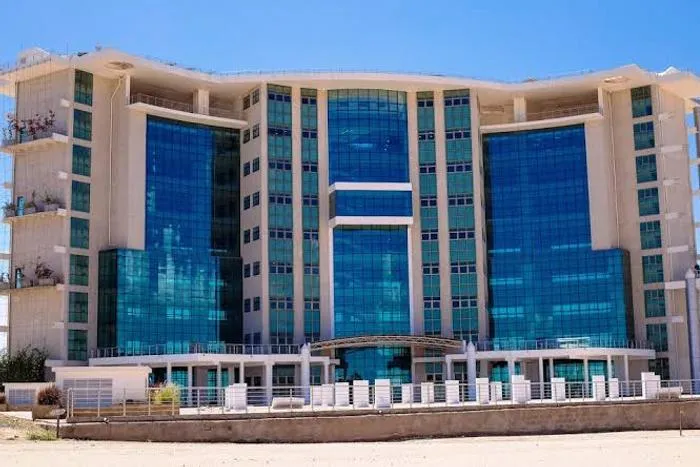
The latest push came as the government appeared before the National Assembly Departmental Committee on Trade, Industry, and Cooperatives to brief MPs on the implementation and operationalization of the 290 CIDCs, their progress, and plans for turning the centers into productive hubs for local enterprises.
The session was also attended by Kenya Power Managing Director and CEO Dr. Eng. Joseph Siror, underscoring the importance of reliable electricity infrastructure to the success of the industrialization program.
The CIDC concept goes to the heart of Kenya's longstanding struggle with unemployment, low household incomes, and limited value addition at the grassroots.
Instead of forcing small entrepreneurs to travel to major towns in search of machinery, workspace, electricity, and technical support, the centers are intended to bring industrial infrastructure closer to communities.
That could fundamentally change the economic fortunes of constituencies—particularly those whose economies depend heavily on agriculture.
From raw produce to finished products
The real measure of success, however, will not be the number of buildings constructed.
It will be what happens inside those buildings.
A functioning CIDC should enable a farmer to move beyond selling raw maize, cassava, milk, fruits, vegetables, or other commodities and participate in processing, packaging, and marketing.
A carpenter should have access to appropriate machinery. A tailor should have modern production facilities. A young entrepreneur should be able to develop a product without first having to raise millions of shillings for industrial equipment.
In short, the CIDCs are expected to turn local communities from suppliers of cheap raw materials into producers of higher-value goods.
This is consistent with the government's wider industrialization agenda, which places value addition, manufacturing, MSME development, and job creation at the center of economic transformation.
The State Department for Industry has also been examining how existing industrial infrastructure and public assets can be better utilized to stimulate production and industrial growth.
The unfinished-business question
But there is a difficult question Parliament and the public must keep asking:
How many of the 290 centers are actually operational, and how many exist mainly on paper or as completed structures awaiting equipment, electricity, management, and users?
That question is particularly important because recent parliamentary oversight has already focused on the completion and operationalization of industrial centers.
In September, the National Assembly Trade, Industry and Cooperatives Committee visited industrial facilities in Nyando, including a CIDC, to assess their completion status and determine what interventions were required to make them operational.
The challenge therefore extends beyond construction.
A building without machinery is not an industrial center.
A machine without electricity is not industrialization.
And machinery without entrepreneurs, technical skills, maintenance, markets, and affordable financing is unlikely to generate the jobs and wealth Kenyans expect.
The electricity factor
The presence of Kenya Power CEO Dr. Joseph Siror at the briefing is therefore significant.
Industrialization requires dependable and affordable power.
Small manufacturers cannot compete if production is repeatedly interrupted by power outages or if electricity costs make locally manufactured products more expensive than imported alternatives.
The CIDC program therefore provides an opportunity to rethink industrialization as an ecosystem rather than a construction project.
Electricity, machinery, skills, financing, raw materials, product certification, digital technology, and markets must work together.
Agriculture could become the biggest beneficiary.
For rural Kenya, the greatest opportunity may lie in agro-processing.
A constituency producing large quantities of milk, maize, cassava, sunflower, groundnuts, fruits, or vegetables should not remain trapped in the cycle of selling raw produce at depressed farm-gate prices.
The CIDC could provide a platform for aggregation, processing, packaging, and branding.
That is where industrialization begins to have a direct impact on ordinary households.
Instead of a farmer selling tomatoes cheaply because they are perishable, for instance, local enterprises could process and package tomato products.
Instead of selling milk immediately after production, entrepreneurs could process it into yogurt and other products.
Instead of exporting or transporting raw agricultural products elsewhere, communities could retain a greater share of the value within their own economies.
Parliament's oversight will matter
The National Assembly's Trade, Industry and Cooperatives Committee has a constitutional and parliamentary oversight role over industrialization, enterprise development, MSMEs, and cooperatives.
That oversight will be critical.
MPs should demand constituency-by-constituency information showing the status of each CIDC: construction, equipment, electricity connection, staffing, operationalization, beneficiaries, production capacity, and revenue generated.
They should also ask the uncomfortable question of whether the centers are reaching the intended beneficiaries—or becoming another avenue through which public resources are spent without producing measurable economic returns.
The real test begins now.
Kenya has no shortage of economic blueprints.
The country has produced policies, strategies, and programs promising industrialization, job creation, and empowerment of small businesses.
The CIDCs offer an opportunity to translate some of those promises into something citizens can physically see and use.
The ultimate test will therefore be simple.
Can a young Kenyan walk into a CIDC with an idea and walk out with a viable product?
Can a farmer turn raw produce into a branded commodity?
Can a cooperative use the facility to add value and access better markets?
Can a small manufacturer expand production and employ ten, twenty, or fifty people?
If the answer is yes, the 290 CIDCs could become one of Kenya's most consequential grassroots industrialization programs.
But if they remain locked buildings, idle machines, or politically celebrated projects without sustained production, they will become yet another reminder that industrialization is not achieved by constructing centers—it is achieved by making them work.
And that is now the real challenge facing the Government
No comments yet. Be the first to share your thoughts.