
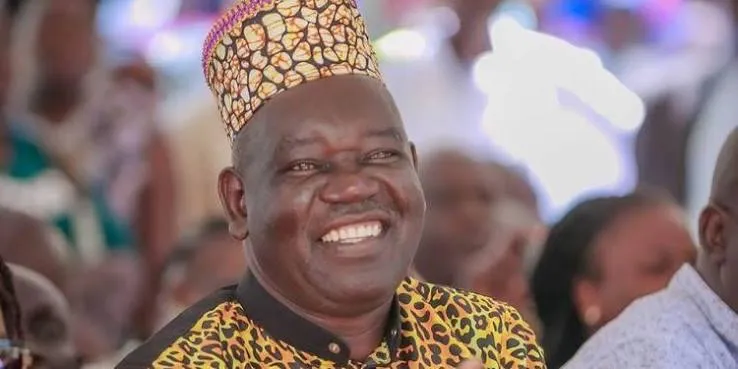
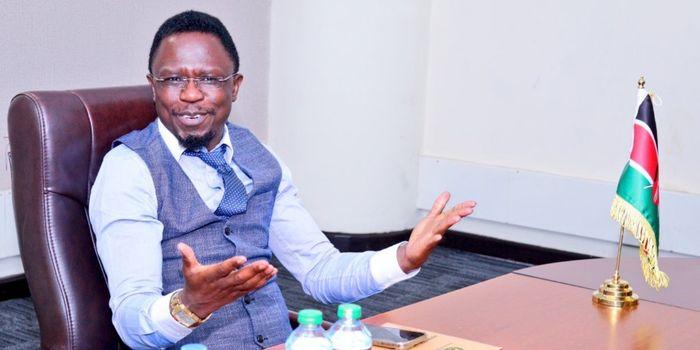
More than 500 Orange Democratic Movement (ODM) leaders have reportedly resolved to abandon the party after a consultative meeting led by Hon. Oku Kaunya, opening a new front of internal dissent over party management, political inclusion, and the distribution of leadership opportunities in Busia County.
The declaration places ODM under scrutiny in Teso North, where the participating leaders say their grievances go beyond individual political ambitions to a fundamental question of representation: who has a voice in the party, who controls its leadership, and whose interests does it serve?
At the center of the dispute is what the leaders describe as the personalization of ODM, an allegation that the party's management has become insufficiently inclusive and that minority and historically marginalized communities are not adequately represented in its leadership structures.
Their resolution to leave, if translated into formal resignations and sustained political mobilization, could disrupt local party networks and force ODM officials to confront uncomfortable questions about internal democracy.
But the numbers and political consequences remain to be independently established. The meeting's declaration is evidence of organized dissent among its participants, not proof that all 500 have formally resigned or that the wider Teso North electorate shares their position.
Nevertheless, the message from the meeting is unmistakable: the participating leaders want their concerns heard, their communities represented, and their place in the party's decision-making structures addressed.
THE ACCUSATION: A PARTY THAT HAS LOST TOUCH WITH ITS GRASSROOTS?
Political parties often speak the language of democracy, inclusion, and representation. The harder test is whether those principles are reflected in their internal operations.
For the Teso North leaders, that is precisely where they believe ODM has fallen short.
They argue that political organizations should belong to their members and serve collective interests rather than become instruments through which a few individuals exercise influence over leadership and decision-making.
Their criticism raises questions about how party decisions are made, how leadership positions are distributed, and whether local members have effective channels through which to challenge decisions they consider unfair.
These are serious allegations, but they remain the position of the dissenting leaders. Without a response from ODM's Busia leadership, it would be premature to conclude that the party has deliberately excluded particular communities or that its leadership structures have been captured by individuals.
The party's response will therefore be important in determining whether the dispute reflects unresolved internal grievances, competing political interests, or a deeper breakdown in confidence between grassroots leaders and the party establishment.
What is clear is that the participants have placed internal democracy at the center of their complaint.
Their demand is for a structure in which representation is not merely promised in political speeches but reflected in meaningful participation.
THE MINORITY REPRESENTATION QUESTION
The dispute also touches on a sensitive issue in Busia County politics: how political organizations accommodate different communities and ensure that minority groups have a meaningful role in leadership.
The participating leaders insist that inclusivity and equitable representation should guide the management of political parties.
Their position raises an important question for ODM and other political organizations operating in socially diverse areas: can a party sustain broad-based support if some of its local leaders believe their communities have little influence over decisions affecting them?
Representation is not simply about occupying positions. It also involves access to decision-making, consultation over political priorities, and confidence that members' concerns receive fair consideration.
However, establishing whether particular communities are underrepresented requires evidence about party structures, leadership appointments, and the participation of members across the county. The meeting's allegations alone do not settle that question.
ODM now faces an opportunity to explain how its Busia structures accommodate different communities and what avenues exist for members who believe they have been sidelined.
For the dissenting leaders, the challenge is to translate their demand for inclusion into clear proposals and demonstrate how their concerns can be addressed.
500 LEADERS: A POLITICAL STATEMENT OR THE BEGINNING OF A REALIGNMENT?
The reported scale of the meeting gives the declaration political significance, but the next steps will determine its practical consequences.
If the participants formalize their departures and maintain a common political position, ODM could face the loss of experienced grassroots organizers and established local networks in Teso North.
Such networks can be important to party mobilization, communication, and community engagement. Their departure could also create space for other political formations to attract members dissatisfied with the party's management.
But a resolution adopted at a meeting is not the same as a completed political exodus.
The key questions remain unanswered: How many participants are registered ODM members? How many have formally resigned? Will they move together to another political party, remain politically independent, or seek negotiations with the existing leadership?
There is also the question of whether the reported 500 participants represent a wider movement among ordinary members or primarily reflect the position of leaders who attended the meeting.
These distinctions matter. Political declarations can generate headlines, but their lasting significance depends on what follows.
For now, the meeting demonstrates a willingness among the participants to challenge the party's management publicly. Whether that dissent develops into a sustained realignment remains to be seen.
ODM'S RESPONSE WILL MATTER.
The immediate responsibility now rests with the party's leadership to respond to the grievances raised by the Teso North delegation.
A meaningful response would require more than dismissing the complaints as political maneuvering. It would involve listening to the participants, clarifying how leadership decisions are made, and examining whether existing structures provide fair opportunities for members from different communities.
ODM should also have an opportunity to present its account of the dispute, explain its record on inclusion, and indicate whether internal mechanisms are available to resolve the disagreement.
Equally, the dissenting leaders must be prepared to substantiate their allegations and explain what changes they seek beyond their stated intention to leave.
If the dispute is rooted in genuine concerns about representation, structured dialogue could offer a route towards resolving it. If the differences prove irreconcilable, the participants may pursue their political future elsewhere.
Either way, the matter deserves scrutiny because party management and internal democracy affect how political organizations represent their members.
THE BIGGER BATTLE: WHO OWNS A POLITICAL PARTY?
The Teso North dispute goes to the heart of a recurring problem in party politics: the difference between a political organization's formal commitment to democracy and the experience of members who believe they have been excluded from its affairs.
A party's identity is shaped not only by its national leadership but also by the people who organize meetings, mobilize supporters, and sustain its presence at the grassroots.
When those members question their place in the organization, party officials face a challenge that cannot be resolved by slogans alone.
The central issue is whether the party's structures offer credible opportunities for participation, accountability, and fair representation.
For ODM in Busia County, the meeting led by Oku Kaunya has brought that question into sharp focus.
For the participating leaders, the next step is to demonstrate whether their declaration represents a firm political break or an attempt to force a conversation about their place in the party.
And for ODM, the test is whether it can address the grievances without allowing the dispute to deepen.
The final verdict will not be determined by the number announced at the meeting alone. It will depend on whether the leaders follow through, whether ODM responds, and whether the demand for inclusion produces concrete changes—or a lasting separation.
No comments yet. Be the first to share your thoughts.