
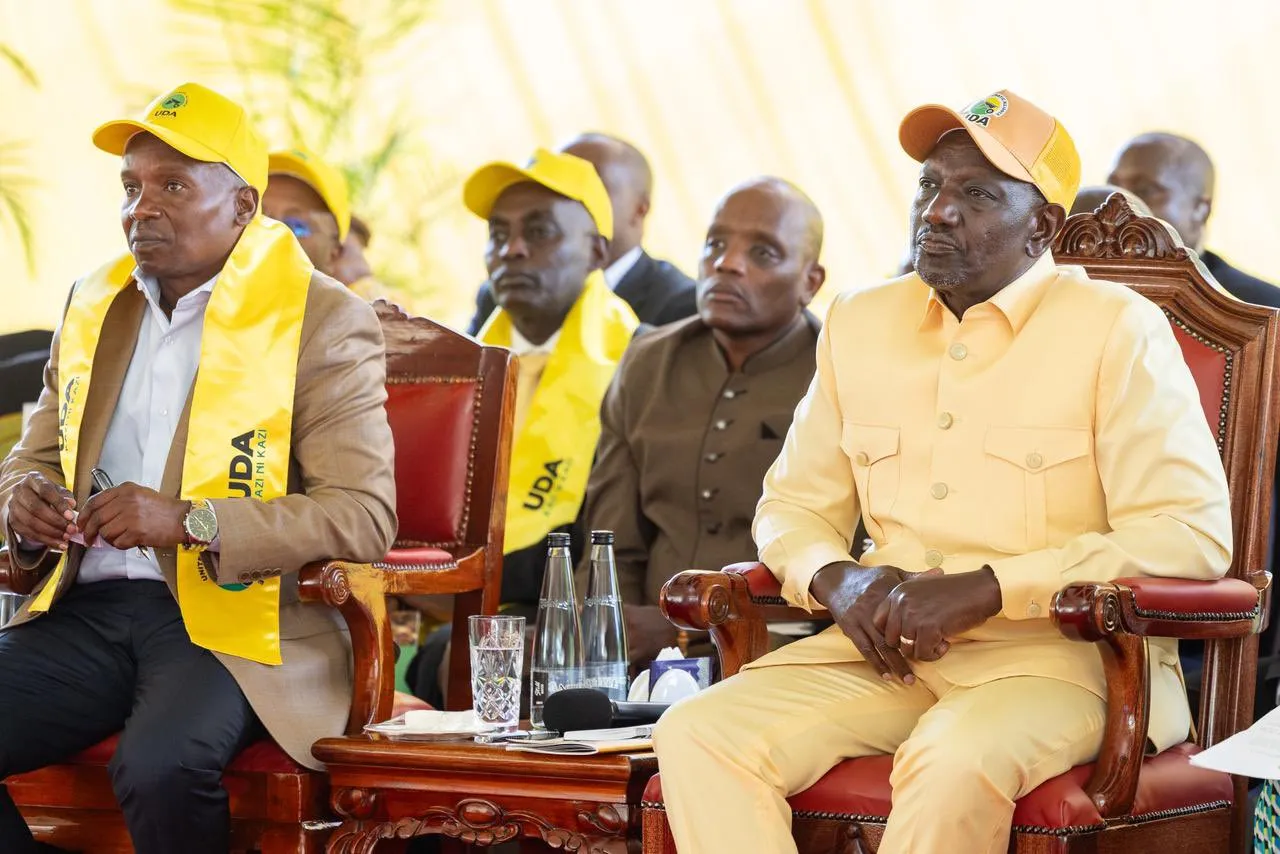
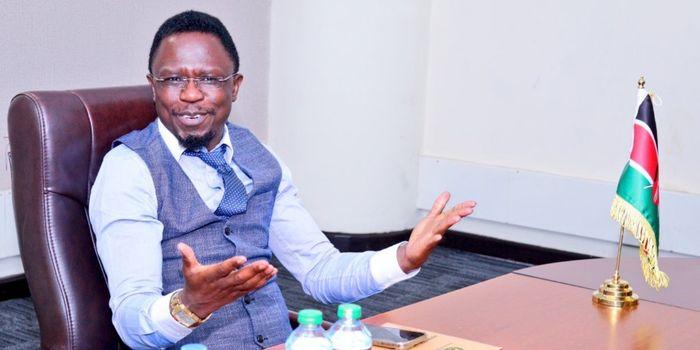
In Kenya's increasingly combustible political marketplace, there may be a new shortcut to popularity — at least according to Senior Counsel Ahmednasir Abdullahi: attack President William Ruto, and the applause will follow.
Ahmednasir's latest observation, reported as the political battle for Mt Kenya intensifies, opens a much bigger question than the lawyer may have intended.
Has criticism of Ruto become a political strategy in itself — or are politicians simply responding to genuine voter dissatisfaction in a region where the political ground has shifted dramatically?
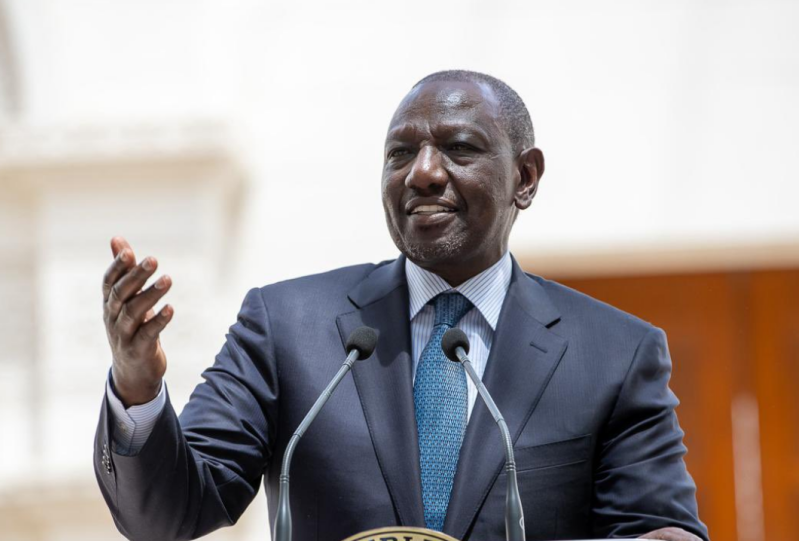
Ahmednasir argues that some politicians have discovered that attacking or insulting the President is an easy way of winning attention and approval among sections of the Mt Kenya electorate.
It is a striking claim because Mt Kenya is no longer displaying the political certainty associated with the 2022 election.
The region that once formed a critical component of Ruto's electoral coalition has become one of the most fiercely contested political theatres ahead of 2027.
And the numbers tell part of the story.
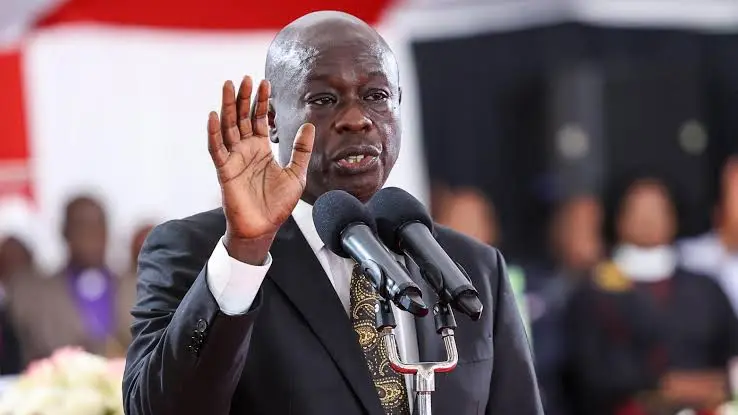
A TIFA survey conducted in May 2026 among 2,013 Kenyan adults across all 47 counties put Ruto's support in Mt Kenya at 9 per cent, while former Deputy President Rigathi Gachagua had 70 per cent recognition as the Kikuyu community's political reference point in that survey.
An Infotrak survey reported by Daily Nation in July similarly placed UDA's support in Mt Kenya at 9 per cent, with Gachagua's Democracy for Citizens Party (DCP) at 33 per cent and 36 per cent undecided.
These figures do not, by themselves, determine what will happen in 2027. Polls measure sentiment at a particular moment, and political alliances, candidates and campaign messages can change substantially before voting day.
But they demonstrate something important:
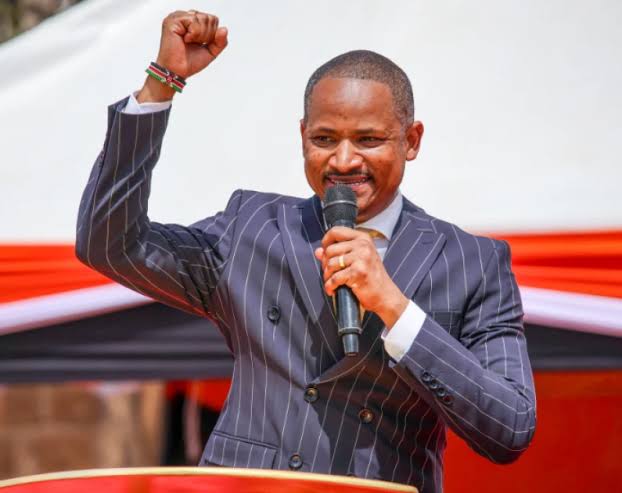
Mt Kenya is politically unsettled.
And where voters are unsettled, politicians smell opportunity.
The Ruto factor
For years, attacking a sitting President in his strongest political backyard would have carried considerable political risk.
Today, the calculation appears different.
Ruto's relationship with parts of Mt Kenya has deteriorated considerably since the dramatic fallout with his former deputy, Gachagua.
That political divorce transformed the region into a battleground.
Gachagua has subsequently built DCP into a vehicle for challenging Ruto's influence in the region. The party's victory in the July 2026 Ol Kalou parliamentary by-election gave that challenge an important electoral demonstration, after DCP's Sammy Kamau defeated UDA's John Muchina.
The significance of Ol Kalou went beyond the parliamentary seat.
It became a proxy contest.
Ruto's allies campaigned for UDA.
Gachagua campaigned for DCP.
The result consequently became part of the larger argument over who commands political influence in Mt Kenya.
That is why every speech, insult, rally and political declaration in the region is now being interpreted through the prism of 2027.
But is insulting Ruto really the secret?
This is where Ahmednasir's argument deserves scrutiny.
If politicians are indeed discovering that attacking Ruto generates applause, there are two possible explanations.
The first is the one suggested by his remarks: politicians have discovered a cheap route to popularity.
Say what the crowd wants to hear. Attack the President. Blame him for the region's problems. Turn every government decision into evidence of betrayal. Then watch the crowd respond.
The second explanation is more uncomfortable for the government.
Perhaps some politicians are not manufacturing anger.
Perhaps they are tapping into anger that already exists.
Those are two very different things.
A politician cannot manufacture every grievance simply by shouting into a microphone.
If voters are unhappy about taxation, the cost of living, employment, development priorities, appointments, perceived exclusion or broken political promises, attacking the government may resonate because people already have something to complain about.
That does not make every accusation against Ruto true.
Nor does applause make a politician's argument correct.
But it does mean the political establishment should distinguish between political opportunism and political feedback.
Kindiki's difficult assignment
At the centre of this battle is Deputy President Kithure Kindiki.
His political assignment is unusually complicated.
He must defend the Ruto administration while simultaneously rebuilding confidence in the government's relationship with a region where Gachagua has established a formidable political challenge.
Kindiki has increasingly toured Mt Kenya, presenting himself as a unifying figure and arguing that the region continues to have a significant place within government.
He has also openly linked the 2027 Ruto campaign to a possible post-Ruto political succession, saying that after another Ruto term the presidential "goalpost" would be open.
That argument carries its own political dilemma.
A voter may reasonably ask:
What exactly does Mt Kenya gain by supporting Ruto in 2027?
Is it development?
Government representation?
The Deputy Presidency?
Succession?
Or simply political continuity?
The answer will not come from insults or counter-insults.
It will ultimately depend on what voters believe serves their interests.
Gachagua's shadow
Meanwhile, Gachagua's continued political activity ensures that Ruto cannot treat Mt Kenya as settled territory.
His DCP victory in Ol Kalou has strengthened his argument that his political network remains capable of defeating the ruling party in the region. The contest has consequently become a test not only of personalities but also of competing claims over who can speak for Mt Kenya.
Yet Gachagua also faces the challenge common to regional political movements:
Can anger against an incumbent be converted into a coherent national political programme?
That question remains unanswered.
Winning a by-election is one thing.
Building a nationwide coalition capable of competing for State House is another.
The danger of the insult economy
There is a deeper issue here.
Kenyan politics has repeatedly demonstrated the danger of reducing public debate to personalities.
One politician insults another.
The other responds.
Crowds cheer.
Social media explodes.
Clips circulate.
And somewhere beneath the noise, the original question disappears.
What is the politician offering?
What is the government's record?
What would the alternative administration do differently?
How would it finance those promises?
What would it do about unemployment?
Agriculture?
Healthcare?
Education?
Debt?
Devolution?
Corruption?
The danger is that politics becomes a competition over who can produce the most entertaining insult rather than the most convincing programme.
That is particularly dangerous in Mt Kenya, where political emotions are already running high.
Recent reporting has documented increasingly confrontational political rhetoric nationally as the country approaches the 2027 election cycle.
The lesson from Kenya's electoral history is obvious: political language matters.
Words spoken at rallies do not remain at rallies.
They travel to social media.
They enter homes.
They are repeated in villages, markets and workplaces.
And sometimes they harden political disagreements into communal antagonism.
Ruto cannot be both the problem and the entire campaign
There is another irony in Ahmednasir's observation.
If politicians can become popular merely by attacking Ruto, then Ruto has acquired an unusual political centrality.
Even his opponents would still be campaigning around him.
That can become a trap for the opposition.
A political movement built entirely around anti-Ruto sentiment eventually has to answer a simple question:
What happens after Ruto?
Opposition politics cannot permanently depend on the existence of the person it opposes.
At some point, voters demand an alternative.
And that alternative must be more substantial than a louder microphone.
The real Mt Kenya contest
The 2027 battle in Mt Kenya is therefore shaping up as something larger than a personality contest between Ruto and Gachagua, or a succession contest involving Kindiki.
It is becoming a struggle over political identity, bargaining power and the future relationship between the region and national power.
Ruto's camp is arguing that Mt Kenya remains represented in government.
Gachagua's camp is building a case around political betrayal and regional interests.
Kindiki is attempting to position himself as the bridge between government and the Mountain.
Other politicians are trying to establish their own political identities in the same crowded space.
And Ahmednasir has now thrown another provocative idea into the debate: that Ruto-bashing itself has become a political currency.
Perhaps he is right about the tactic.
But the bigger question is why that tactic appears to resonate.
If the answer is merely political opportunism, the noise will eventually fade.
If the answer is genuine voter dissatisfaction, then insulting politicians will not solve the problem.
Neither will counter-insults.
The politicians who eventually command attention in Mt Kenya will have to confront something far more difficult than a microphone and a hostile slogan:
the voters themselves.
They will have to explain what they want for the region, what they want for Kenya, and how they intend to deliver it.
Because applause is easy.
Winning trust is much harder.
This version keeps Ahmednasir’s claim clearly attributed while separating it from the available polling and electoral evidence. It also avoids treating current polling as a prediction of the 2027 result. �
The Standard +1
No comments yet. Be the first to share your thoughts.