

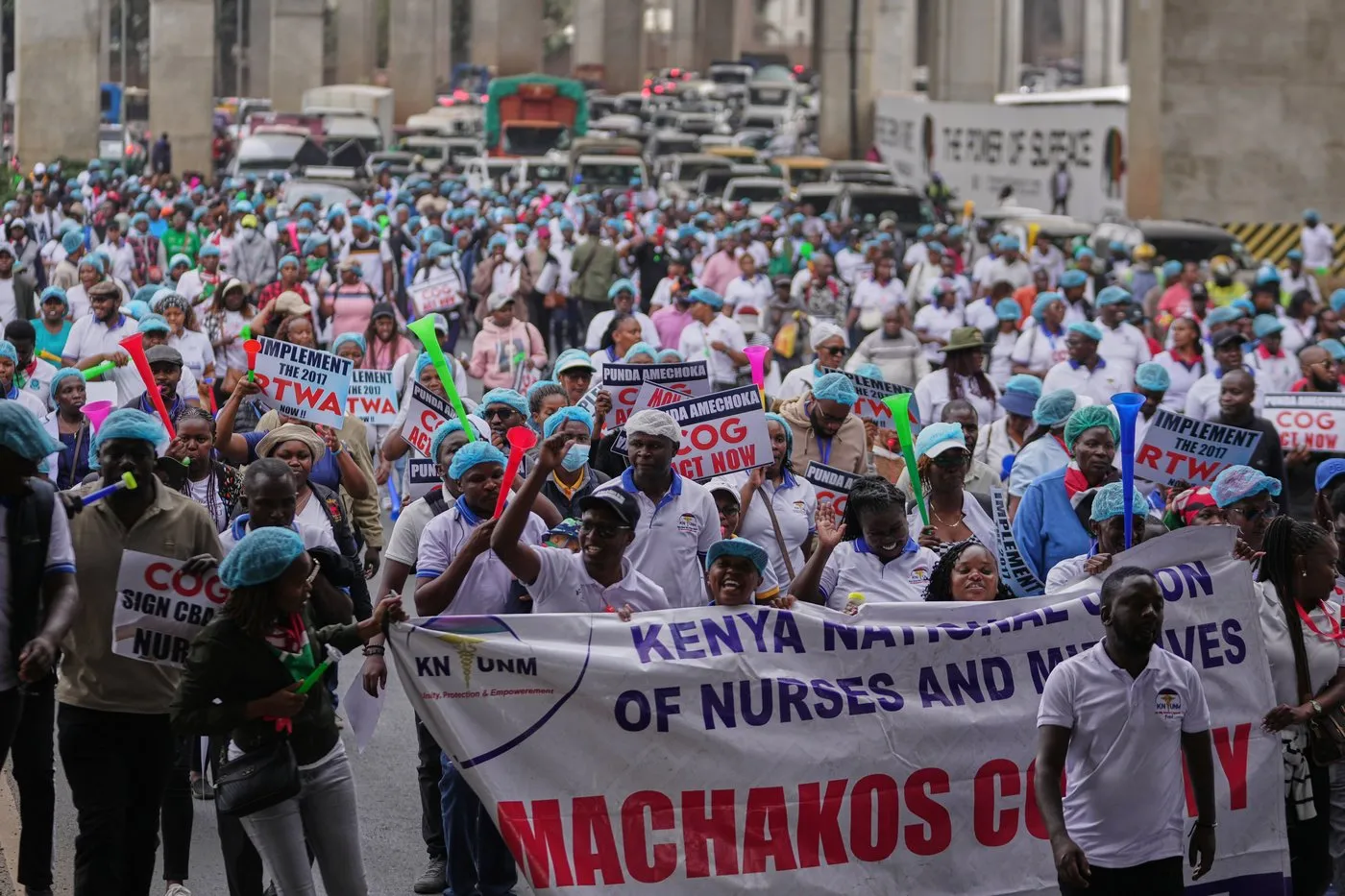
Kenyan nurses have called off their 43-day strike after signing a return-to-work agreement with the government, offering relief to patients and families who have faced weeks of disrupted services in public hospitals.
The agreement gives the government, counties and nurses’ representatives a 45-day period to conclude the implementation of a collective bargaining agreement first negotiated in 2017. That agreement has remained a source of tension for years, with health workers arguing that key commitments were delayed or ignored.
During the strike, many public facilities were forced to operate with reduced capacity. Doctors, clinical officers and support staff were left to absorb the pressure, while patients seeking maternity services, chronic-care treatment and emergency care faced long waits or were forced to seek expensive alternatives.
Doctors had also warned that they could issue a strike notice, saying they were carrying an unsustainable workload as they attempted to fill gaps created by the nurses’ absence.
The return of nurses should restore services gradually, but it does not solve the deeper weaknesses exposed by the crisis. Health is managed largely by county governments, meaning the quality and speed of recovery may differ from one county to another.
For counties such as Busia, where many residents rely heavily on public facilities, the priority will be ensuring that dispensaries, health centres and referral hospitals are fully staffed and supplied. The bigger question is whether the new deal will be honoured before frustrations again push health workers toward industrial action.
For patients, the end of the strike is welcome news. For the government and county administrations, it is now a test of whether promises on staffing, pay and working conditions can finally be turned into lasting reform.


No comments yet. Be the first to share your thoughts.