
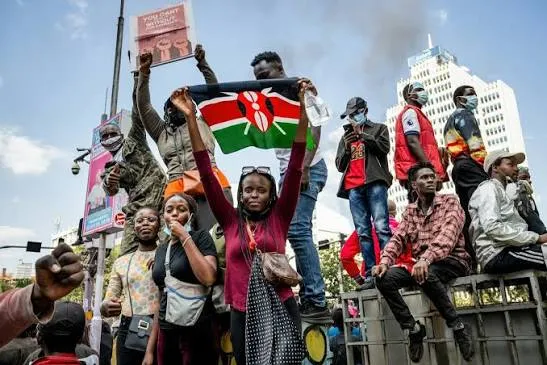
Kenya has developed a dangerous habit.
It asks questions.
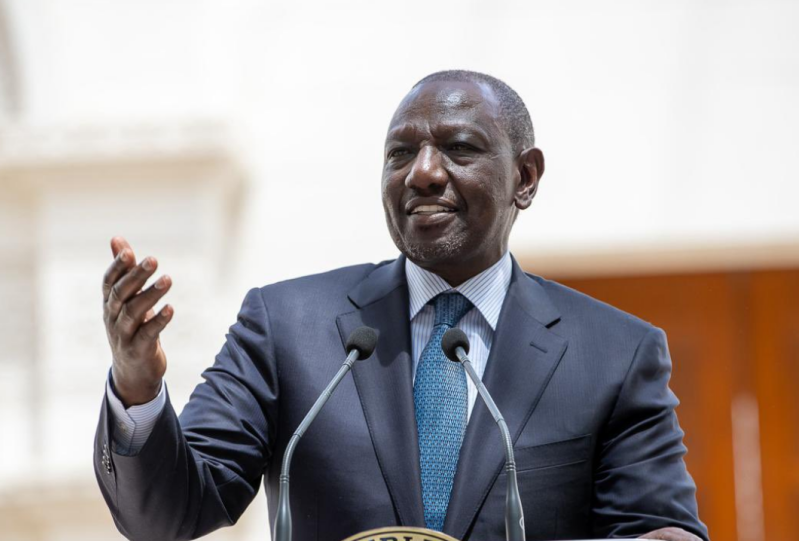
Not the useful kind.
Not questions about who gets the contract, who owns the land, who pays for the infrastructure, where the money comes from or where the profits eventually go.
No.
Kenya asks the kind of questions that make powerful people uncomfortable.
Where will the crude come from?
Who owns the refinery?
Who benefits?
How many jobs will actually go to Kenyans?
What happens if the promised investment does not arrive?
Who pays when the numbers on the billboard refuse to become numbers in the bank?
These are dangerous questions.
They are especially dangerous when the project comes wrapped in the magic words:
Sh2 trillion.
Suddenly, arithmetic becomes patriotism.
A billion becomes development.
A mega-project becomes a national prayer.
And anyone who asks for the workings of the equation risks being accused of not believing in Kenya. This is how the questioning metaphor works. Kenya is the child who raises a hand in class.
The teacher has just announced that the school is receiving a magnificent new laboratory.
The government says it will create thousands of jobs.
The contractor says it will transform the village.
The businessman says it will make everyone prosperous.
And Kenya raises its hand.
“Excuse me, sir…”
The room falls silent.
“Where is the money coming from?”
Wrong question.
“Who owns the building?”
Wrong question.
“Who chose the contractor?”
Wrong question.
“Can we see the agreement?”
Very wrong question.
“Who benefits?”
Now you are clearly a troublemaker.
The proper Kenyan response is apparently to clap.
Clap when the ribbon is cut.
Clap when the President arrives.
Clap when the billionaire arrives.
Clap when the artist performs.
Clap when the minister announces 60,000 jobs.
And, above all, clap before anyone asks where the 60,000 jobs actually went.
We have turned applause into a development policy.
Questions, meanwhile, have become sabotage.
A citizen asks for details.
He is told to support development.
A journalist asks for documents.
She is told not to discourage investors.
A resident asks about land.
He is told to think about the bigger picture.
A lawyer goes to court.
He is told the country cannot afford delays.
Apparently, development has become allergic to paperwork.
This is where Kenya's great national contradiction appears.
We want foreign and domestic investors to trust Kenya.
But we are sometimes encouraged to trust investors without asking investors to explain themselves.
We want billions.
But we are suspicious of the person who asks where the billions will flow.
We want jobs.
But asking who gets those jobs can suddenly sound like hostility to employment.
We want industrialisation.
But asking who owns the factories becomes an act of economic negativity.
We want transformation.
But asking “transformation for whom?” is apparently too complicated.
And so the Kenyan citizen learns a new civic discipline:
Look at the size of the investment.
Do not look too closely at the agreement.
Look at the number of jobs.
Do not ask about the contracts.
Look at the refinery.
Do not ask who supplies it.
Look at the President cutting the ribbon.
Do not ask who wrote the terms.
It is a remarkable country in which the announcement is treated as evidence. The promise is treated as delivery. The projected job is treated as employment. And the proposed investment is treated as if the money has already arrived. Perhaps that is why questions are so dangerous. Questions slow down the photograph.
And modern politics loves photographs. The President standing beside the billionaire.
The machines in the background.
The hard hats.
The flags.
The handshake.
The enormous number printed in enormous letters.
SH2 TRILLION.
What a beautiful picture.
Then comes the irritating journalist.
“Can we see the numbers?”
The picture begins to wobble.
“Where is the crude coming from?”
Someone clears his throat.
“Who owns what?”
The photographer suddenly discovers that the lighting is poor.
“What happens to the landowners?”
The microphone mysteriously develops a problem.
And when the journalist refuses to stop, the accusation arrives:
You are against development.
No. The journalist is against being impressed by a PowerPoint presentation. There is a difference.
Kenya does not need fewer investments.
Kenya needs more questions about investments.
It does not need fewer billionaires.
It needs stronger institutions around billionaires.
It does not need politicians to stop courting capital.
It needs citizens who can ask what the courtship produces.
That is the point of the metaphor.
Kenya is not the investor. Kenya is the house.
And when somebody proposes to build a magnificent new wing onto your house, you are allowed to ask:
Who owns it?
Who paid for it?
Who gets to use it?
Who maintains it?
What happens if the builder leaves?
And, before handing over the keys: Can I see the contract?
That is not ingratitude. That is adulthood.
So, perhaps I owe Alhaji Dangote another apology. Not because I asked questions.
But because I briefly forgot that in Kenya, asking questions about a Sh2 trillion project can make you sound like the only person in the room who has not been invited to the celebration. I have now learned the rules.
When the billionaire arrives, applaud.
When the politician speaks, applaud.
When the number gets bigger, applaud harder.
When somebody says “jobs,” stop counting.
When somebody says “transformation,” stop asking for the beneficiaries.
And when somebody asks the obvious question—
“But who pays, who owns and who benefits?”—please lower your voice.
You might frighten the investment. Or worse: you might make Kenya remember that development is not something citizens are supposed to applaud.
It is something they are entitled to question.
No comments yet. Be the first to share your thoughts.