

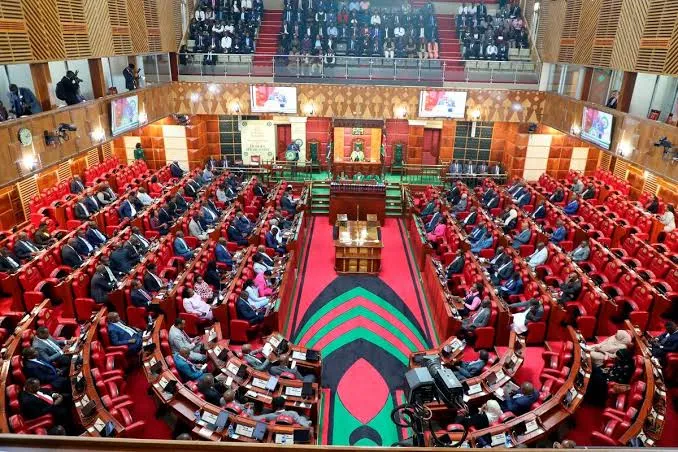
The country is quietly but unmistakably entering an election season before the election itself has even officially begun. With less than a year to the August 2027 General Election, almost every major story in the country—from the economy to healthcare, weather to foreign policy—is being filtered through a single question: what does this mean for 2027?
The political temperature has been rising steadily. President William Ruto and his United Democratic Alliance (UDA) are facing strong headwinds, with analysts pointing to an electorate that is younger, more impatient, and far less loyal to traditional party structures than before. The country's electoral body has already set the stage: the Independent Electoral and Boundaries Commission (IEBC) has confirmed that Kenya will hold its fourth General Election under the 2010 Constitution on August 10, 2027, and is targeting an ambitious 6.3 million new voters, with a strong reliance on technology for voter identification and results transmission. International partners are watching closely—Germany has already publicly pressed Kenya to ensure the 2027 polls are peaceful and credible, a sign of how much external confidence is riding on the process.
But the political story is bigger than just Ruto versus whoever emerges to challenge him. The opposition space is in flux, with former Deputy President Rigathi Gachagua repositioning himself as a leading government critic and Raila Odinga's future plans remaining the subject of endless speculation. What has changed most dramatically, however, is the electorate itself. The Gen Z generation that rocked the country with protests in 2024 has not gone away—it has matured into a political force that parties can no longer afford to ignore. Their concerns are less about party manifestos and more about jobs, taxes, dignity, and accountability, and they are organizing online with a speed and creativity that traditional political machines are struggling to match.
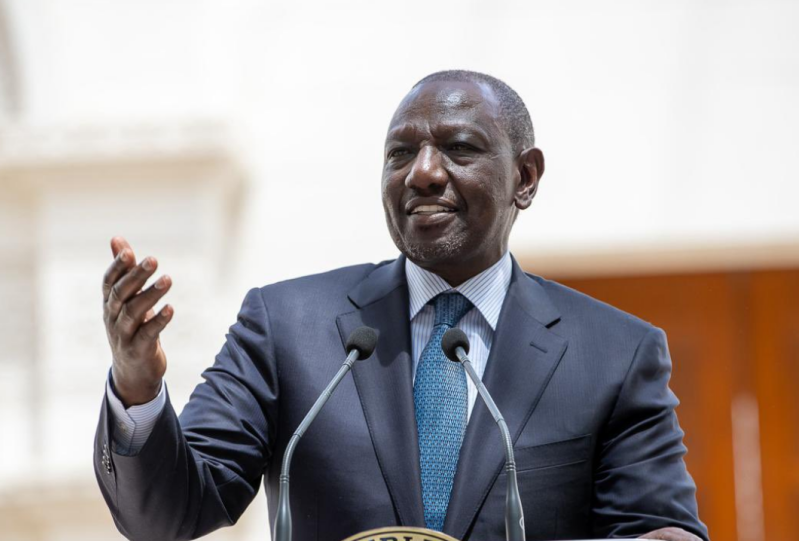
Away from the political arena, there is cautious optimism about the economy. The International Monetary Fund projects Kenya's real GDP growth at 4.5% in 2026, with inflation expected to settle around 5.9%. Early signs suggest the recovery is gaining real momentum: economic growth accelerated to 5.3% year-on-year in the first quarter of 2026, driven by agriculture, accommodation, mining, construction, and financial services, while the Central Bank of Kenya held its benchmark rate steady at 8.75% in August. For businesses and investors, the numbers tell a story of resilience. For ordinary Kenyans, however, the story is more complicated—the cost of living remains punishing, and surveys consistently place unemployment, weak public services, and debt among the country's most pressing risks.
Healthcare is another sector at a crossroads. October 2026 marks roughly the second anniversary of the Social Health Authority (SHA), which formally began operations on October 1, 2024, taking over from the National Health Insurance Fund and managing the Social Health Insurance Fund, the Primary Health Fund, and the Emergency, Chronic, and Critical Illness Fund. The anniversary is reigniting debate about whether the new system is delivering on its promise of universal health coverage—or whether contribution demands are outpacing the services patients actually receive. Hospitals, employers, and county governments are all still adjusting to the transition, and for millions of Kenyans, the quality of care they experience in the coming year will be one of the loudest campaign issues.
Nature, too, is demanding attention. The Kenya Meteorological Department has forecast rainfall across dozens of counties in the first full week of October 2026, even as some northern regions brace for extreme heat above 35°C. The short rains are always a double-edged sword in Kenya: they bring relief to farmers and refill reservoirs, but they also bring the threat of flooding, destroyed roads, and displaced families in low-lying areas. With agriculture having contributed to the strong first-quarter growth figures, the performance of this season's rains will have a direct bearing on food prices and rural incomes heading into the election year.
Meanwhile, Kenya's digital transformation continues at a breakneck pace, even as it exposes the country's inequalities. The country recorded 77.5 million mobile connections in late 2025—equivalent to 134% of the population—while internet penetration reached 40.5%. Mobile money, e-commerce, digital content creation, and online political mobilization are reshaping daily life, but tens of millions of Kenyans remain on the wrong side of the digital divide. That gap matters enormously in an election cycle, because the citizens most active online are not always the ones most affected by the policies being debated.
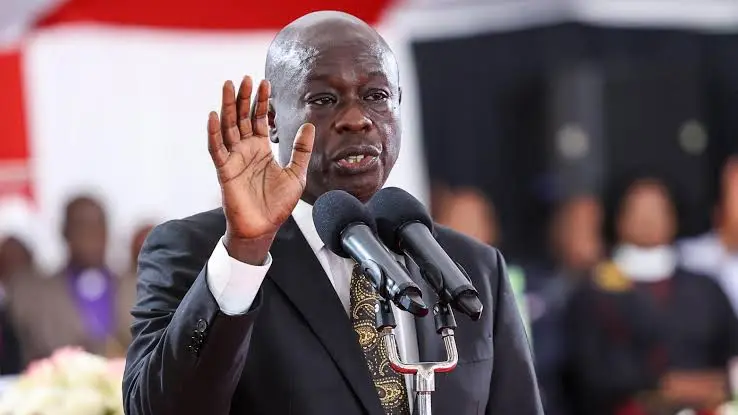
Trust between citizens and the state remains perhaps the most fragile trend of all. Following the 2024 protests, rights monitors have documented a more restrictive environment, with reports of threats, abductions, and enforced disappearances—allegations the government denies. This unresolved tension sits beneath almost every national conversation, from police reform to media freedom, and it explains why public skepticism runs so high even when official economic indicators improve.
On the global stage, Kenya is enjoying a rare moment of leverage. Foreign powers are courting Nairobi on everything from trade and security to critical minerals, with open questions including a potential US minerals deal, regional trade disputes such as Sudan's ban on Kenyan goods, and how the 2027 election outcome could reshape Kenya's international alliances. The government has positioned itself as a non-aligned bridge between Washington, Beijing, Brussels, and the Gulf, and that balancing act has so far paid diplomatic dividends—though sustaining it through a heated election season will test Kenya's statesmanship.
Taken together, these threads paint the picture of a nation in motion. Kenya in October 2026 is growing economically but grumbling politically, digitizing rapidly but unequally, and preparing for an election that could either consolidate the current order or upend it entirely. The hashtags will change from week to week, but the underlying questions—jobs, justice, health, food, and faith in institutions—will define the conversation all the way to August 2027. For anyone watching Kenya, now is the time to pay attention, because the story of the next decade is already being written in the debates of today.
No comments yet. Be the first to share your thoughts.