
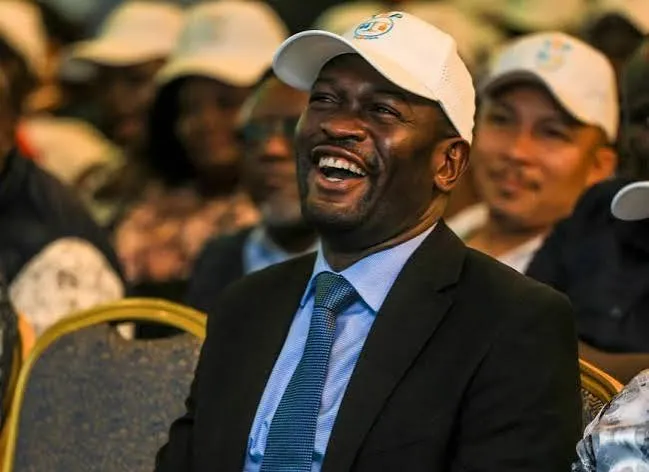
At 44, Nairobi Senator Edwin Sifuna is being advised to wait before seeking Kenya’s presidency. Nearly six decades ago, however, a generation of young political leaders was already negotiating the country’s independence, challenging colonial authority and shaping the foundations of the modern Kenyan state.
Among them was Tom Mboya, the charismatic trade unionist and nationalist who had risen to international prominence before turning 30.
The contrast raises a difficult question for Kenya’s political establishment: when did age become a barrier to leadership, and who determines when a politician is sufficiently experienced to aspire to the presidency?
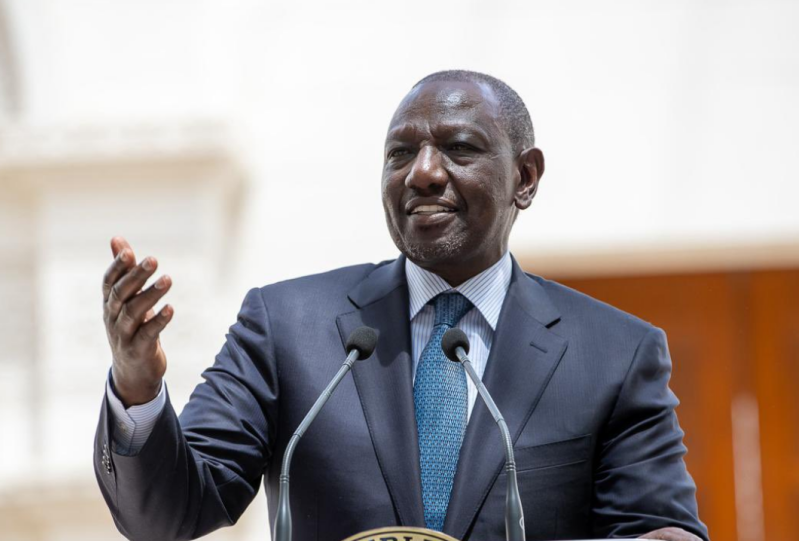
The question has gained renewed significance following remarks by Central Organisation of Trade Unions (COTU) Secretary-General Francis Atwoli, who told Sifuna that the time was not yet right for him to pursue the presidency in the 2027 General Election.
Atwoli acknowledged Sifuna’s political potential but argued that the Nairobi senator needed more preparation and a stronger political organisation before making a serious presidential bid. His remarks were reported in September 2026.
But when the argument is examined against Kenya’s political history, a more complicated picture emerges.
Is the objection really about Sifuna’s age? Is it about his experience? Or does it reflect an established political culture in which senior figures expect younger leaders to wait for permission before challenging for the country’s highest office?
The distinction matters because the Constitution provides a legal framework for presidential eligibility, while questions about political experience, national support and organisational capacity require a separate assessment.
THE MBOYA TEST: WHEN YOUNG LEADERS CHALLENGED AN ENTIRE SYSTEM
To understand the present controversy, it is necessary to revisit the rise of Tom Mboya, one of the most influential figures in Kenya’s independence struggle.
Born on August 15, 1930, Mboya was only 23 when he assumed leadership of the Kenya Federation of Labour in 1953. By 1957, aged 27, he had been elected to the colonial Legislative Council, becoming one of the prominent African voices challenging the political arrangements that maintained colonial power.
His rise was not simply a story of youthful ambition. It was a demonstration of how political influence could be built through trade union organisation, negotiation, international engagement and sustained confrontation with an unequal political system.
In December 1958, at approximately 28, Mboya chaired the All-African Peoples’ Conference in Accra, Ghana, a gathering of nationalist leaders seeking to advance the continent’s liberation from colonial rule.
The conference placed a young Kenyan trade unionist at the centre of a continental political movement.
By 1958, the international magazine TIME was describing him as a 27-year-old labour leader whose nationalist politics posed a serious challenge to British colonial authority in Kenya.
Consider the historical implications.
Mboya was not waiting until he reached his forties to enter the national political arena. He was building influence while still in his twenties, at a time when Africans were fighting for the political rights that would eventually make self-government possible.
His authority came from his involvement in organised labour, his political activism, his negotiating skills and his growing international profile.
He was also operating in circumstances fundamentally different from those confronting politicians in contemporary Kenya. The independence struggle demanded the dismantling of colonial institutions and the establishment of African self-government.
Nevertheless, Mboya’s experience provides an important historical test for arguments that young leaders should automatically defer their ambitions until they reach a particular age.
If a politician could be entrusted with consequential responsibilities in his twenties during the independence struggle, why should a 44-year-old senator automatically be considered too young to seek the presidency today?
The answer cannot be supplied by age alone.
WHAT WAS MBOYA DOING WHEN KENYA APPROACHED INDEPENDENCE?
The comparison becomes more revealing when Mboya’s age is placed against the political milestones leading to independence.
In 1960, he became secretary-general of the Kenya African National Union (KANU), the nationalist party that would form the government after independence. He also participated in the Lancaster House negotiations that helped determine Kenya’s constitutional future.
In 1962, he became Minister for Labour. By independence in 1963, he was serving in the national government and would subsequently hold the Justice and Constitutional Affairs portfolio before becoming Minister for Economic Planning and Development.
Mboya was 32 when Kenya attained independence on December 12, 1963, and turned 33 the following year.
This is an important distinction: Mboya was younger than Sifuna when he entered the independence-era leadership establishment, but he had accumulated substantial political and administrative experience by the time independence arrived.
The comparison, therefore, is not that Mboya and Sifuna have identical careers or qualifications.
They do not.
Rather, it is that Mboya’s history challenges the proposition that age itself should determine when a person may aspire to consequential political leadership.
Mboya had built his credentials through organised labour, electoral politics, constitutional negotiations and ministerial service.
His career also demonstrates that youthful leadership need not mean an absence of experience. Experience can be accumulated through responsibility, public engagement and participation in institutions.
The question for contemporary Kenya is whether its political culture allows younger leaders to acquire that experience through genuine responsibility or expects them to remain subordinate until established political figures consider them sufficiently seasoned.
THE SIFUNA QUESTION: WHAT EXACTLY IS HE BEING ASKED TO WAIT FOR?
Sifuna’s situation presents a different set of circumstances.
As Nairobi senator and a prominent figure in national political debates, he has occupied an important position within Kenya’s contemporary opposition politics. His supporters may interpret his public profile as evidence that he deserves an opportunity to pursue higher office, while critics may question whether he has built the national political machinery required for a presidential campaign.
Those are legitimate subjects for public scrutiny.
A presidential candidate must confront questions about economic policy, national security, public finance, unemployment, healthcare, agriculture, constitutional governance and the management of competing regional interests.
A senator’s experience does not automatically establish preparedness for the presidency. Neither, however, does a relatively short period in elective office automatically establish the opposite.
The critical issue is what a prospective candidate has demonstrated, what remains untested and whether the candidate can assemble a credible national programme and organisation.
Atwoli’s September remarks placed the emphasis on Sifuna’s readiness and the timing of his ambitions. They did not establish that age alone legally disqualifies him from seeking office.
This distinction is central to the investigation.
If the argument is that Sifuna lacks sufficient national organisation, political alliances or administrative experience, those concerns should be identified and examined individually.
If the argument is simply that he is too young, the historical record raises an obvious challenge.
Kenya has no shortage of politicians who have occupied public office for decades. Yet length of service is not, by itself, proof of sound judgment, integrity, policy competence or effective leadership.
Equally, youth is not proof of competence.
The public deserves an assessment based on evidence rather than assumptions attached to age.
THE CONSTITUTIONAL QUESTION: DOES 44 DISQUALIFY A PRESIDENTIAL ASPIRANT?
Kenya’s constitutional framework provides a useful starting point for separating political opinion from legal eligibility.
Article 137 of the Constitution establishes the qualifications for election as President. Among other requirements, a presidential candidate must be qualified to stand for election as a member of Parliament. The Constitution does not prescribe an upper age threshold for presidential candidates.
The legal question is therefore whether a candidate meets the constitutional and statutory requirements for election, not whether a veteran politician believes the candidate should wait.
However, constitutional eligibility does not guarantee political viability or establish that a candidate possesses the necessary leadership qualities.
A candidate may be legally eligible but lack a nationwide political organisation. Another may have extensive political experience but struggle to articulate a convincing programme for governing the country.
Those are matters for political examination, public debate and ultimately the electoral process.
The distinction should not be lost in the argument over Sifuna.
Atwoli is entitled to express his assessment of the senator’s readiness. Sifuna and his supporters are equally entitled to challenge that assessment by presenting their own arguments and evidence.
Neither position should be confused with a constitutional determination.
THE HISTORICAL IRONY: MBOYA WAS BUILDING INFLUENCE BEFORE 30
There is another dimension to the Mboya comparison.
His political career demonstrates that leadership is not simply a product of age. It is also a product of opportunity, political organisation and the willingness of institutions to entrust individuals with responsibility.
Mboya’s trade union leadership gave him a platform from which he could organise workers, negotiate with authorities and engage political movements beyond Kenya.
His international connections helped him advance educational opportunities for East African students through the student airlift initiatives associated with the African-American Students Foundation. The programme helped students access higher education in the United States and Canada.
These were practical undertakings, not merely declarations of ambition.
His career also unfolded amid disagreement, political competition and controversy. He was not universally supported, and his approach to the independence struggle drew criticism even from fellow African political figures.
A serious historical comparison must acknowledge those complexities rather than turn Mboya into a flawless political icon.
Nevertheless, the trajectory of his career demonstrates that a young politician could acquire national and international responsibilities well before reaching middle age.
It also suggests that political experience should be assessed through actual responsibilities and achievements rather than the passage of time alone.
For Sifuna, the relevant question is not whether he can reproduce Mboya’s career. It is whether the public can evaluate his own record without age becoming a substitute for examining the substance of his politics.
THE GENERATIONAL QUESTION: WHO OWNS KENYA’S POLITICAL FUTURE?
The debate extends beyond one senator and one trade union leader.
Kenya’s political establishment has long included leaders who built their careers during earlier political eras. Their experience may be valuable, particularly in understanding state institutions, coalition-building and the consequences of political decisions.
But experience can also become a source of political gatekeeping when senior figures treat leadership as a privilege that younger politicians must earn through indefinite waiting.
That is the tension exposed by the Sifuna debate.
There is a difference between advising a candidate to prepare adequately and suggesting that the candidate should postpone ambition simply because established figures consider the moment unsuitable.
Preparation can be measured through policy knowledge, organisational strength, integrity, public service and an ability to engage the concerns of citizens across the country.
A vague instruction to wait is more difficult to evaluate.
How long should a politician wait? Until a second parliamentary term? Until reaching 50? Until securing the approval of established political patrons? Or until voters themselves decide that the candidate has earned their confidence?
These are not identical questions, and they should not be treated as though they are.
A democracy benefits when political experience is respected without turning seniority into an automatic entitlement to leadership.
It also benefits when ambitious younger politicians are required to explain their programmes, defend their records and demonstrate how they intend to govern.
Neither deference to age nor celebration of youth should exempt a presidential aspirant from public scrutiny.
THE VERDICT OF HISTORY: AGE IS NOT A SUBSTITUTE FOR EVIDENCE
The comparison between Edwin Sifuna and Tom Mboya does not establish that the two men possess identical qualifications, political records or ambitions.
Their careers belong to different historical periods, and the challenges they faced were different.
Mboya rose through the labour movement, challenged colonial authority, participated in independence negotiations and served in the national government. Sifuna’s political record must be examined within the institutions, opportunities and challenges of contemporary Kenya.
The historical lesson is narrower but significant.
Mboya’s career makes it difficult to defend the blanket proposition that political leadership should be postponed simply because a person is young. It also demonstrates why experience must be assessed through identifiable responsibilities and achievements.
At 44, Sifuna is older than Mboya was when he first entered the Legislative Council and chaired the All-African Peoples’ Conference. That comparison does not automatically qualify Sifuna for the presidency. It does, however, expose the weakness of treating age as a sufficient argument against his ambitions.
The more important questions concern his policies, political organisation, national appeal, integrity and capacity to govern.
Those questions should also be asked of every other presidential aspirant, regardless of age or length of service.
Kenya’s independence generation did not wait for every political elder to agree that the time had come before challenging colonial rule. Its leaders built influence by accepting responsibility and confronting the defining questions of their era.
The country has changed fundamentally since 1963. Its constitutional institutions, electorate and political challenges are different. Historical comparisons must therefore be made carefully.
But one principle remains relevant: political ambition should be judged by lawful eligibility, demonstrable preparedness and the scrutiny of citizens—not by an arbitrary assumption that a particular age automatically confers either competence or incapacity.
The question is not whether Edwin Sifuna is Tom Mboya. He is not. The question is whether Kenya can evaluate a 44-year-old presidential aspirant on the evidence of his own record, rather than asking him to wait because established political figures believe his time has not arrived.
That is the test of a political culture that claims to value both experience and democratic choice.
No comments yet. Be the first to share your thoughts.