

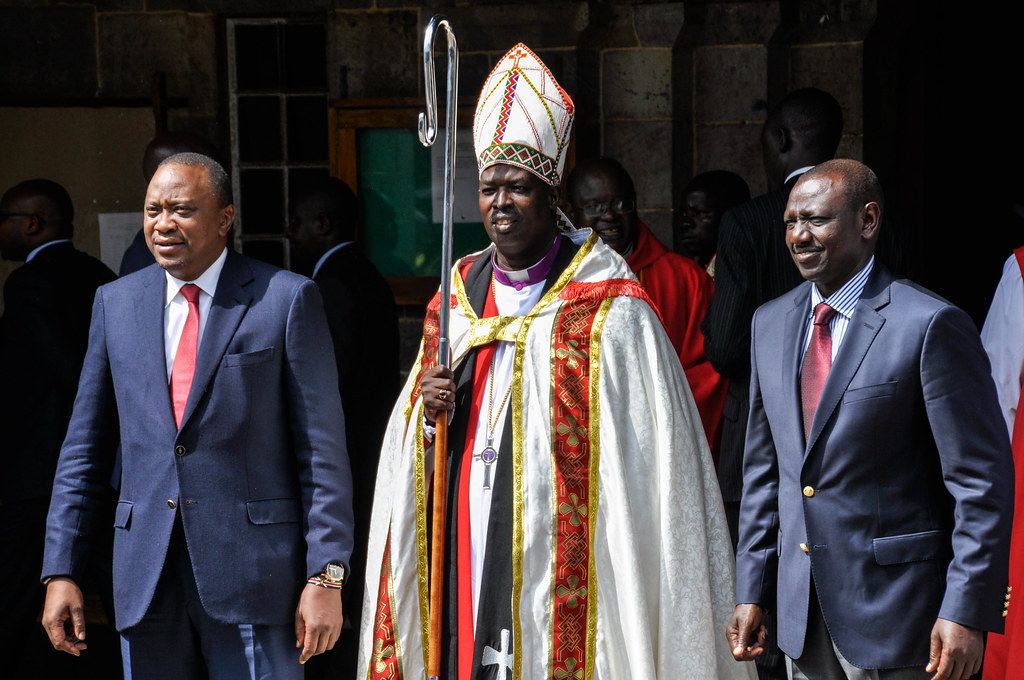
From Handshake to Bare-Knuckle Politics
The political marriage that once defined Kenya's ruling establishment has collapsed into its most bitter rivalry yet. President William Ruto escalated his long-running feud with former President Uhuru Kenyatta this week, publicly demanding that his predecessor "stop sabotaging my government" during a tour of Nyanza.
The confrontation deepened in Homa Bay, where Ruto went as far as accusing Kenyatta of financing opposition figures and working to undermine his administration. These were the most direct accusations to date in a conflict that has been building since the two men's dramatic political divorce in 2022. Ruto did not hold back, suggesting that Kenyatta's actions were diminishing the dignity of the office of a former president a pointed remark given that the two men campaigned side by side as running mates in 2013 and 2017 before their spectacular falling out.
"Life Is Becoming Dangerous"
Kenyatta has refused to absorb the attacks quietly. In response to repeated claims that he is funding groups intent on destabilizing the government before the 2027 elections, the former president issued a short but striking statement: "Life is becoming dangerous."
He has also offered his own account of how the relationship broke down. According to him, the rift began when he discovered what he describes as Ruto's plan to remove him from office before the end of his term. Ruto, meanwhile, has continued campaigning in the region with a warning aimed squarely at his rivals, declaring that "Kenyans will shock you" — a phrase that has since spread rapidly across social media.
Why Nyanza, Why Now
The choice of venue is no coincidence. Nyanza is the political homeland of the late Raila Odinga, and Ruto's tour comes as the country observes the first anniversary of Odinga's death with a week-long national commemoration expected to bring together every major opposition voice. By attacking Kenyatta while standing in Odinga's backyard, Ruto appears to be pursuing two goals at once: wooing the region's voters while sending a warning to its political leadership.
Beneath it all lies the question of 2027. Though barred by the Constitution from seeking a third term, Kenyatta still commands extensive political networks, considerable influence, and loyalty from a significant section of the electorate. Any informal alliance between the Kenyatta political machinery and a united opposition would represent the most serious threat to Ruto's re-election which explains why the President seems determined to pre-empt it.
Fighting in the Shadows of Disinformation
The feud is not only playing out at rallies and in press statements. It is unfolding in a heavily polluted information space, where fabricated graphics attributed to Kenyatta have gone viral including fake posts in which he supposedly vows to seize power by force in 2027 and hurls insults at the President. Fact-checkers have confirmed these images are doctored, but by the time corrections circulate, the damage is done. This is a war that will be fought as much on WhatsApp and Facebook as it will on the campaign trail.
What Comes Next
Several questions now hang over the country's political future. Will Kenyatta escalate further with a formal, comprehensive statement? Will the opposition rally visibly around him during the Odinga commemorations? And can Ruto sustain a campaign built on attacking his predecessor rather than defending his own record on fuel prices, the cost of living, and the economy issues that matter far more to ordinary Kenyans?
Kenya has witnessed friction between sitting and former presidents before, but rarely this early in an election cycle and rarely with such open hostility. The 2027 race, it seems, has already begun, and its first shots are being exchanged between two men who once shared the same campaign podium.
No comments yet. Be the first to share your thoughts.