


As political temperatures rise ahead of the 2027 General Election, a difficult question is emerging in Busia County: is the appeal for ethnic unity being advanced as a genuine commitment to inclusive leadership, or is it being used as a strategy for assembling votes across community lines?
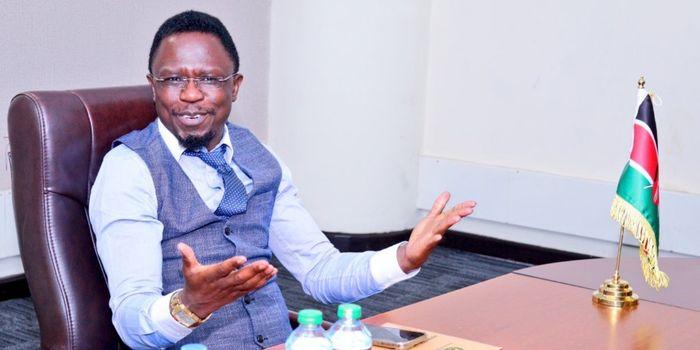
The question follows allegations concerning Arthur Osiya, a politician associated with the Teso community and aspiring to the Busia gubernatorial seat, who is reported to have urged Luhya delegates to reject tribalism while presenting himself as a candidate capable of attracting support across the county.
According to claims circulating in political circles, Osiya has visited Budalangi, Samia, and Butula, where he allegedly told residents that tribal considerations should not determine their political choices and that he had confidence in securing their support.
He is also alleged to have indicated that the Hayo, a Luhya sub-community, was the particular group he intended to engage.
Taken on its own, an appeal to voters to reject tribalism is consistent with the principles of inclusive democracy. Kenya's Constitution recognizes equality, political participation, and freedom from discrimination.
But the controversy arises from a second allegation: that Osiya has reportedly delivered a different message to sections of the Teso community, urging them to unite behind his gubernatorial ambition while he seeks to persuade Luhya voters to support his candidacy.
The claims raise questions that deserve clarification before political rhetoric is accepted as evidence of a candidate's intentions.
Is Osiya advocating a common political agenda for all Busia residents, or are different communities being approached with different expectations about who should ultimately control the county's leadership?
That is the central issue requiring answers.
One county, different political messages?
Busia's political landscape brings together communities with distinct histories, identities, and political interests. Winning a countywide election requires candidates to build coalitions that extend beyond their immediate ethnic or geographical support bases.
There is nothing inherently wrong with such coalition-building. Indeed, a candidate who can unite voters across community lines may contribute to a more inclusive political culture.
The concern emerges when appeals for unity are allegedly accompanied by messages that suggest political power should ultimately remain within one community or geographical bloc.
One account attributed to Osiya claims that he told members of his community that the Teso had previously gained access to gubernatorial power through Ojaamong, but that leadership subsequently went to a Luhya politician.
The account further alleges that he argued that the Teso should use Luhya support to regain the seat and, if successful, ensure that the position did not move beyond Ang'orom.

These are serious political allegations. They have not been independently verified for this report and should not be treated as established quotations without a recording, transcript, or confirmation from people who directly heard the remarks.
Osiya should be given an opportunity to clarify whether he made the statements attributed to him and, if so, the context in which they were delivered.
Nevertheless, the allegations raise an important question about the relationship between electoral coalition-building and the principle of equal political opportunity.
If the remarks are accurately reported, voters would be entitled to ask whether the candidate's public appeal against tribalism is consistent with the alleged suggestion that the gubernatorial seat should remain within a particular community or geographical area.
If the account is inaccurate or taken out of context, a clear response would help dispel suspicion and prevent political debate from deteriorating into ethnic hostility.
The Ojaamong question: History or political entitlement?
The reference to former Busia Governor Sospeter Ojaamong introduces another dimension to the debate: how historical political representation is interpreted in contemporary campaigns.
Political leaders routinely invoke the past to explain present-day grievances, rally supporters, or argue that particular communities deserve greater representation.
But historical participation in government does not create permanent ownership of a public office.
A gubernatorial seat belongs to the people of Busia County, who exercise their democratic right to choose a governor through an election conducted under the Constitution and electoral law.
No community has an exclusive constitutional entitlement to the office, and no other community should be expected to surrender its political ambitions because of ethnic identity.
Equally, voters should not be discouraged from supporting a candidate simply because that candidate comes from a different community.
The legitimate question is not which community has occupied State House or the governor's office in the past. It is which candidate can present a credible program, demonstrate integrity, and earn the confidence of the electorate.
Historical grievances may deserve discussion, but they should not become instruments for establishing ethnic ownership of public office.
Can anti-tribalism survive political convenience?
The controversy points to a broader challenge in Kenyan politics: the difference between rejecting tribalism as a principle and rejecting it only when it helps secure electoral support.
A candidate may legitimately appeal to voters across ethnic boundaries while retaining a strong connection to their home community. Ethnic identity alone does not establish prejudice or disqualify anyone from leadership.
The test is consistency.
Does the candidate recognize the equal political rights of all communities, including when discussing the distribution of leadership positions? Does the candidate support fair access to public opportunities? Can voters from different backgrounds expect to participate in government without being treated as temporary partners whose role ends once power is secured?
These questions are more consequential than campaign slogans.
A county government controls public resources and oversees services that affect residents regardless of their ethnicity. Roads, healthcare, agriculture, education, water, trade, and employment do not serve only the community from which a governor comes.
The same principle should apply to political representation.
Busia's residents need leadership that treats the county as a shared civic space rather than a prize to be transferred between ethnic blocs.
The danger of turning ethnicity into a bargaining chip
Ethnic coalition-building can broaden democratic participation, but it can also become divisive when communities are portrayed as instruments to be mobilized for another group's political benefit.
The suggestion that one community should help another capture power, only for that power to remain within a designated ethnic or geographical area, would raise legitimate concerns if substantiated.
It could create the impression that some voters are being invited into a coalition without being recognized as equal partners in the county's political future.
However, allegations of this nature must be handled responsibly. Unverified claims should not be used to stigmatize an entire community or provoke hostility between the Teso and Luhya populations.
The political responsibility rests with individual leaders to explain their statements and demonstrate that their ambitions are consistent with constitutional values.
Voters, meanwhile, should examine candidates' actual records, policy proposals, and public commitments rather than relying solely on ethnic loyalties or claims made by political opponents.
The questions Osiya needs to answer
The allegations present an opportunity for Osiya to clarify his position on several matters.
First, did he tell residents of Budalangi, Samia, and Butula that they should reject tribalism and support his gubernatorial ambition?
Second, did he make the alleged remarks about using Luhya support to regain the gubernatorial seat for the Teso community and keeping the position within Ang'orom?
Third, what does he mean by rejecting tribalism in practice, particularly regarding political representation and the distribution of county resources?
Finally, what is his vision for a Busia government in which residents from every community can compete for leadership and participate in decision-making on equal terms?
These questions do not presume guilt or establish that the allegations are true. They identify issues that a candidate seeking public office should be prepared to address.
A clear response would allow voters to distinguish between political rumour, misinterpretation, and statements that accurately reflect a candidate's position.
Busia needs a development contest, not an ethnic contest.
The county's political debate should ultimately be judged by what candidates propose to do for its people.
Farmers need better access to markets, affordable inputs, and reliable agricultural extension services. Young people need opportunities to work and build businesses. Families need accessible healthcare, clean water, and quality education. Traders need infrastructure and an environment that supports enterprise.
These challenges cannot be solved by deciding which ethnic community should permanently occupy the governor's office.
Nor can they be resolved through campaign appeals that promise unity without explaining how a future administration will practice it.
Candidates should set out their plans for county finances, project implementation, agricultural development, employment creation, and service delivery. They should explain how they intend to distribute resources fairly and how residents will hold their administration accountable.
The electorate should demand measurable commitments rather than accept ethnic arithmetic as a substitute for policy.
A candidate's community of origin may be part of their identity, but it should not become the principal measure of their suitability for office.
The final test: Equal citizenship
The allegations surrounding Osiya's reported statements remain matters requiring verification and a response from the politician concerned.
But the underlying democratic principle is clear: rejecting tribalism must mean rejecting ethnic exclusion, not merely seeking support across ethnic boundaries.
If a politician asks voters to rise above tribal considerations, that appeal should apply equally to the candidate's own community and political calculations.
If a candidate believes that a particular community deserves greater representation, that position should be explained openly and examined against the constitutional principle that every Kenyan has an equal right to participate in public affairs.
No candidate should be condemned on the strength of unverified allegations. Equally, no candidate should be exempt from legitimate questions about statements attributed to them.
Busia's future should not be reduced to a contest over which community can mobilise enough votes to claim permanent possession of the governor's office.
The county belongs to all its residents.
The question facing voters is not whether a Teso, a Luhya or a member of another community should lead Busia. It is whether whoever wins can govern fairly, deliver development and respect the equal political rights of every resident.
That is the standard against which the county's gubernatorial aspirants should be judged.
And if anti-tribalism is to mean anything beyond a campaign slogan, it must begin with one simple commitment: no community should be treated merely as a vehicle for another community's political ambition.
No comments yet. Be the first to share your thoughts.