

By Xavier Lugaga
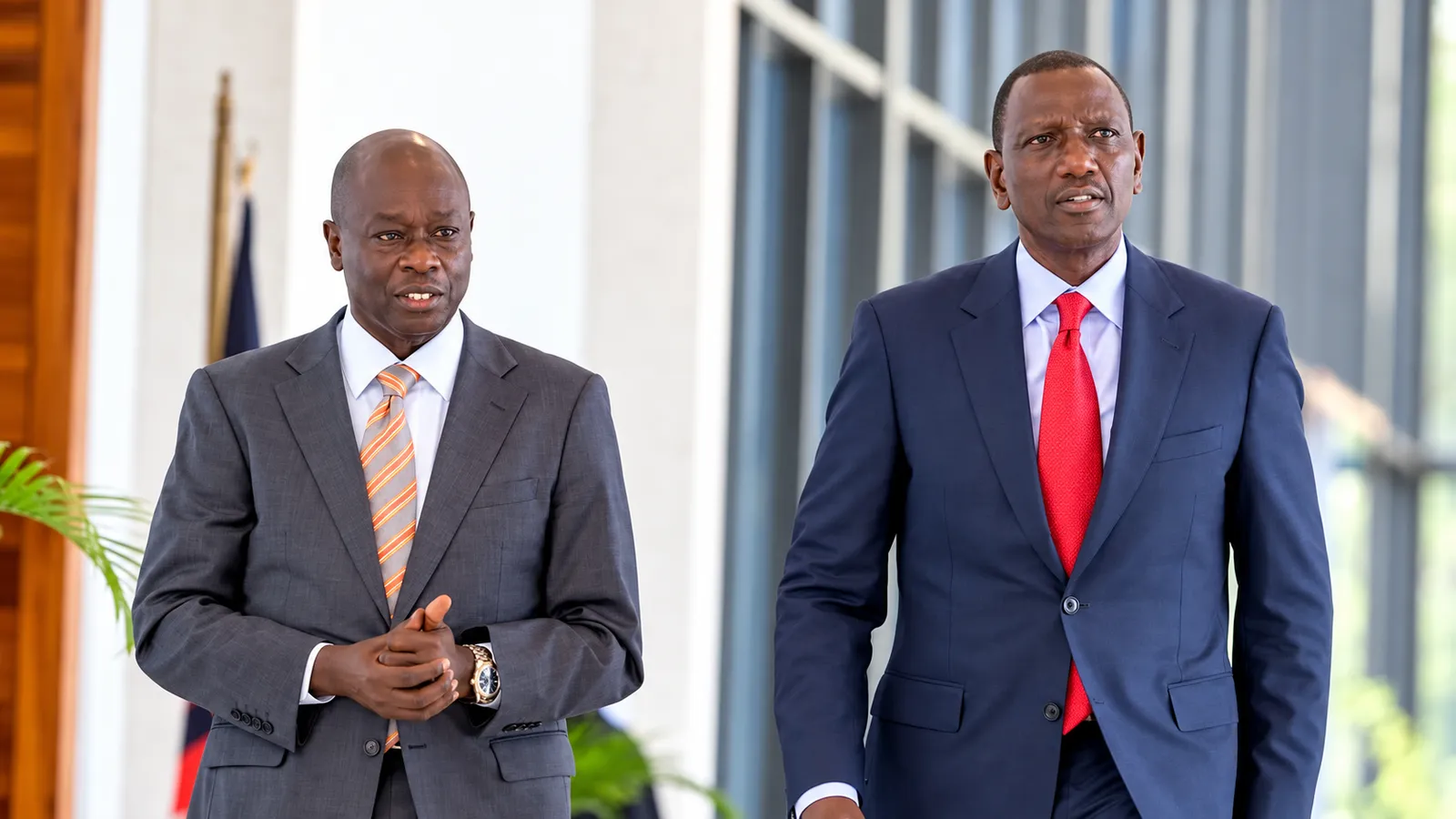
President William Ruto's October 1, 2026 interview in Mombasa took an unexpected turn when a journalist asked him to respond to former Deputy President Rigathi Gachagua's increasingly vocal claims about Kenya's mineral wealth.
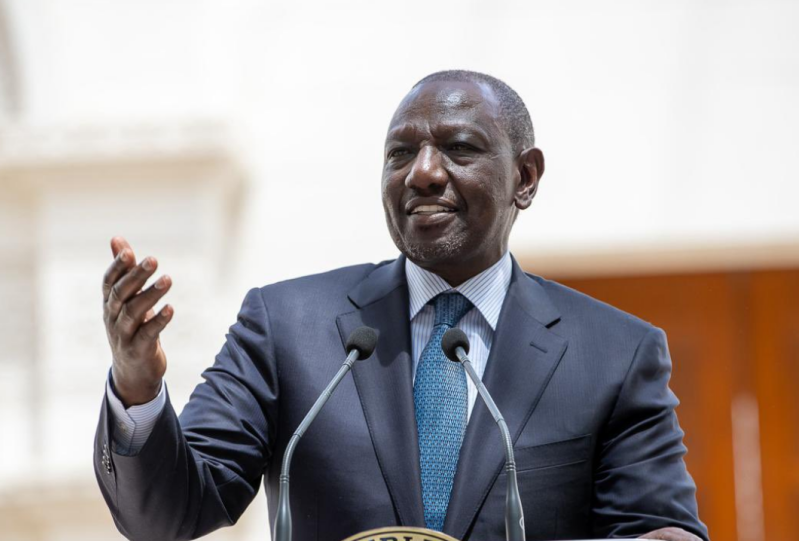
The question appeared straightforward: what did the President make of Gachagua's allegations concerning the exploitation of niobium and rare-earth minerals at Mrima Hill in Kwale County?
The response was anything but routine.
“Usiniletee maneno ya mtu mjinga kama huyo tafadhali. Tuongee maneno mengine, yule ni mpuuzi sana yule,” Ruto was quoted as saying, before shifting the conversation towards his administration's plans for the mining sector.
The exchange immediately raised a larger question.
When a political opponent makes allegations about a country's strategic natural resources, should the allegations simply be dismissed because of the person making them—or should the underlying facts be placed before the public for independent scrutiny?
That question is now increasingly difficult to avoid.
The man at the centre of the controversy
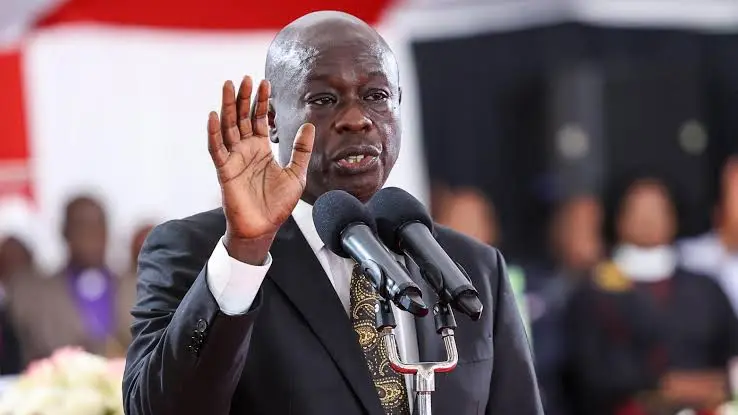
Gachagua, who now leads the Democracy for Citizens Party (DCP), has repeatedly questioned the government's plans for Mrima Hill.
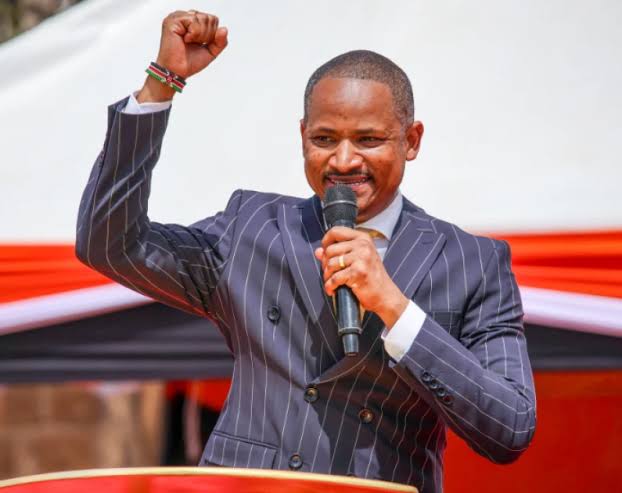
Speaking to Kenyans in the United States in September, he alleged that President Ruto's trip to New York for the 81st United Nations General Assembly was being used to advance or finalise an agreement involving American companies and the exploitation of niobium at Mrima Hill.
Gachagua claimed the deposits could be worth trillions of shillings and said he would oppose any arrangement that did not give Kenyans an adequate benefit.
He also threatened legal action over the proposed exploitation. These are political allegations by Gachagua and should not be treated as established facts.
But there is an important distinction.
While the allegations about a secret deal and alleged personal benefit remain unsubstantiated claims, the mineral project itself is real and has been under an official government process.
That is where the story becomes much bigger than the political confrontation between Ruto and Gachagua.
Mrima Hill is not a political invention
Government documents identify Mrima Hill in Kwale County as an area containing niobium and rare-earth minerals.
A government notice listed approximately 31.93 square kilometres at Mrima Hills among areas where niobium and rare-earth minerals were being sought.
The Ministry of Mining has also described niobium and rare-earth elements as strategic minerals and said the government intends to commercialise the resources through a public tender process governed by the Mining Act and related regulations.
This is significant.
It means the national conversation should not be reduced to whether Gachagua is right or Ruto is right.
There is an actual resource.
There is an actual government process.
There are potential investors.
And there is growing international interest.
The United States has publicly expressed interest in helping Kenya develop critical-mineral processing capacity, with Mrima Hill featuring prominently in discussions about niobium and rare-earth elements. Reuters reported in September that Washington was supporting development of Kenya's critical-minerals processing sector amid growing global competition for strategic minerals.
Billions beneath the ground—but how much belongs to Kenyans?
The figures surrounding Mrima Hill have generated enormous public interest.
Government-related estimates cited in recent reports include substantial quantities of niobium and rare-earth mineralisation. Reports citing tender documents have referred to an indicated resource of about 5.8 million tonnes grading 1.41 per cent niobium oxide, alongside significant rare-earth resources.
But there is an important caution.
A geological resource estimate is not the same thing as cash sitting underground waiting to be collected.
The eventual economic value depends on further exploration, recovery rates, processing technology, infrastructure, financing, environmental requirements, operating costs, commodity prices and the commercial terms of any eventual mining agreement.
That distinction is essential because political arguments can easily transform geological estimates into apparently guaranteed fortunes.
They are not.
Has Kenya already given away Mrima Hill?
This is one of the most important questions arising from the controversy.
Available government information indicates that the project has been subjected to a process aimed at identifying a suitable operator.
The government has invited qualified mining operators to participate in a competitive process for commercialisation of the Mrima Hill resource.
Mining Cabinet Secretary Hassan Joho has also previously said that no mining licence had been issued for Mrima Hills, indicating that the project remained at a preliminary stage rather than being an already operational mine.
That information complicates the political claim that Kenya's mineral wealth has already been sold.
At the same time, it does not remove the need for scrutiny.
A tender process involving strategic national resources should attract public attention precisely because decisions made at the licensing and contractual stages can determine how much value Kenya eventually captures.
The bigger question is not Gachagua
This is where the political argument should give way to public-interest journalism.
The important question is not simply whether Gachagua's allegations are true.
Nor is it whether President Ruto was justified in dismissing his former deputy.
The bigger question is:
What exactly will Kenya receive from Mrima Hill?
How will the government determine the economic value of the deposit?
Who will eventually receive exploration or mining rights?
What will the ownership structure look like?
How much revenue will go to the national government?
How much will go to Kwale County?
What benefits will go directly to communities living around the resource?
Will Kenya export raw material or process it locally?
How many jobs will be created?
What environmental safeguards will apply?
And, perhaps most importantly, will the contracts eventually signed be available for public scrutiny?
These questions do not belong to Ruto, Gachagua or any political party.
They belong to the Kenyan public.
The danger of the “resource curse”
Africa's history provides a sobering backdrop.
Natural resources can generate enormous wealth, but they can also produce conflicts over ownership, environmental degradation, unequal benefit-sharing, corruption allegations and political competition.
The discovery of valuable minerals therefore does not automatically make a community wealthy.
The difference lies in governance.
A resource-rich country can remain poor if it exports raw materials without developing domestic value chains, receives inadequate fiscal returns, or fails to protect local communities.
Conversely, minerals can become an industrial opportunity when extraction is linked to processing, manufacturing, skills development, infrastructure and transparent revenue management.
That is why Ruto's own emphasis on value addition is important to the debate.
The President has argued that Kenya should develop its processing capacity rather than simply export raw minerals. US officials have likewise spoken about processing, technology transfer, worker training and local economic benefits.
The test, however, will ultimately be in the details of implementation.
A journalist's question can be uncomfortable—and still legitimate
The most revealing part of the Mombasa exchange may therefore not be the President's choice of words.
It may be the fact that the question was asked at all.
Journalists routinely put allegations made by political actors to those accused of wrongdoing.
That does not mean the journalist endorses the allegation.
It means the person being questioned has an opportunity to accept it, reject it, clarify it or provide evidence.
In this case, the President rejected the premise associated with Gachagua and redirected the conversation towards his government's mining reforms. People Daily reported that Ruto subsequently emphasised the importance of the mining sector and measures his administration had undertaken to improve accountability.
That response should itself become part of the public record.
But so should the questions.
Kenya must look beyond political personalities
There is a danger that the Ruto-Gachagua rivalry could obscure the central economic issue.
Mrima Hill existed before the two politicians fell out.
The minerals will remain beneath the ground after today's political arguments have disappeared.
And whatever government eventually supervises their exploitation will inherit the consequences of decisions made today.
That is why Kenyans should demand documentation rather than political slogans.
If there is a tender, let the process be transparent.
If there are contracts, let the public understand their broad terms.
If there are environmental studies, let communities scrutinise them.
If there are revenue-sharing arrangements, let citizens know what they provide.
If there are foreign investors, let their identities and beneficial ownership structures be properly established.
And if allegations are made, let investigators, auditors, Parliament, courts and journalists test them against evidence.
The question beneath the question
President Ruto may have been irritated by the reference to Gachagua.
But the mineral question is unlikely to disappear simply because the political messenger is unpopular with the person being questioned.
The real issue is not whether Kenya should exploit its minerals.
It is how Kenya should exploit them.
A country that possesses strategic minerals should not merely ask who can extract them.
It should ask who benefits.
The people of Kwale should not have to watch trucks carry away valuable minerals while their communities remain trapped in poverty.
Kenyan taxpayers should not have to wait decades to discover that a resource worth billions generated little public benefit.
And future generations should not inherit environmental damage from decisions whose contracts they never saw.
Mrima Hill therefore deserves something more serious than a political shouting match.
It deserves geological facts, transparent tendering, independent economic analysis, environmental safeguards, parliamentary oversight and a clear answer to one fundamental question:
When Kenya's natural wealth is finally converted into money, how much of that wealth will actually remain with Kenyans?
That is the question that should survive the political noise.Start writing your story…
No comments yet. Be the first to share your thoughts.