
Kenya is heading towards another presidential election with familiar political language, familiar faces and, increasingly, a familiar question: what exactly will change after Kenyans vote?
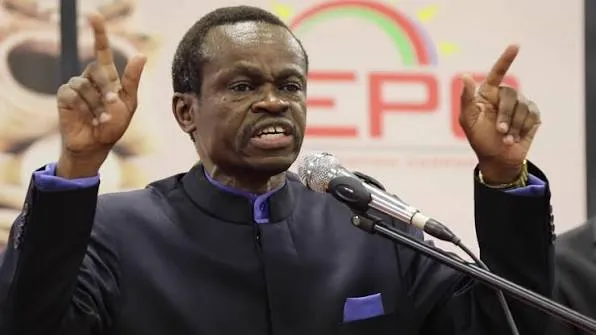
That is the uncomfortable question constitutional lawyer and public intellectual Professor PLO Lumumba is putting before the country as politicians position themselves for the 2027 General Election.
Lumumba’s message is blunt: an election, by itself, will not transform Kenya.
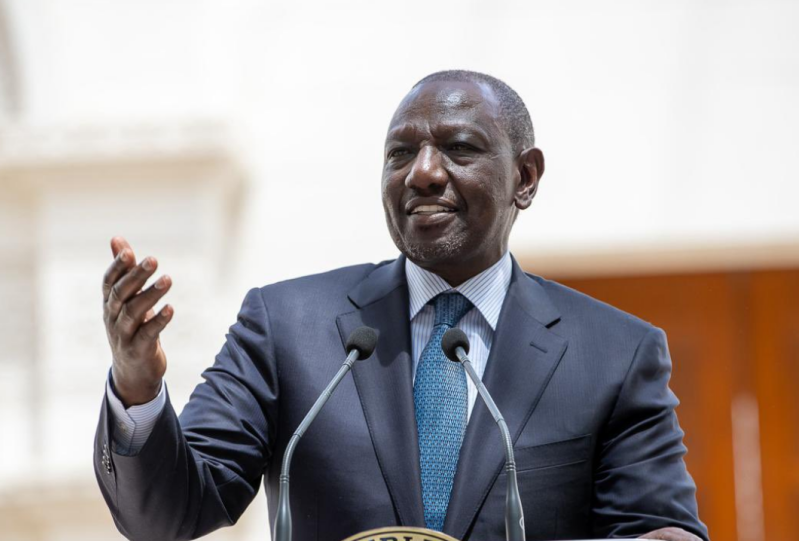
In an interview reported on September 28, 2026, Lumumba questioned whether the politicians positioning themselves to occupy State House have sufficiently explained why they want the presidency and, more importantly, what they intend to do with presidential power once they get it.
At the centre of his criticism is the increasingly prominent “Wantam” slogan—the political shorthand for the campaign to ensure President William Ruto serves only one term.
For Lumumba, however, defeating an incumbent cannot, on its own, constitute a national governing programme.
The big question: Why do you want to be president?
It is perhaps the simplest question in an election campaign—and potentially the most revealing.
Why do you want to be president?
Lumumba argues that Kenyan politics rarely forces presidential aspirants to answer that question with sufficient seriousness.
Instead, political debate frequently becomes a contest over personalities, communities, alliances and who should occupy State House next.
The result is that Kenyans can be told who should leave office without being adequately told what the person replacing them intends to build.
Lumumba challenged politicians to move beyond the politics of succession and explain their national agenda.
His question effectively turns the spotlight from the occupant of State House to the purpose of occupying State House.
And that is a crucial distinction.
A presidential election should not merely answer “Who is coming?” It should also answer “What are they coming to do?”
Wantam may express dissatisfaction—but dissatisfaction is not a governing programme
There is an important political reality behind the Wantam movement.
The slogan has emerged as an expression of dissatisfaction with the Ruto administration and a desire among some voters to deny the President a second term. The Institute for Security Studies has described Wantam as reflecting public frustration with the government, while noting the emergence of the counter-slogan “Tutam” among Ruto supporters.
Wantam therefore represents a political sentiment.
But Lumumba's argument is that a sentiment is not necessarily a programme.
There is a difference between saying:
“We do not want this government.”
and saying:
“Here is the government we intend to establish, here is what it will do differently, here is how it will finance those programmes, and here is how citizens will hold it accountable.”
That distinction could become one of the defining questions of the 2027 election.
Because removing one president does not automatically remove the problems of unemployment, public debt, corruption, insecurity, weak institutions, poverty, inequality, expensive living costs or inadequate public services.
Kenya cannot keep changing players while preserving the game
This is where Lumumba's intervention becomes bigger than the Wantam slogan.
Kenya has experienced repeated political realignments in which politicians change alliances, parties are formed and dissolved, old opponents become allies and former allies become rivals.
Lumumba has previously criticised what he sees as a political culture in which leaders move between formations without sufficiently strong ideological foundations. In June 2026, he warned that ethnicity, political rhetoric and a focus on the next election were pulling Kenya away from the path of good governance.
His latest intervention essentially asks whether Kenya is preparing for another change of political occupants without a fundamental change in political culture.
That is a question worth asking regardless of which side of the political divide one supports.
The danger of making an election a referendum on one man
There is another dimension to the Wantam debate.
If the entire opposition campaign becomes a referendum on President Ruto, the political argument risks becoming excessively personalised.
The election becomes:
Ruto or not Ruto?
But a mature democracy requires more questions.
What will happen to taxation?
What is the proposed strategy for reducing public debt?
How will the next administration create productive employment for young people?
What will happen to education?
How will healthcare be financed and administered?
What is the plan for agriculture and food security?
How will corruption be confronted?
What institutional reforms will be undertaken?
What will happen to devolution?
How will national resources be distributed?
And perhaps most importantly: what kind of Kenya do the presidential aspirants actually want to build?
These are not questions that can be answered by a slogan.
Even the opposition has heard the warning
Lumumba is not alone in questioning whether Wantam is sufficient.
Democracy for Citizens Party deputy leader Cleophas Malala recently argued that opposition politicians must move beyond the slogan and give voters concrete commitments and practical plans for governing.
That is significant because the argument is no longer simply coming from political commentators or academics. It is becoming part of the political conversation itself.
The Wantam movement has also attempted to develop an internal mechanism for identifying a preferred opposition presidential candidate through a digital voting process. But that exercise is separate from the official IEBC electoral process and will not itself determine who eventually appears on the presidential ballot.
The development illustrates the intensity of the search for an alternative political vehicle—but it also raises the larger question Lumumba is posing:
Alternative to what, exactly?
Kenya needs an agenda bigger than State House
The presidency is enormously powerful, but the presidency is not Kenya.
A political movement can successfully remove one leader and still fail to transform the institutions, economic structures and political habits that produced the problems it promised to solve.
That is why Lumumba's intervention deserves to be considered beyond the immediate contest between Wantam and Tutam.
The question should not simply be whether President Ruto gets a second term.
The deeper question is what kind of political contract Kenyans are being offered in 2027.
If an aspirant wants to become president, citizens have every reason to ask:
Why?
If the answer is merely that the incumbent must go, the next question should be:
And then what?
If the answer is that it is now the turn of a particular community, region, political generation or alliance, another question follows:
What national programme comes with that turn?
And if the answer is simply “Wantam,” Lumumba's challenge remains unanswered.
The election should be about Kenya—not merely State House
Kenya has held many elections.
Governments have changed.
Political alliances have changed.
Presidents have changed.
But the persistence of corruption, ethnic mobilisation, institutional weakness and economic hardship demonstrates why changing political personalities cannot be assumed to equal structural transformation. Lumumba has repeatedly argued that Kenya's challenge is less a shortage of laws than the failure to enforce them consistently and fairly.
That is perhaps the central lesson in his latest warning.
A presidential ambition should be larger than the ambition to defeat another presidential candidate.
A candidate seeking the highest office in the land should be able to explain not only why the incumbent should leave, but why the candidate should enter—and what Kenya will look like after the change.
For voters, that distinction matters.
Because ultimately, “one term” describes the length of somebody's presidency. It does not describe the future of a country.
And Kenya's 2027 election may therefore require citizens to ask a much harder question than “Who will win?”
They may need to ask:
“What exactly are we voting to change?”
No comments yet. Be the first to share your thoughts.