
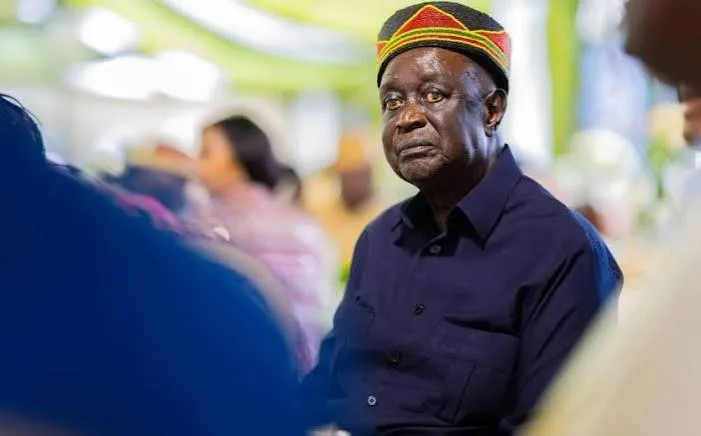
BONDO, Siaya County, October 15, 2026 — “Tunataka Oburu! "Oburu ako wapi?”—We want Oburu! Where is Oburu?
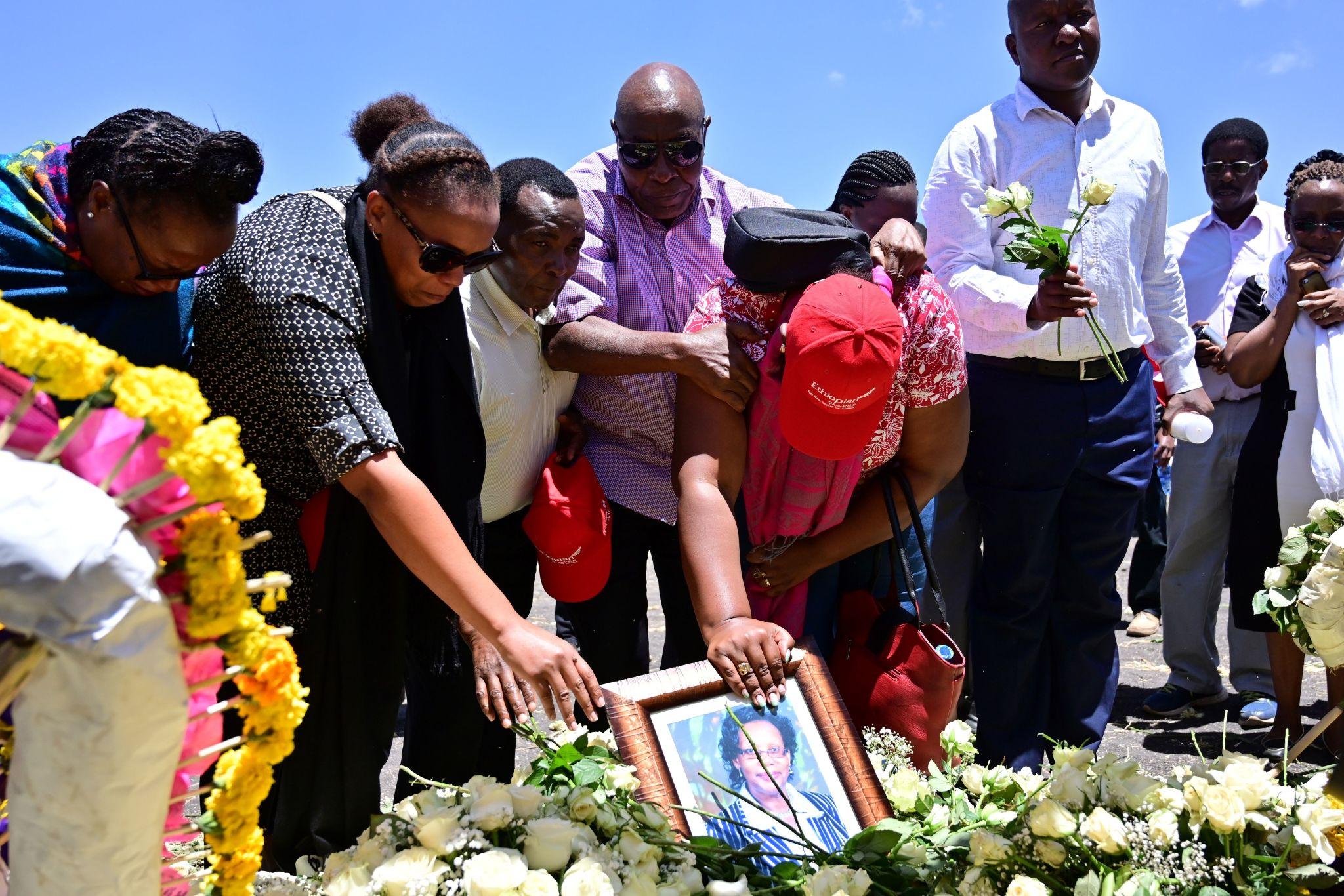
The chants cut through the solemn atmosphere at Migwena Cultural Grounds in Bondo, transforming a gathering intended to honor the life and legacy of former Prime Minister Raila Amolo Odinga into a moment of political tension and uncomfortable questions.
As mourners gathered on Thursday to mark the first anniversary of Raila’s death, sections of the crowd demanded to know why his elder brother, Oburu Oginga, was missing from an occasion that carried profound significance for the Odinga family, the Orange Democratic Movement (ODM), and its supporters.
The disruption threatened to overshadow the remembrance of a man whose political journey shaped Kenya’s multiparty democracy and whose influence extended across generations.
But beneath the angry chants lay a more consequential question: Can ODM sustain the political movement? Raila built without the personal presence, authority, and mobilizing power that defined his leadership for decades?
The immediate source of the disquiet was Oburu’s absence. The larger concern was what that absence might mean for a party navigating life after its most influential figure.
OBURU’S ABSENCE BECOMES THE CENTER OF ATTENTION.
Oburu, who assumed ODM’s leadership following Raila’s death on October 15, 2025, was conspicuously absent from the anniversary gathering, according to the account of events at Migwena Cultural Grounds.
His absence had already attracted attention after he missed a candle-lighting ceremony at the Odinga family home in Kang’o ka Jaramogi on Wednesday.
By Thursday, the questions had spilled into the public memorial, where sections of the crowd appeared unwilling to ignore the matter.
The repeated calls for Oburu turned the gathering into an impromptu test of leadership visibility and communication at a time when ODM supporters are confronting the reality of a party without Raila at its helm.
Yet an important distinction remains: his absence alone does not establish the reason he missed the ceremonies, nor does it prove a breakdown within the party or the Odinga family. An explanation from Oburu or his representatives would be necessary to establish the circumstances.
Nevertheless, the public reaction demonstrated how closely supporters associate the family's presence with the continuity of Raila's political legacy.
A MEMORIAL THAT RAISED QUESTIONS ABOUT ODM’S FUTURE
For decades, Raila was more than a party leader. He was ODM’s principal political mobilizer, its most recognizable public figure, and the personality around whom much of its political identity revolved.
His death created an inevitable leadership challenge: how could a movement built around such a dominant figure preserve its identity, maintain unity, and reassure its supporters while undergoing a transition?
Oburu’s succession offered a formal answer to the question of who would lead the party. But leadership succession is not merely a matter of occupying an office. It also involves maintaining communication with supporters, building confidence in party institutions, and demonstrating an ability to hold together competing political interests.
The chants at Migwena exposed the sensitivity of that transition.
For supporters demanding Oburu’s presence, his absence was sufficiently important to warrant public questions. Whether the protest reflected broader dissatisfaction with ODM’s leadership or was confined to sections of those attending the memorial remains unclear.
What was evident, however, was that the anniversary had become an occasion for more than remembrance.
It had also become a moment in which supporters sought reassurance about the future of the movement Raila left behind.
RAILA’S LEGACY UNDER FRESH SCRUTINY
Raila’s political legacy was built through decades of opposition politics, constitutional agitation, political alliances, and struggles over the direction of the Kenyan state.
His supporters saw him as a champion of democratic reform and political accountability. His opponents challenged aspects of his political choices and alliances. Across these competing interpretations, few could ignore the central place he occupied in Kenya’s modern political history.
That history makes the management of his legacy particularly sensitive.
ODM must now demonstrate that its institutional strength extends beyond the personality of its founder. Its future will depend not only on who occupies leadership positions but also on how the party manages internal disagreements, communicates decisions, and maintains the confidence of its grassroots supporters.
The Bondo incident therefore raises questions that cannot be answered by the presence or absence of a single individual.
Where is the party heading? How will its new leadership balance institutional continuity with the expectations of Raila’s supporters? And what mechanisms exist to ensure that ordinary members feel heard during the transition?
These are questions for ODM’s leadership to address through clear communication and demonstrable organizational accountability.
RUTH ODINGA’S WARNING: JUSTICE BEFORE PARTY LOYALTY
The tensions surrounding the memorial were further complicated by remarks attributed to Kisumu County Woman Representative Ruth Odinga, who declared that she was prepared to leave ODM if doing so became necessary to defend justice, democracy, and the rights of Kenyans.
Speaking at the anniversary gathering, Ruth made clear that her political allegiance was not unconditional.
“If I have to move to another party to ensure that justice prevails in Kenya, I will do so,” she said.
Her declaration did not amount to a formal resignation from ODM. It was, however, a statement of principle that placed the interests of the public above party membership.
Ruth also alleged that individuals carrying stones had attempted to disrupt the gathering but said the program continued despite the incident.
“Those who came with stones to disrupt the meeting are ashamed because the meeting continued as planned,” she said.
The two developments—the chants demanding Oburu’s presence and Ruth’s declaration on political loyalty—highlighted the range of questions surrounding the anniversary.
While one centered on leadership visibility, the other concerned the relationship between party allegiance and democratic principles.
Neither, on its own, establishes the extent of any internal divisions. Together, however, they underline the importance of transparent communication and credible leadership during a sensitive political transition.
THE QUESTIONS ODM CANNOT IGNORE
The anniversary was intended to honor Raila’s life, mourn his passing, and celebrate his contribution to the country.
Instead, the chants demanding Oburu’s presence introduced an uncomfortable political dimension to the proceedings.
The central question is no longer simply who succeeds Raila. It is whether the institutions, leadership structures, and political relationships he helped build can endure without his personal intervention.
For ODM, the challenge is to reassure its supporters that the party remains guided by a coherent political vision, functioning leadership structures, and a commitment to the democratic principles it has historically championed.
For Oburu, the questions raised by his absence present an opportunity to clarify the circumstances and communicate directly with the party’s supporters.
For the wider Odinga political establishment, the episode illustrates the weight of public expectations attached to Raila’s name and the difficulty of managing his legacy during a period of transition.
One year after Raila’s death, the chants of “Tunataka Oburu!” captured a moment of public frustration and uncertainty at a memorial meant to celebrate his life.
Whether the incident signals deeper divisions within ODM or remains an isolated expression of discontent will require further evidence.
But the underlying challenge is unmistakable: Raila’s legacy cannot be preserved by remembrance alone. It must also be sustained through credible leadership, open communication, and the confidence of the people who kept his political movement alive.
No comments yet. Be the first to share your thoughts.