

There is a deeper question beneath the increasingly heated debate over the political direction of the Luo community after the death of Raila Odinga.
It is not simply whether Luo politicians should work with President William Ruto. It is not even whether the Orange Democratic Movement should cooperate with Kenya Kwanza. Those are tactical political questions.
The deeper question is this:
What was the political project for which generations of Luo people sacrificed, campaigned, organised, suffered and voted—and does that project end with the death of the man who became its most powerful contemporary symbol?
That is the question raised by Prof. Edward Akongo Oyugi's argument about the changing political orientation of sections of Luo leadership.
Oyugi's intervention is deliberately provocative. He describes the competing political traditions as rival "Churches", with Jaramogi Oginga Odinga and Raila Odinga representing one tradition and President William Ruto representing another. The religious metaphor is not a literal description of Kenyan politics. It is a rhetorical device intended to distinguish two competing conceptions of the Kenyan state: one centred on constitutionalism, equality and reform, and another which Oyugi associates with political accommodation, patronage and establishment politics.
That distinction deserves serious interrogation.
But so does another proposition: Can a community's political loyalty be reduced to the ethnicity of the person occupying the centre of power?
That is where the debate becomes much bigger than Luo politics.
The Luo question is really a Kenyan question
The history of Luo political mobilisation cannot comfortably be separated from the history of Kenya's struggle over constitutionalism, political pluralism, land, human rights, equitable development and democratic accountability.
Jaramogi Oginga Odinga's political career was part of the nationalist struggle and the difficult contest over what independence would mean after 1963. Later generations inherited different versions of that struggle through people such as Bildad Kaggia, Pio Gama Pinto, J. M. Kariuki, George Anyona, Raila Odinga and many others.
The important point is not that every Luo has always agreed with these leaders. They plainly have not.
The important point is that Luo political mobilisation frequently acquired a national rather than merely ethnic vocabulary.
That distinction matters today.
If Luo politics becomes principally about obtaining proximity to State power because a Luo is no longer occupying the centre of a particular political coalition, then the community would face a difficult question: was the original political project about who occupied State House, or about what kind of Kenya was being built?
Those are not the same thing.
A personal history behind the argument
For me, this is not an abstract academic argument.
My connection with Luo Nyanza is woven into my own educational and political history.
My sisters and I studied in schools across Luo Nyanza. We went through institutions including Lwak Girls, St Mary's Yala, St John's Rakwaro and Ulanda Girls. I joined Homa Bay School in January 1990, only days before the assassination of Dr Robert Ouko.
Our primary-school years were similarly spread across the region, including Kadika, Migori Township, Homa Bay Primary, Mulaa and Township Primary in Siaya.
Siriba Teachers College in Kisumu became part of our family history when my first-born sister trained there as a teacher.
These are not merely geographical references.
They explain why the Luo question cannot be reduced, at least in my experience, to ethnicity.
I grew up seeing Luo Nyanza not simply as another region of Kenya but as part of a wider national political conversation.
Our family began supporting Jaramogi's political tradition early.
In the 1992 elections, even while living in Kisii, we found ourselves campaigning against KANU and supporting FORD-Kenya's Ferdinand Obure in Bomachoge.
That experience taught me something that remains relevant decades later: political allegiance can cross ethnic boundaries even when elections themselves are heavily shaped by ethnic calculations.
From Jaramogi to Raila
My own political journey subsequently followed several stages of the reform movement.
I supported the political tradition associated with Jaramogi Oginga Odinga. I later supported Prof. Anyang' Nyong'o, J. A. B. Orengo and Raila Odinga at different stages.
When the FORD-Kenya leadership struggle intensified, I took Raila's side. When the dispute could not be resolved through the Thika Stadium process, we moved with him into the National Development Party.
As a student, I became NDP Secretary-General on campus, with OBC Were as chairman and Eng. Bernard Ongola as organising secretary.
I subsequently participated in the political mobilisation surrounding Raila's return to Parliament through the Lang'ata by-election.
These experiences are important because they demonstrate that my attachment to Raila was not something that appeared in 2022 or 2024.
It developed over decades.
From 1996, when I was about 20, I worked within the broader political environment surrounding Raila and the reform movement.
I supported different political formations, worked with different leaders and, at various points, disagreed with Raila himself.
That last point is important.
Political loyalty should never mean intellectual surrender.
Supporting a leader does not mean agreeing with every tactical decision that leader makes.
Indeed, some of the strongest political relationships are those in which supporters retain the freedom to challenge strategy while remaining committed to a broader national objective.
The Raila question after Raila
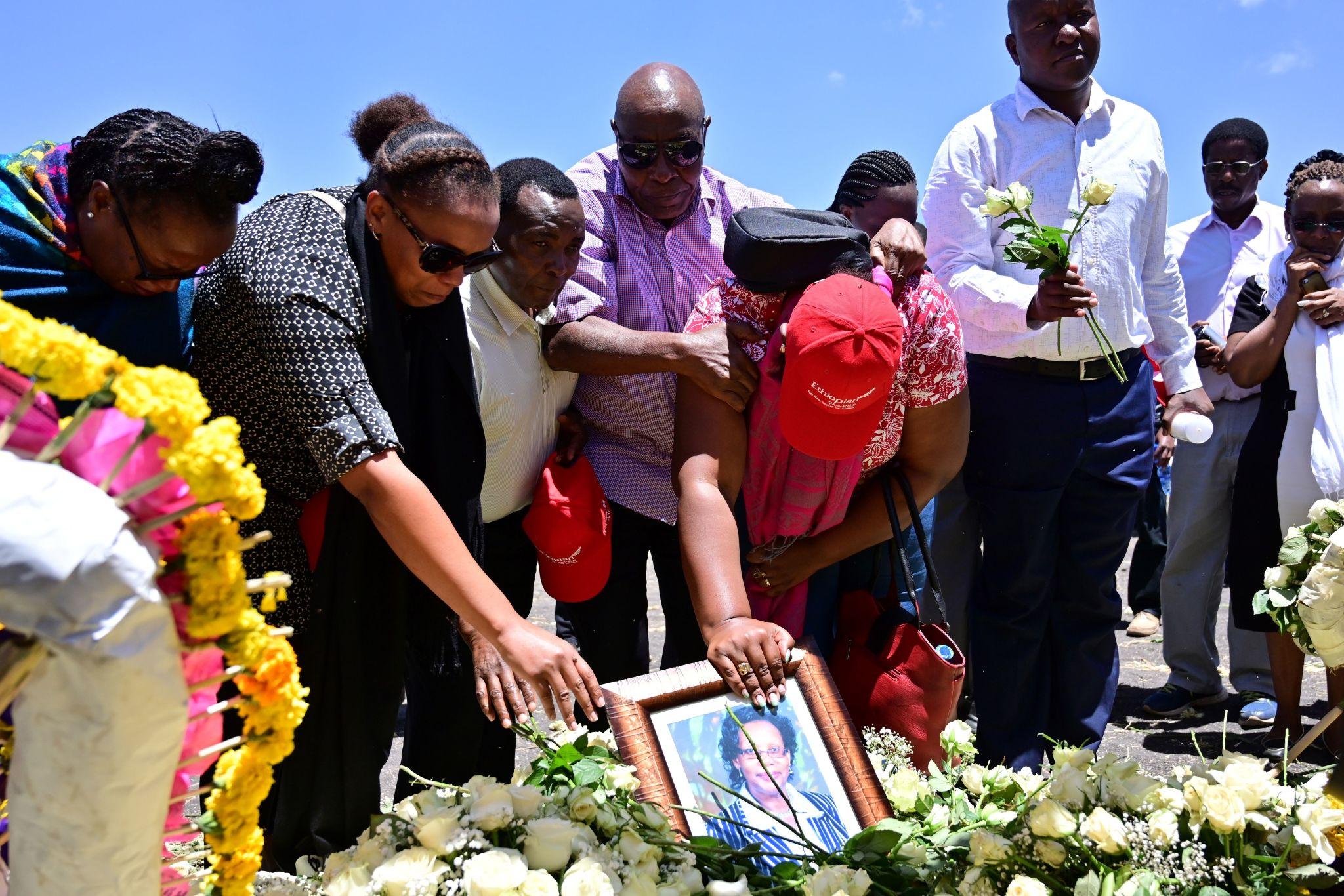
Raila Odinga died in October 2025 and was buried at Kang'o ka Jaramogi in Bondo. President William Ruto participated prominently in the national farewell and described Raila as a friend and political mentor.
His death therefore created a political vacuum that is larger than the vacancy left by the departure of one politician.
For decades, Raila was simultaneously a Luo political leader, a national opposition figure, a constitutional reform advocate, a former Prime Minister and a symbol of Kenya's contested democratic history.
His supporters did not always agree about his tactics.
But his political identity provided a bridge between ethnic mobilisation and a broader national reform narrative.
The question now is whether that bridge survives its architect.
That is why the current debate among Luo leaders is so consequential.
Was the Ruto-Raila cooperation a betrayal or a political strategy?
This is perhaps the most contentious part of the argument.
The text under discussion interprets Raila's cooperation with President Ruto as tactical rather than strategic. That interpretation has a legitimate basis in the fact that Raila and Ruto formally agreed in March 2025 to a framework for cooperation addressing economic, social and political challenges.
The agreement stated that the two sides should move beyond old rivalries and pursue a more inclusive national vision. President Ruto separately described the arrangement as being about unity, development, youth employment, integrity in public service and national inclusivity rather than a power-sharing arrangement or a 2027 electoral pact.
Whether history ultimately judges that strategy as successful is a matter for political historians and voters, not something that can be settled by rhetoric alone.
But one fact is undeniable:
Raila's cooperation with Ruto represented a major departure from the political confrontation that had characterised their relationship for many years.
For some supporters, it represented pragmatism.
For others, it represented unacceptable compromise.
Both interpretations became part of the political debate.
The June 2024 generation changed the conversation
The June 2024 demonstrations also fundamentally altered Kenya's political environment.
The protests were initially driven by opposition to the Finance Bill and expanded into a broader expression of public anger among many young Kenyans.
The Kenya National Commission on Human Rights documented deaths, injuries, arrests and allegations of excessive use of force during the demonstrations. Its July 2024 reporting recorded 60 deaths and 601 injuries connected to the protests between June 18 and July 15.
Those figures matter because they demonstrate that the political debate cannot be reduced to competition between established ethnic political blocs.
The Gen-Z protests introduced a powerful alternative language into Kenyan politics—one centred on accountability, taxation, public expenditure, corruption, constitutional rights, government transparency and generational change.
That generation was not necessarily asking to inherit the political loyalties of 1992, 2002, 2007 or 2013.
It was asking different questions.
That should worry every established political establishment—not because young Kenyans belong to one particular political camp, but because they demonstrated that political mobilisation can occur outside the traditional ethnic-party structures.
The argument about development
One of the strongest arguments in the text is that development should not be treated as a favour to a community.
That principle is constitutionally and politically significant.
Roads, hospitals, water projects, universities, electricity, markets, ports and other public infrastructure are not gifts from individual politicians to communities.
They are public investments financed ultimately through public resources.
Therefore, whether a particular region receives development should not depend upon whether its residents supported the president, the opposition, ODM, UDA or another party.
President Ruto himself has publicly said that no community, county or region should be sidelined under the broad-based government.
That statement provides an important standard against which the politics of development can be measured.
If development is constitutional government at work, it should not require political gratitude.
If development is presented as payment for political loyalty, then citizens are effectively being invited to exchange their democratic agency for access to public resources.
That would be a dangerous political culture regardless of which community benefits.
The real danger of ethnic entitlement
There is another uncomfortable issue buried inside the debate.
The argument that Luo people should remain loyal to a political formation because its leader is Luo can easily reproduce the very ethnic politics that reform movements historically sought to overcome.
If the principle becomes:
"We support our own when our own is at the centre, and we abandon the national project when another community takes over",
then the political philosophy has shifted from constitutional nationalism to ethnic succession.
That is a profound difference.
The same principle would be problematic if applied by Kikuyus, Kalenjins, Luhyas, Kambas, Kisii, Maasai, Mijikenda or any other community.
A Kenyan democratic project cannot mean that every community waits for "its turn" to control the State.
It must mean that citizens participate in government regardless of who occupies the presidency.
That is why the most powerful part of the argument about the Luo is actually not about Luo supremacy.
It is about Luo responsibility.
What does the Luo community owe Kenya?
The answer cannot simply be Ruto.
Nor can it simply be Raila.
Nor can it be any other individual politician.
A community does not owe the country allegiance to a politician. It owes the country fidelity to constitutional citizenship.
If Luo political history has contributed significantly to the struggle for pluralism, democracy and constitutional reform, then the responsibility is to preserve those principles even when doing so becomes politically inconvenient.
That obligation extends beyond Luo Nyanza.
It extends to the Luhya, Kisii, Kamba, Kalenjin, Kikuyu, Maasai, Somali, Mijikenda, Meru, Turkana and every other Kenyan community.
The same constitutional standard must apply to everybody.
But there is also a warning against romanticising the past
There is a danger in turning Jaramogi and Raila into flawless icons.
Neither man was politically infallible.
Both operated in complicated political environments and made strategic compromises.
Raila's decision to work with political opponents is itself evidence that Kenyan politics cannot be understood through a simple good-versus-bad binary.
The 2025 Kenya Kwanza-ODM framework explicitly recognised that divergent and even conflicting ideas are part of democratic politics.
Therefore, disagreement with today's ODM leadership does not automatically make those leaders enemies of the reform tradition.
Nor does cooperation with Ruto automatically establish that they have abandoned every constitutional or democratic principle.
The evidence has to be examined issue by issue.
That is the standard a mature political debate requires.
The language of "Churches" is powerful—but dangerous
Oyugi's "Church" metaphor makes the argument memorable.
It describes two competing political faiths:
the Church of constitutionalism, equality and reform, and
the Church of patronage, ethnic mobilisation and establishment politics.
But the metaphor also carries a risk.
Kenya's political parties have repeatedly changed alliances, leaders have crossed ideological boundaries and yesterday's opponent can become today's negotiating partner.
Consequently, political labels should not become substitutes for evidence.
If a politician is accused of abandoning constitutionalism, the question should be:
Which action, statement, policy, vote or agreement demonstrates the abandonment?
If a government is accused of violating human rights, the question should be:
What documented incident demonstrates the violation, who investigated it, what evidence exists and what accountability followed?
If a political leader is accused of ethnic mobilisation, the question should be:
What specific speeches, appointments, policies or political practices demonstrate it?
That approach is stronger than simply attaching a label.
The unfinished project
Perhaps the most important phrase in the entire argument is "Kenya Bora Tuitakayo."
That phrase describes an aspiration rather than a political party.
It is the idea that Kenya can become a country in which constitutional rights are meaningful, development is equitable, public institutions are accountable, elections are credible, security is enjoyed by all citizens and political power does not determine whether one receives justice.
That project cannot belong to Luo people alone.
And it cannot die with Raila Odinga.
If Raila's political legacy is to have meaning beyond the man himself, then his supporters must be prepared to defend principles even when the political arithmetic becomes uncomfortable.
That may sometimes mean opposing the government.
At other times it may mean cooperating with it.
The decisive question should not be who is cooperating with whom?
It should be:
What is being negotiated, what public interest is being served, what constitutional principles are being protected, and what price is the citizen being asked to pay?
The Luo people matter—but so does every Kenyan
The strongest version of this argument is therefore not that Luo people must remain permanently opposed to William Ruto.
Nor is it that Luo people must permanently support Raila's political successors.
It is that no Kenyan community should surrender its political conscience merely because the occupant of State House belongs to another community.
The Luo should not be expected to abandon development simply because development is being delivered by a government they once opposed.
But neither should development become a currency through which political loyalty is purchased.
That principle applies equally to every Kenyan.
A road is not Kalenjin.
A hospital is not Luo.
A university is not Kikuyu.
A water project is not Luhya.
A constitution is not Kamba.
A human right is not Kisii.
A democratic election does not belong to one ethnic community.
They belong to the Republic of Kenya.
Beyond Raila
Raila's death inevitably created a period of political uncertainty among his supporters.
That uncertainty should not be answered by replacing one political personality with another without examining the principles underneath the personality.
The post-Raila generation must therefore confront a difficult but necessary question:
If Raila was supported because he represented a national democratic project, who now carries that project—and what evidence demonstrates that they actually carry it?
That question should be asked of every aspiring leader.
It should be asked of ODM leaders.
It should be asked of Kenya Kwanza leaders.
It should be asked of opposition leaders.
And it should be asked of emerging movements seeking to replace the old political order.
The answer should never be determined simply by the tribe of the candidate.
The final test
The ultimate test of Luo political maturity is not whether the community can produce another national political kingpin.
It is whether Luo voters, like voters everywhere in Kenya, can judge political leaders according to principles that survive individual politicians.
That means examining constitutionalism.
It means examining human rights.
It means examining public accountability.
It means examining corruption allegations through evidence and due process.
It means examining development through budgets, implementation and measurable outcomes rather than political speeches.
It means examining appointments according to constitutional requirements rather than ethnic arithmetic.
And it means recognising that political cooperation is legitimate, but political accountability remains essential.
The Luo people matter to me because they are part of my personal history, educational history and political history.
But that attachment cannot logically lead to the conclusion that Luo interests are superior to Kenyan interests.
Quite the opposite.
The greatest tribute to the Luo contribution to Kenya would be to ensure that the struggle for constitutionalism, equality and democratic citizenship remains bigger than the Luo community itself.
Jaramogi's generation did not inherit a finished Kenya.
Raila's generation did not finish it either.
The next generation will have to decide what survives.
And that decision should not be made on the basis of who happens to be Cardinal.
It should be made by citizens examining the record of those seeking their trust—and asking the oldest democratic question of all:
What kind of Kenya are we building together?
No comments yet. Be the first to share your thoughts.