

By Xavier Lugaga
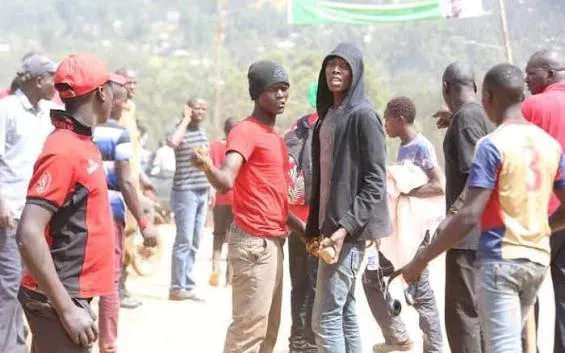
The continuing confrontation between security agencies and the group popularly known as the “Jobless” gang in Busia has exposed a dangerous intersection of unemployment, street power, politics and law enforcement.

But amid the heated political exchanges, one basic principle appears to have been forgotten:
Being summoned to record a statement is not the same thing as being arrested.
That distinction matters.
When detectives summon a person to assist an investigation, the person may be required to answer questions, provide information or clarify circumstances surrounding an incident. An arrest, on the other hand, is a different legal step.

In July 2026, Busia Governor Paul Otuoma, Woman Representative Catherine Omanyo and Presidential Advisor Arthur Osiya were reported to have recorded statements with DCI detectives investigating the activities of the “Jobless” group. Regional security officials said the leaders were considered relevant to the investigations.
Therefore, celebrating a summons as though it were an arrest risks turning an investigation into political entertainment.
The real question for Busia is much bigger:
How does a society dismantle criminal networks without creating another generation of angry, unemployed and alienated young people?

A SECURITY PROBLEM THAT CANNOT BE IGNORED
Security agencies have increasingly described the “Jobless” group as a criminal gang and have warned members to abandon criminal activities or face the law.
On September 30, Busia County Police Commander Robinson Langat told residents that the group was outlawed and warned that members would face the full force of the law. County Commissioner Stephen Orinde, meanwhile, called for reconciliation and urged residents to share their grievances with authorities.
On October 1, security agencies again pledged to intensify efforts against criminal gangs operating around Marachi and Busia town following a series of clashes.

That security response is taking place against a painful recent history.
In May, clashes between police and youths associated with the group resulted in deaths and injuries.
In July, 26-year-old Laura Wesonga was reportedly killed during a confrontation between police and members of the group in Marachi. Her death triggered renewed demands for accountability and highlighted the danger faced by ordinary residents caught in violent confrontations.
This is why the debate cannot simply be reduced to political slogans.

Every confrontation has consequences for somebody's mother, father, spouse, child, business or livelihood.
FARMERS PARTY: SECURITY AND ECONOMIC OPPORTUNITY MUST GO TOGETHER
The Farmers Party's published policy platform provides an economic dimension to the security debate.
Its manifesto identifies jobs, youth and enterprise as a priority, with an emphasis on job creation through production, talent and modern agriculture. It also highlights food security, farmer income, support for SMEs and rural industries.
That approach offers an important lesson for Busia.
A police operation can arrest a suspect.
A court can prosecute an accused person.
A prison can confine a convicted offender.
But none of those institutions, by themselves, creates a sustainable livelihood for thousands of young people.
That is where economic policy becomes part of the long-term security conversation.
For a county whose economy is heavily connected to agriculture, cross-border trade, small businesses, boda boda transport and informal enterprises, youth empowerment cannot remain a campaign slogan.
Young people need practical pathways into farming, agro-processing, transport cooperatives, construction, technology, livestock, fisheries, retail, manufacturing and other legitimate enterprises.
FROM “JOBLESS” TO “WORKING”
There is a profound difference between saying that unemployment causes every criminal act and recognising that economic exclusion can create conditions in which criminal networks recruit and thrive.
The distinction is important.
Not every unemployed young person is a criminal.
And not every member of a criminal gang is unemployed.
But where young people see little legitimate economic opportunity while criminal networks offer money, protection, status or belonging, the state faces a much deeper challenge than policing alone.
The answer must therefore have two arms:
firm enforcement against crime and serious investment in legitimate livelihoods.
One without the other can leave the underlying problem unresolved.
POLICE MUST ENFORCE THE LAW — WITHIN THE LAW
The government has a responsibility to protect residents, traders, farmers and visitors.
The police cannot be expected to stand aside when officers are attacked, property is destroyed or residents are threatened.
At the same time, security operations must remain lawful and accountable.
Governor Otuoma himself has previously said that criminality must be confronted while law-enforcement operations must protect innocent civilians and remain within the law.
That principle should apply regardless of political affiliation.
If a person is suspected of committing a crime, investigators should investigate.
If sufficient evidence exists, the law should take its course.
If there is insufficient evidence, a summons should not be converted into a political conviction through social media.
THE POLITICS OF CELEBRATING SUMMONSES
The most disturbing development in the current debate may not be the summons themselves but the political theatre surrounding them.
A summons can generate headlines.
An arrest can generate even bigger headlines.
But neither is a conviction.
In a functioning justice system, investigators gather evidence, prosecutors assess cases and courts determine guilt.
That sequence matters.
Those celebrating every summons as though it were a political defeat should remember that investigations are not elections.
And those dismissing every investigation as political persecution should equally allow investigators to do their work and provide evidence for their claims.
Busia needs fewer political celebrations over police summonses and more seriousness about evidence, accountability and the law.
THE FARMERS PARTY QUESTION
From the Farmers Party's published policy position, the bigger development question is whether Busia can turn its youthful population into an economic asset rather than allowing sections of the youth to become trapped in cycles of unemployment, street violence and political mobilisation.
Agriculture provides an obvious starting point.
A young person should be able to join a cooperative, access affordable financing, produce food, add value to agricultural products and sell into reliable markets.
A farmer should be able to make a living without paying criminal groups for “protection”.
A trader should be able to open a shop without fear.
A boda boda rider should be able to operate without criminal elements damaging the reputation of the entire sector.
And a young person should be able to disagree with a politician without becoming a target or being recruited into political street violence.
That is what economic empowerment should ultimately mean.
BUSIA NEEDS PEACE, JUSTICE AND OPPORTUNITY
The “Jobless” question should therefore not become another excuse for political camps to trade insults.
It should become a test of leadership.
Can security agencies dismantle criminal networks while respecting the rights of innocent residents?
Can politicians stop treating police investigations as trophies?
Can communities cooperate with investigators without fear?
Can the county and national governments create meaningful economic opportunities for young people?
Can agriculture, cooperatives, SMEs and skills training become part of the security strategy?
And can Busia's political class agree that the county's young people deserve something better than being recruited into political confrontations?
The answer will determine much more than the fate of one gang.
It will determine whether Busia becomes a county where young people are known principally for their productivity, enterprise and innovation — or one where unemployment and political confrontation continue feeding each other.
The message should therefore be simple:
Summonses should be treated as summonses. Arrests should be treated as arrests. Charges should be proved in court. And young people should be given legitimate economic opportunities before criminal networks convince them that the street is their only future.
For Busia, the ultimate victory should not be the number of people summoned or arrested.
It should be a county where there is law and order, justice, productive youth, thriving farmers, secure businesses and peaceful communities.
The Farmers Party references above are based on its published policy priorities, rather than an invented statement attributed to a party official. Its platform specifically links youth employment with production, modern agriculture, SMEs and rural industries.
No comments yet. Be the first to share your thoughts.