

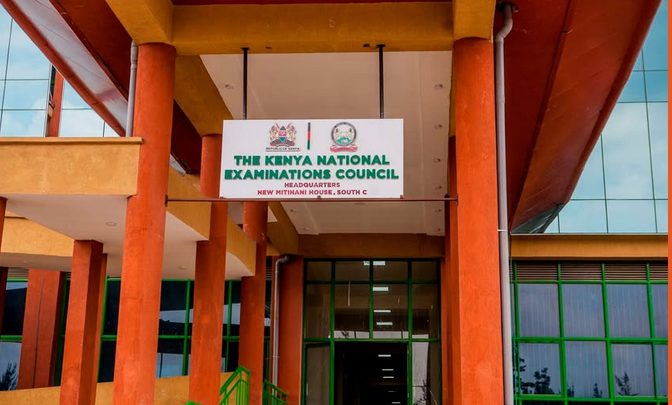
The Kenya National Examinations Council has released the timetable for the 2026 Kenya Certificate of Secondary Education examinations, giving candidates, teachers and parents a clear schedule for the final stage of preparation.
According to the timetable, the national examination period will begin on Monday, October 19, 2026. The opening phase is expected to include oral, practical and project-based papers before candidates proceed to the main written examinations.
Schools are now expected to use the remaining weeks to complete their syllabuses, administer internal assessments and prepare candidates for the demanding examination period.
The timetable also allows school administrators to organise examination rooms, laboratories, security arrangements and the storage and distribution of confidential examination materials.
2026 KCSE marks penultimate examination under 8-4-4 system
The 2026 examination carries special historical significance because it will be the second-last regular KCSE sitting under Kenya’s 8-4-4 education system.
The final group of learners admitted to Form One through the Kenya Certificate of Primary Education examination entered secondary school in 2024. That cohort is expected to complete Form Four and sit its KCSE examination in 2027.
This means the 2026 candidates are part of the penultimate group completing secondary education through the system that has shaped Kenyan schooling for more than four decades.
The transition began at the primary-school level with the gradual introduction of the Competency-Based Curriculum, later renamed Competency-Based Education. The final KCPE examination was administered in 2023, bringing an end to the examination that had traditionally determined admission to secondary school.
Although KCPE has already been retired as the main primary-school exit examination, KCSE will continue temporarily to accommodate learners completing their studies under the outgoing curriculum.
CBC learners move into senior school
As Form Four candidates prepare for the 2026 KCSE examination, the pioneer Competency-Based Education cohort has entered senior school.
The learners completed Grade Nine and undertook the Kenya Junior School Education Assessment before progressing to Grade Ten in 2026. Their transition formally introduced the senior-school stage of the new education structure.
Senior-school learners follow pathways based on their interests, abilities and possible career ambitions. The principal pathways are:
- Science, Technology, Engineering and Mathematics
- Social Sciences
- Arts and Sports Science
Schools are expected to offer subjects within the pathways for which they have teachers, facilities and approval. The government has consequently been under pressure to recruit additional teachers, expand laboratories and ensure schools are adequately prepared to offer the new curriculum.
The first cohort is expected to complete Grade 12 in 2028 and undertake the Kenya Senior School Education Assessment.
Continuous assessment gains importance under CBE
The transition is changing how learners are evaluated. Under the traditional 8-4-4 system, national examinations carried enormous weight in determining progression to the next level of education.
Competency-Based Education combines national assessments with School-Based Assessments administered during a learner’s education. The approach is intended to measure progress over time instead of depending entirely on performance in one final examination.
At senior-school level, School-Based Assessment is expected to contribute a substantial portion of the learner’s final result, with the national Grade 12 assessment providing the remaining component.
This approach evaluates learners through projects, practical activities, written assignments, performances and other tasks completed during the learning period.
Education officials maintain that continuous assessment provides a broader picture of what a learner can understand and perform. Critics, however, have raised concerns about differences in facilities, teacher capacity and assessment standards between schools.
Schools in well-resourced areas may have laboratories, internet connectivity, sports facilities and specialised teachers, while institutions in marginalised and rural communities may struggle to provide similar opportunities.
Ensuring that School-Based Assessments are administered and moderated fairly will therefore be essential to maintaining public confidence in the new system.
What the timetable means for candidates
The release of the timetable gives candidates an opportunity to organise their revision according to the order and spacing of their papers.
Teachers have advised candidates to prepare across the entire syllabus instead of attempting to predict which topics will appear in the examination. Learners should also spend time practising with past papers, reviewing marking schemes and improving their ability to answer questions within the allocated time.
Candidates taking practical subjects should pay particular attention to instructions issued by their schools and KNEC. Practical, oral and project-based papers may require candidates to complete activities before the main written examination period begins.
The timetable should also help candidates identify days on which they have more than one paper. Creating a balanced revision programme can reduce last-minute pressure and allow learners to give adequate attention to every subject.
Parents have been encouraged to provide candidates with a calm and supportive environment. Excessive pressure can increase anxiety and affect concentration during the examination period.
KNEC expected to intensify fight against examination malpractice
KNEC and security agencies are expected to strengthen measures intended to protect the credibility of the 2026 examinations.
In previous examination cycles, the council warned candidates, teachers and parents about individuals using WhatsApp, Telegram and other online platforms to sell purported examination papers.
Many of the papers circulated through such platforms are either fake or obtained through fraudulent means. Candidates who rely on them risk losing money and facing disciplinary or criminal consequences.
The government has previously deployed security officers to examination storage containers and distribution centres. Examination officials are also required to follow strict procedures when collecting, transporting, opening and returning examination materials.
Candidates found possessing unauthorised material, communicating during an examination or receiving assistance can have their results cancelled. Teachers and other officials involved in malpractice may face dismissal, prosecution or exclusion from future examination duties.
Schools enter final preparation period
With the timetable now available, secondary schools are entering an important final preparation period.
Teachers are expected to complete any remaining syllabus areas and focus on revision without exposing candidates to unhealthy academic pressure. Schools must also ensure that candidates’ registration details are correct before the examination begins.
Errors involving names, subject codes, gender or identification details should be reported through the appropriate KNEC procedures. Candidates should confirm that they are registered for the correct subjects and alert their schools immediately if they notice discrepancies.
Schools offering sciences, computer studies, agriculture, home science, art, music and other practical subjects must ensure that the required facilities and materials are available.
Principals will also coordinate with examination officials and security agencies to prepare secure rooms, laboratories and examination centres.
A symbolic turning point in Kenyan education
For many Kenyans, the approaching end of KCSE represents more than a change in examination names. It signals the gradual closure of the 8-4-4 era, which has defined the country’s education system since 1985.
Under 8-4-4, learners spent eight years in primary school, four years in secondary school and at least four years in university. KCPE and KCSE became two of the most important examinations in a learner’s academic journey.
The system produced generations of professionals, public servants, entrepreneurs and political leaders. However, it was frequently criticised for placing excessive emphasis on examinations, encouraging memorisation and failing to develop practical skills among learners.
Competency-Based Education is intended to address those weaknesses by focusing on the application of knowledge, creativity, communication, collaboration, critical thinking and the identification of individual talent.
Its success will depend on whether the government can provide enough teachers, classrooms, laboratories, learning materials and financial support across the country.
When will KCSE be completely phased out?
The last regular KCSE examination under the transition is expected to be administered in 2027.
Beginning in 2028, the pioneer Competency-Based Education cohort is expected to complete Grade 12 and undertake the Kenya Senior School Education Assessment.
Special KCSE examinations may still be provided for eligible candidates affected by exceptional circumstances, depending on future directions issued by the Ministry of Education and KNEC.
For the 2026 candidates, however, the immediate task is to prepare for the examination beginning on October 19. Their performance will determine entry into universities, colleges, technical institutions and other training opportunities.
As examination day approaches, candidates have been encouraged to remain disciplined, follow official KNEC instructions and avoid individuals claiming to possess advance copies of examination papers.
The 2026 KCSE examination will be another major step towards closing the 8-4-4 chapter and establishing Competency-Based Education as Kenya’s principal system of learning and assessment.

No comments yet. Be the first to share your thoughts.