
There are deaths that shock a family.
There are deaths that shock a nation.
And then there are deaths that leave behind a trail of questions so strangely arranged that people begin revisiting the final days of the deceased, searching for meanings that may never have been intended.
The death of Zimbabwean businessman Wicknell Chivayo, who died alongside his wife, Lucy Muteke, in a helicopter crash on September 30, 2026, has become one such story.
South African author Jackie Phamotse has added another layer to the growing public fascination with Chivayo's final days.
Her interpretation is provocative: that Chivayo appeared to be rushing to reconnect with religious figures, distributing money and gifts and perhaps attempting to "buy favour" or even "buy time."
That is a powerful proposition.
But it is also precisely where commentary must stop short of turning interpretation into fact.
There is no established public evidence that Chivayo knew he was going to die.
There is no evidence, from the chronology alone, that his religious engagements were preparations for death.
And there is no proof that the money, gifts or tributes he announced were motivated by fear of an impending catastrophe.
Yet the chronology remains extraordinary.
Days before the crash, Chivayo and Lucy hosted Prophet Emmanuel Makandiwa for dinner.
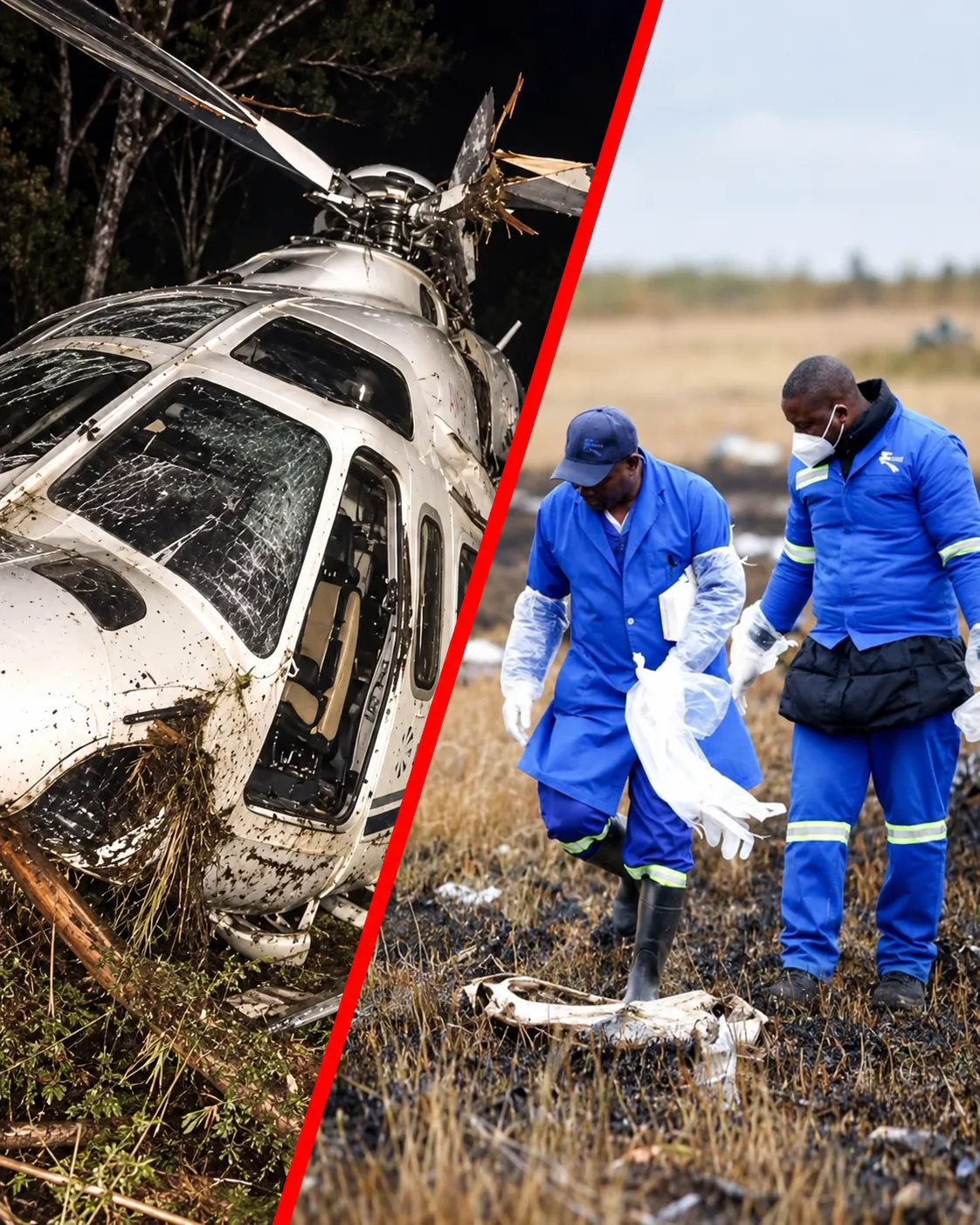
He subsequently attended a church gathering where he met Apostle Joshua Selman and publicly spoke about prayer, protection, wisdom and divine guidance.
Then, on the morning of the crash, came a message that has acquired an almost unbearable poignancy after the fact.
Chivayo paid tribute to two lawyers who had been part of his life for decades. He spoke about rewarding them with luxury vehicles and substantial sums of money.
And then came the words:
Dangote Lamu refinery: Kenya’s sh2.2 trillion industrial bet opens a new industrial chapter
"SAVED THE BEST FOR LAST."
Hours later, he was dead.
That sentence now looks like a message from another world.
But journalism requires an uncomfortable discipline: we must resist the temptation to allow hindsight to manufacture intention.
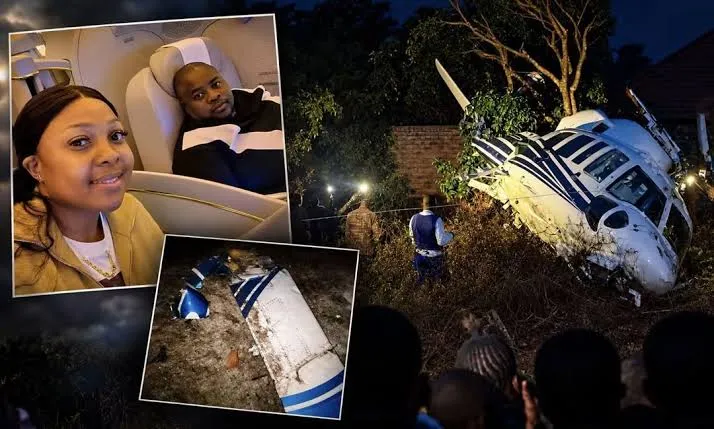
People routinely use phrases such as "saved the best for last" without predicting their own death.
A generous gift is not automatically a farewell.
A meeting with a pastor is not evidence of foreknowledge.
And an unusually busy schedule becomes "ominous" only after tragedy gives it a new meaning.
This is the danger of retrospective interpretation.
Death changes the meaning of everything that came before it.
A final photograph becomes a goodbye.
A final meal becomes a last supper.
A final social-media post becomes a prophecy.
A casual statement becomes a warning.
Sometimes those interpretations reveal something real.
Sometimes they reveal more about the living than about the dead.
But Phamotse's question should not simply be dismissed
The value of Phamotse's intervention is not necessarily that she has solved the mystery.
She hasn't.
Its value lies in forcing people to examine the extraordinary intensity of Chivayo's final public activities.
For years, generosity was part of Chivayo's public persona.
Luxury cars.
Cash gifts.
Church relationships.
Celebrity friendships.
Political connections.
Philanthropic gestures.
Public displays of wealth.
His final days therefore cannot be separated completely from the lifestyle he had already constructed.
It is entirely plausible that he was simply being Chivayo.
Perhaps he was celebrating friendships.
Perhaps he was rewarding people who had been important to him.
Perhaps he was strengthening relationships with religious leaders.
Perhaps he was giving because giving had become part of his identity.
Perhaps he was simply enjoying life.
There is another possibility: perhaps something had made him unusually reflective.
But unless evidence emerges showing what that "something" was, that remains speculation.
The haunting expression: "buying time"
Perhaps the most compelling part of Phamotse's commentary is not "buying favour."
It is "buying time."
Because that phrase exposes the fundamental contradiction at the centre of Chivayo's public life.
Money can purchase extraordinary things.
It can buy houses.
Cars.
Aircraft.
Access.
Comfort.
Influence.
Generosity can create gratitude and open doors.
But wealth encounters an absolute boundary when confronted by mortality.
The helicopter does not negotiate with the bank account.
Death does not recognise social status.
The powerful and powerless ultimately stand before the same human limitation.
And that is why Chivayo's final days have become so fascinating.
His life appeared to demonstrate the extraordinary possibilities of wealth.
His death demonstrated its limits.
Perhaps the greatest lesson is not about Chivayo at all
There is a temptation whenever a wealthy and controversial public figure dies suddenly to search for a hidden message.
Was there a warning?
Did he know?
Was he preparing?
Was somebody trying to tell him something?
Was he trying to make peace?
Was he giving away his possessions?
Was he saying goodbye without saying goodbye?
Those questions are understandable.
But they are not answers.
The evidence currently available does not establish that Chivayo anticipated the crash.
What it establishes, at most, is a striking sequence of religious encounters, gifts, tributes and public reflections immediately before a sudden death.
The rest belongs to interpretation.
And perhaps that is where the story should remain.
Because the most disturbing possibility is also the simplest:
He may not have known.
He may have believed there would be another morning.
Another flight.
Another dinner.
Another gift.
Another social-media post.
Another meeting with a pastor.
Another opportunity to say "thank you."
Then suddenly there wasn't.
That is the brutal mathematics of mortality.
We often behave as though tomorrow is an entitlement.
Chivayo's story reminds us that tomorrow is, in reality, an assumption.
Whether his final acts represented urgency, generosity, faith, celebration or coincidence may never be established.
But the phrase "SAVED THE BEST FOR LAST" will inevitably remain attached to his final public chapter.
Not because it proves that he knew what was coming.
It doesn't.
It remains haunting because, after the fact, the words acquired a meaning their author may never have intended.
And perhaps that is the cruelest irony of all.
A man who appeared to have the resources to acquire almost everything the modern world could offer ultimately encountered the one thing no fortune could purchase: more time.
Replace repeated short lines with tighter prose
Strengthen the opening with Phamotse’s claim
Add a sharper Kenyan audience angle
No comments yet. Be the first to share your thoughts.