

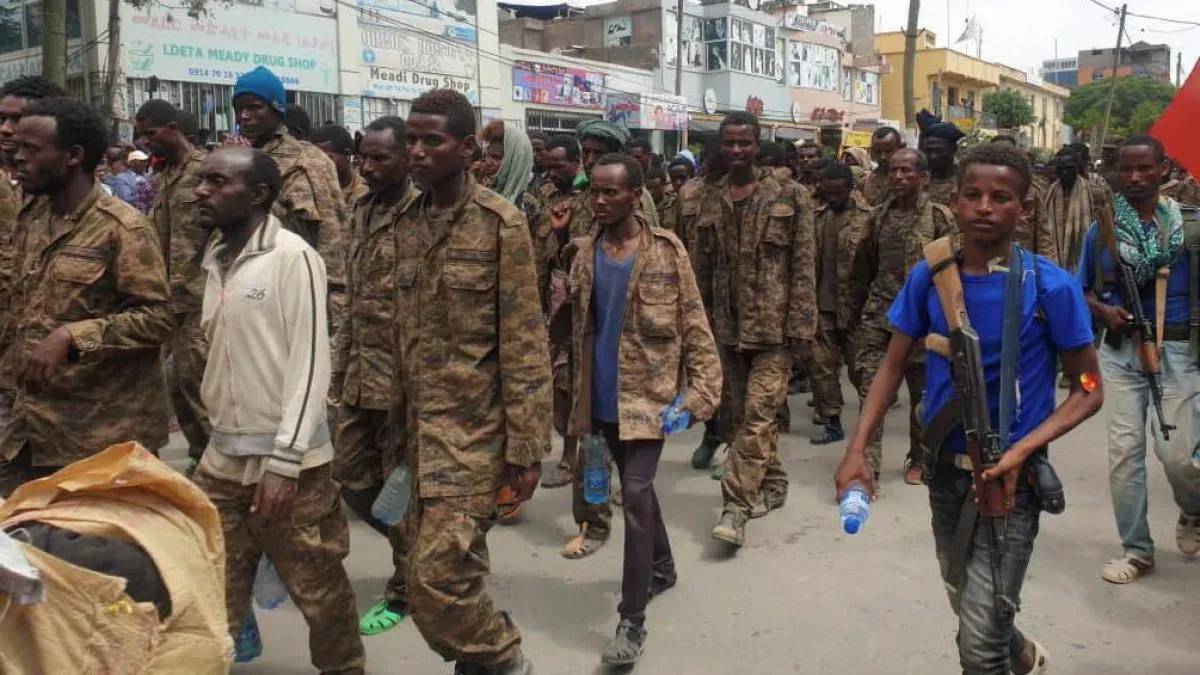
Ethiopia’s northern conflict has escalated again, with fighting around Tigray and neighboring areas threatening the peace process established after the devastating 2020–2022 war. The United Nations has warned that further military escalation could trigger a broader conflict, placing civilian protection and humanitarian access at the center of urgent diplomatic appeals.
In a statement issued on September 23, UN Secretary-General António Guterres expressed alarm over intensified hostilities and the seizure of airports in Mekelle, Axum, and Shire. The developments have raised fresh concerns about the security of civilian infrastructure as fighting spreads beyond the immediate locations of confrontation.
The African Union said Tigrayan forces had occupied the three airports and detained federal personnel, disrupting civilian air services. AU Commission Chairperson Mahmoud Ali Youssouf described the airport seizures as inconsistent with commitments under the Pretoria Agreement and called for an immediate halt to actions that could worsen the crisis.
Communications have also been affected. Reuters reported on September 25 that phone and internet services in Tigray were disrupted, with monitoring organisation NetBlocks confirming an outage. Responsibility remained disputed: sources cited by Reuters blamed the Tigray People’s Liberation Front, while a source close to the group denied its responsibility and accused the federal government.
The renewed confrontation follows the announcement of the Ethiopian Peoples’ Forces Alliance for Survival, a coalition seeking to remove Prime Minister Abiy Ahmed’s government. According to the Associated Press, its seven members include the TPLF, the Oromo Liberation Army and the Amhara Fano National Movement, alongside organisations from other regions.
The alliance brings together former enemies. Fano forces supported the federal government against the TPLF during the earlier Tigray war before entering their own conflict with federal authorities. Their cooperation now signals a significant political realignment, although shared opposition to Abiy does not necessarily resolve disagreements among the groups.
Ethiopia’s government has accused the coalition of receiving Eritrean financial backing, an allegation Eritrea has previously denied. The competing accusations add a regional dimension to the confrontation. The African Union has urged neighbouring countries to avoid contributing to escalation and instead support dialogue and efforts to rebuild trust.
At the centre of diplomatic efforts is the Pretoria Agreement, signed on November 2, 2022, between Ethiopia’s federal government and the TPLF. The accord provided for a cessation of hostilities, disarmament, restoration of services and humanitarian access. It also committed the parties to protecting civilians, including women, children and other vulnerable groups.
The agreement followed negotiations supported by an African Union panel that included former Nigerian president Olusegun Obasanjo, former Kenyan president Uhuru Kenyatta and former South African deputy president Phumzile Mlambo-Ngcuka. At the signing, Obasanjo emphasised that reaching an agreement marked the beginning of the peace process and that implementation would determine its success.
That framework now faces renewed pressure. The AU has asked Obasanjo to engage the parties urgently and help revive direct negotiations. Despite the military escalation, the continental body continues to regard the Pretoria Agreement as the foundation for a sustainable settlement between the federal government and the TPLF.
For civilians, access to assistance remains an immediate concern. The UN has called on all parties to allow humanitarian organisations to reach people safely and without obstruction. Its appeal makes clear that protecting communities and maintaining relief access cannot wait for the resolution of the wider political dispute.
Meanwhile, accounts of battlefield gains require caution. Reuters reported military claims of heavy losses among opposing forces but said it could not independently confirm battlefield reports. The available evidence therefore does not support treating either side’s claims as a complete or verified picture of the fighting.
The immediate diplomatic objective is to stop the escalation and return the parties to talks under the existing peace framework. Both the United Nations and African Union have stressed restraint, with the UN supporting renewed negotiations in good faith. Whether those appeals translate into action will determine the next stage of an increasingly dangerous confrontation.
No comments yet. Be the first to share your thoughts.