
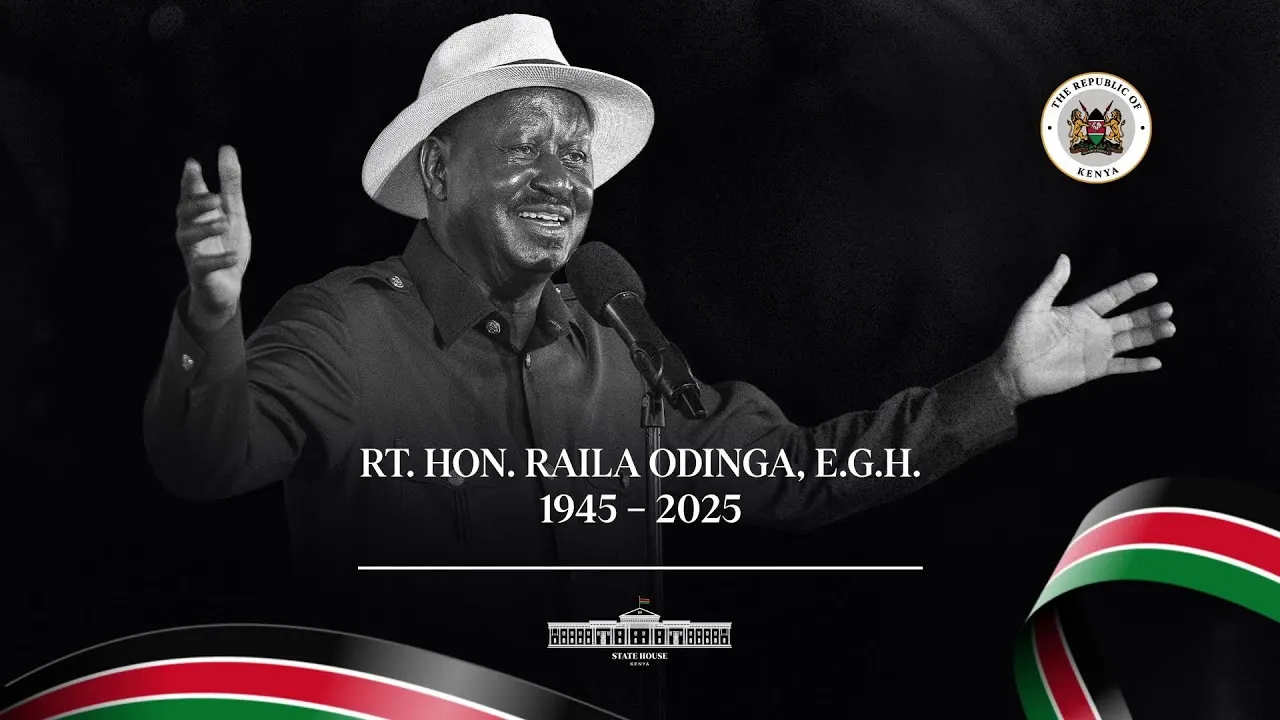
Behind the towering political figure who commanded national attention, mobilized millions of supporters, and remained at the center of Kenya’s political struggles for decades was a man who enjoyed football, cherished friendships, loved a good story, and found comfort in ordinary places.
That was Raila Amolo Odinga, popularly known as Baba.
To many Kenyans, Raila was the indefatigable opposition leader, the political strategist who repeatedly challenged the establishment, the reform campaigner who endured imprisonment and detention, and the veteran politician whose name became synonymous with Kenya’s democratic struggles.
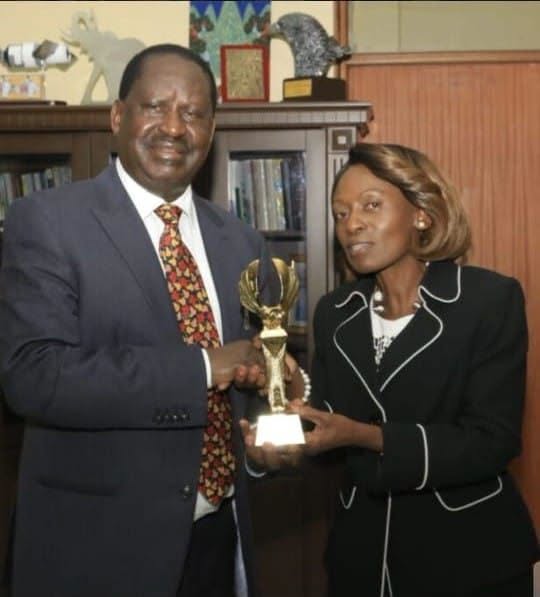
But beyond the political rallies, presidential contests, and national controversies was a more personal side of the man—one revealed through friendships, conversations, football matches, and seemingly insignificant decisions that offered glimpses into his character.
In a published recollection, Ben Agina, a former director of International and Diaspora Engagement in Raila’s presidential campaign secretariat, describes a man who could command the attention of a nation while remaining comfortable in the company of ordinary people.
Having interacted closely with Raila for approximately 25 years, Agina recalls a leader whose personal relationships were not always governed by the formalities and privileges associated with high office.
His memories challenge the tendency to judge political leaders exclusively through their public pronouncements, electoral fortunes, and ideological positions.
They suggest that understanding Raila requires looking beyond the politician to the individual who inhabited familiar spaces, enjoyed simple pleasures, and valued human connections.
A POLITICAL GIANT WHO ENJOYED ORDINARY COMPANY
One of the striking aspects of Agina’s recollections is Raila’s appreciation of ordinary social settings.
During conversations, the former prime minister would recount stories from his childhood and school days, including visits to village bars with childhood friends to enjoy whatever drinks were available.
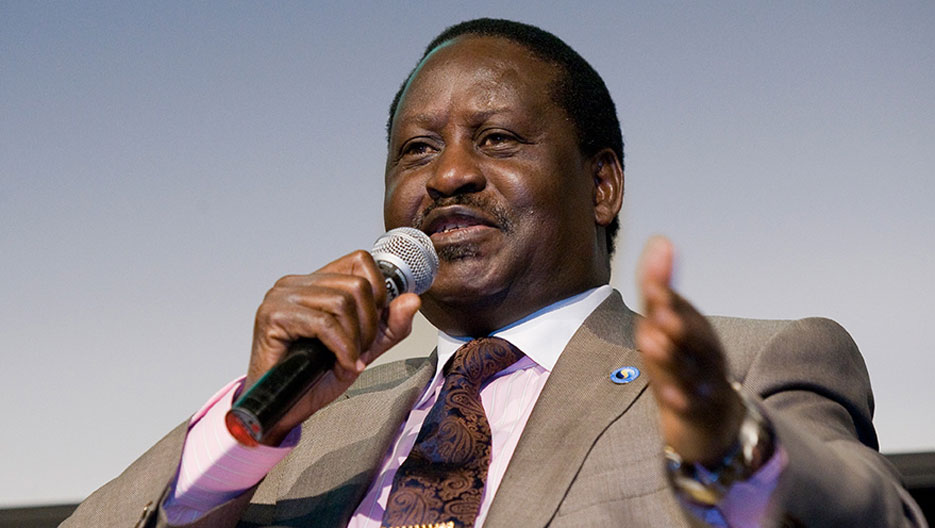
These were not occasions defined by elaborate arrangements or the expectation of special treatment.
According to Agina, Raila appeared comfortable returning to familiar environments where friendship mattered more than political stature.
At the Bunge canteen, he shared drinks and conversations with the late Joab Omino, Joshua Ojode, and Otieno Kajwang.
The company could tease him, challenge him, and engage him freely.
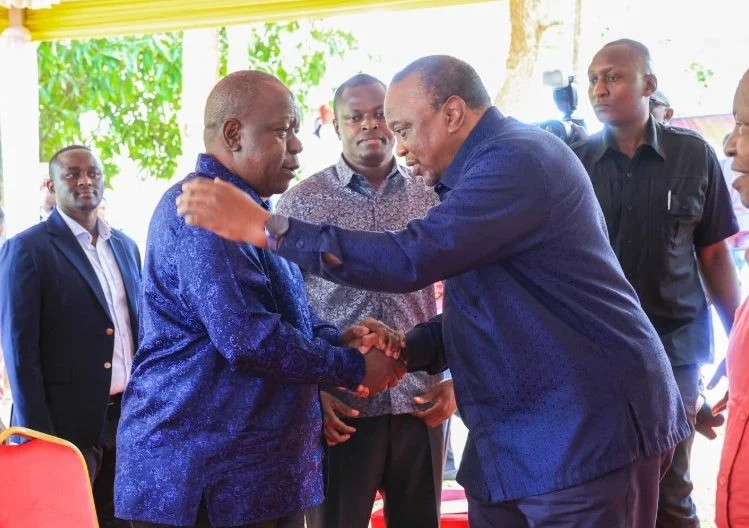
Such moments offered a contrast to the public image of a political heavyweight whose presence could transform an ordinary gathering into a major political event.
They also illustrated a dimension of leadership that is often overlooked in the pursuit of political power: the ability to maintain relationships that are not entirely dependent on status, influence, or access to public office.
For a politician who spent decades navigating the often unforgiving terrain of Kenyan politics, such friendships provided a connection to the ordinary social world beyond political calculations.
ARSENAL: THE PASSION THAT COULD WAIT FOR NO POLITICAL DISCUSSION
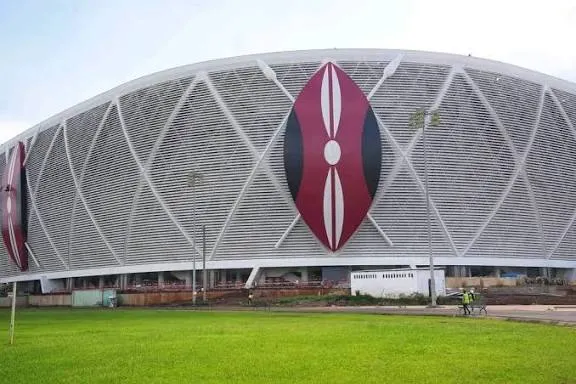
If there was one passion that Agina and Raila did not share, it was football allegiance.
Raila was a devoted supporter of Arsenal Football Club.
When Arsenal played, he would invite close friends, including Mweha Kamau, popularly known as Kamau wa Raira, and Wycliffe Oparanya, to watch the match with him.
Agina recalls an occasion when he needed to discuss an issue with Raila and was asked to meet him at AXA Sports Bar and Grill, an open-air establishment off Bogani East Road in Karen.
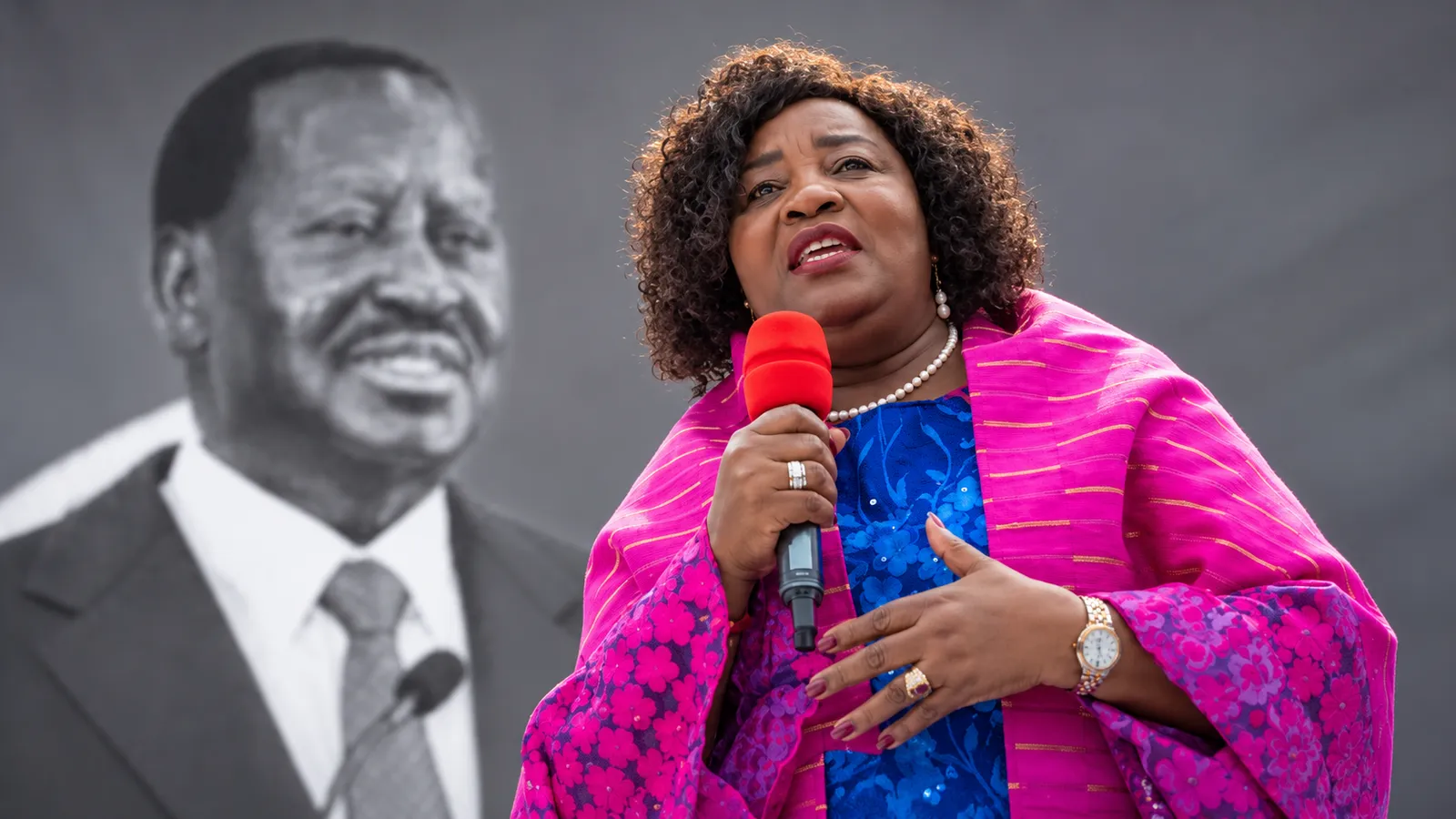
He soon discovered that approaching Raila during an Arsenal match required an understanding of football etiquette.
When the game was underway, Raila’s attention remained fixed on the screen. Conversations competing with the match had little chance of succeeding.
Half-time, however, offered an opportunity.
The football would be analyzed, the visitors would exchange views, and only then would Raila turn to other matters.
The anecdote paints a picture of a man capable of intense concentration on something he enjoyed, even when the demands of political life were never far away.
His love for Arsenal could also influence official travel arrangements.
On one occasion, Raila asked Agina to organize an official trip to London on condition that it coincide with a week when Arsenal were playing.
Former Gatundu South MP Peter Kenneth arranged box seating at the Emirates Stadium for the delegation, which included Siaya Governor James Orengo, Hassan Joho, Junet Mohamed, COTU Secretary-General Francis Atwoli, and Raila’s children, Raila Junior and Winnie Odinga.
The group watched Arsenal take on Liverpool.
For those accustomed to seeing Raila surrounded by political aides, party officials, and supporters, the match offered a different picture: a man enjoying one of life's simple pleasures in the company of people close to him.
Football did not erase the weight of his political responsibilities. It provided a window into the person who carried them.
NJUGUNA'S INSTEAD OF KEMPINSKI
Perhaps the most revealing anecdote in Agina’s account concerns a decision made after a campaign rally in Dagoretti.
A Nairobi Member of Parliament informed Raila that lunch had been arranged at the Kempinski Hotel.
But Raila rejected the plan.
His instruction to his driver was direct: they should go where the people were.
“Juma, let’s go to Njuguna’s,” he said.
The delegation abandoned the planned stop at the prestigious hotel and headed to Njuguna’s instead.
The decision was simple, but its symbolism was significant.
It reflected a preference for a familiar, accessible environment over the formality associated with an exclusive establishment.
For Raila, as Agina remembers him, lunch did not necessarily have to become an exercise in protocol simply because the person being served was a major political figure.
Yet the anecdote also raises a broader question about political leadership in Kenya.
How often do leaders deliberately leave the comfort of official entourages and privileged spaces to engage ordinary citizens on their own terms?
And how much of the connection between politicians and the electorate survives when campaigns end, power shifts, and the cameras disappear?
Raila’s choice of Njuguna’s provides a personal recollection rather than a comprehensive measure of his political record. Nevertheless, it illustrates why some of his associates remember him as a leader who could be comfortable outside the trappings of high office.
For his supporters, such moments reinforced the image of a politician whose appeal was rooted partly in his accessibility and his identification with ordinary Kenyans.
LEADERSHIP MEANS LISTENING.
Beyond football and friendship, Agina’s account offers a more consequential lesson about leadership.
It concerns an episode during preparations for the first Azimio presidential secretariat retreat at Elementaita.
At the time, Agina was serving as acting chief executive of the secretariat. However, his name was missing from the list of invitees.
He learned of the meeting through a Capital FM news alert announcing the appointment of Elizabeth Meyo as chief executive.
Agina believed his exclusion resulted from the actions of an unnamed officer in Raila’s office who considered his position strategically important.
That explanation reflected his understanding of the circumstances; the account does not independently establish the officer’s motives.
What followed, however, became one of the memories that stayed with him.
That evening, both Raila and Winnie Odinga separately called to ask why he had not attended the retreat.
Agina explained that he had not been invited.
The following day, Raila instructed him to report to his Karen residence.
During their conversation, Agina explained what had happened and why he had missed the meeting.
Raila listened before directing the discussion towards the future.
Rather than allowing the encounter to become an extended dispute over the previous day's events, he asked Agina what he wanted to do at the secretariat.
Agina responded in Dholuo: “Baba, gimi miya ema kawo”—whatever you assign, I will take.
Raila then assigned him responsibility for handling interactions with the international community and the diaspora, as well as monitoring activities around the Independent Electoral and Boundaries Commission.
For Agina, the significance of the encounter lay not merely in the new responsibilities but in Raila’s willingness to hear his explanation and discuss his future role.
The incident illustrates an important principle of organizational leadership: before making a judgment about an individual, a leader should establish the facts and give the person an opportunity to be heard.
In institutions where access to decision-makers can determine careers, exclusion from an important meeting can easily be interpreted as a sign of lost confidence or political marginalization.
Listening can prevent a misunderstanding from becoming a lasting grievance.
It can also restore confidence in an organization by demonstrating that personal grievances will not automatically determine professional outcomes.
Raila’s intervention, as Agina recalls it, was a reminder that leadership is not measured only by the ability to make major political decisions. It is also demonstrated through seemingly small acts of attention, fairness, and engagement.
THE PUBLIC LEADER AND THE PRIVATE INDIVIDUAL
Raila’s political legacy cannot be reduced to anecdotes about football, friendship, or lunch.
His place in Kenya’s history must also be examined through his political struggles, advocacy for constitutional reform, periods of detention, participation in government, presidential campaigns, and the controversies that accompanied his long career.
Supporters and critics will continue to disagree over the consequences of his decisions, the compromises he made, and the political alliances he pursued.
Those debates are necessary in a democracy.
But a complete assessment of a public figure also requires an understanding of the personal qualities that shaped relationships with colleagues, supporters and political associates.
Agina’s recollections offer one such perspective.
They describe a man who could be absorbed in a football match, enjoy stories about his childhood, share a drink with old friends and reject a prestigious lunch venue in favour of a familiar establishment.
They also describe a leader who, when confronted with an apparent administrative exclusion, took time to ask questions and consider the explanation of the person affected.
These are personal memories, not an exhaustive assessment of Raila’s character or political record. Their value lies in the human details they preserve.
History often concentrates on speeches, election results, political agreements and the exercise of state power. Yet the private moments surrounding public figures can reveal how they related to the people who occupied their immediate circles.
For Raila, these moments form part of the broader story of a politician whose public life was inseparable from the friendships, loyalties and personal relationships that sustained him.
A LEGACY THAT OUTLIVES THE MAN
The death of a towering political figure inevitably invites questions about the future.
What happens to the ideals associated with that individual? Which political movements survive? Who carries forward the unfinished business? And will the next generation preserve the values that inspired people to follow the departed leader?
Raila's admirers will remember him differently, depending on their experiences, political convictions and expectations.
Some will recall the struggle for democratic freedoms. Others will remember his role in constitutional reform, his years in opposition, his participation in government or his repeated presidential contests.
For those who knew him personally, the memories may be more intimate.
They may remember the laughter, the conversations, the football matches and the moments when a powerful politician appeared simply as a friend or colleague.
Agina’s tribute preserves precisely that dimension of Raila’s life.
It reminds readers that the man who commanded national attention also occupied ordinary human spaces, where friendship, humour and personal loyalty mattered.
His story, therefore, extends beyond the political stage.
It is also a story about relationships, the responsibilities that accompany influence and the importance of listening to people who might otherwise be overlooked.
Raila was a political giant, but he was also a man who enjoyed the company of friends, followed his favourite football club with passion and could choose a familiar lunch spot over a prestigious hotel.
Those who admired him will continue to debate his political achievements and shortcomings. Those who worked closely with him will carry their own memories of the person behind the public image.
Together, such accounts form part of the historical record of a man whose influence on Kenya's political life was profound.
In the end, the measure of a leader lies not only in the crowds he commands or the offices he occupies, but also in the people he listens to, the relationships he sustains and the values he leaves behind.
By Xavier Lugaga
Editorial note: This rewrite is based on the supplied newspaper material, particularly Ben Agina’s personal recollections. It does not independently verify the anecdotes or introduce additional historical claims. I have preserved the distinction between what Agina personally remembers and broader interpretations of Raila’s legacy.
No comments yet. Be the first to share your thoughts.