
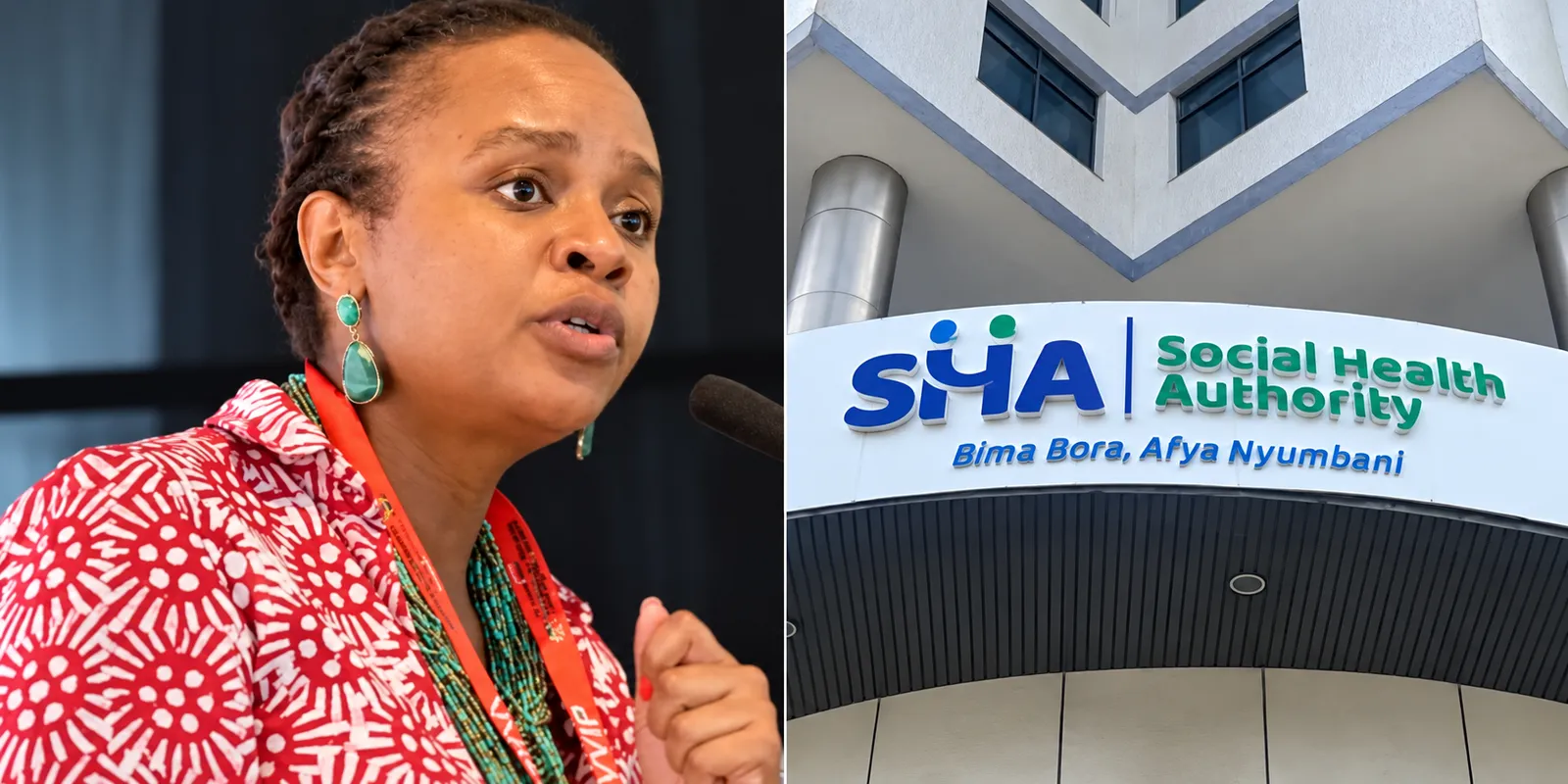
The Social Health Authority (SHA) has moved to avert an immediate disruption in healthcare services after extending the validity of existing contracts with healthcare providers beyond the September 30 deadline.
The development is significant because SHA had earlier notified hospitals, clinics and other healthcare facilities that their existing contracts would expire at 11:59 p.m. on September 30, 2026, and urged them to complete new contracts for the 2026–2029 contracting cycle before October 1.
A notice issued by SHA on September 28, signed by Chief Executive Officer Dr Mercy Mwangangi, CBS, warned that providers without executed contracts would not be permitted to continue offering services to SHA beneficiaries and would have their access to the provider portal switched off.

However, SHA's current e-contracting portal now provides for a temporary 14-day extension, running from September 30 to October 14, 2026. Providers are being asked to confirm the extension electronically.
The extension effectively changes the immediate picture for patients who might otherwise have faced uncertainty as facilities transitioned from the old contracts to the new contracting cycle.
What the original notice said
The September 28 communication was unequivocal.

Healthcare providers wishing to continue serving SHA beneficiaries were told to apply for new contracts and complete the contracting process before October 1.
Facilities without an executed contract for the 2026–2029 cycle would, according to the notice, lose their ability to provide services to SHA beneficiaries and have their access to the SHA provider portal switched off.
The Authority also instructed facilities that had not completed contracting to make arrangements for patients receiving ongoing treatment to be transferred to contracted providers.
That provision was particularly important for patients undergoing long-term or specialised treatment, because an abrupt change of facility can create difficulties involving medical records, continuity of medication and follow-up appointments.

The 14-day breathing space
The latest development provides providers with additional time.
SHA's e-contracting platform currently states that existing contracts can be temporarily extended from September 30 to October 14. The process is presented as a short electronic confirmation, with the facility required to verify the identity of the person signing, provide the facility's registration number and access the administrator's email for verification.
The SHA e-contracting system says the new system allows facilities to submit contracts, track their status and digitally sign agreements online.

This means the immediate issue is no longer simply whether a facility's old contract expired on September 30. The more pressing question is whether individual facilities have completed or are completing the new contracting process before the temporary extension runs out.
Why the contracting issue matters
SHA's relationship with healthcare providers is central to the operation of the new health insurance system.
Under the Social Health Insurance Act, healthcare providers and facilities must be empanelled and contracted for SHA to make payments from the relevant funds, subject to the law and applicable regulations. SHA has previously stated that it continuously empanels licensed and certified healthcare providers and facilities.

This makes contracting more than an administrative exercise.
For hospitals, it determines whether they can continue participating in the SHA-funded system. For patients, it can determine whether a facility remains part of the network through which they access covered services.
For SHA itself, the transition represents a test of whether a nationwide health financing system can move from one contracting cycle to another without creating gaps in patient care.
The bigger concern: continuity of treatment

The most sensitive part of SHA's original notice was not the warning to providers but the instruction concerning patients already receiving care.
Facilities unable to complete contracting were told to arrange transfers for patients receiving ongoing treatment.
That raises practical questions.
What happens to a patient undergoing chemotherapy, dialysis, maternity care, surgery follow-up or another prolonged treatment if the facility's contract status changes?
Who coordinates the transfer?
How quickly are medical records transferred?
Will the receiving facility have the necessary capacity?
And, importantly, will the patient understand where to go before arriving at a facility that is no longer authorised to provide SHA-funded services?
These questions make the transition a patient-care issue rather than merely a contractual dispute between SHA and healthcare providers.
A system under scrutiny
The development also highlights the broader challenge facing SHA as it replaces the former NHIF framework.
SHA's contracting platform indicates that thousands of facilities are being brought into a digital contracting environment, with facilities able to submit and manage contracts electronically.
The Authority has also previously emphasised that licensed and certified facilities must be empanelled and contracted before ordinary claims can be paid, although the regulations provide for payment in specified circumstances involving emergency treatment by licensed and certified facilities.
The 14-day extension therefore buys time, but it does not eliminate the underlying challenge.
The clock has effectively been reset, not stopped.
Providers now have until October 14, 2026, according to the current SHA e-contracting notice, to regularise their position under the temporary extension.
For patients, the critical issue is continuity: whether the transition to the 2026–2029 contracting cycle will occur without forcing vulnerable beneficiaries to navigate uncertainty at the very point when they need medical care.
The September 28 notice created the alarm. The October extension provides breathing space. The real test will be whether SHA and healthcare providers use that breathing space to complete the transition without leaving patients caught between an expired contract and an unfinished replacement.
No comments yet. Be the first to share your thoughts.