
- Farmers are being mobilized.
- Industry is waiting.
- Markets will determine the value.
- But ultimately, the question remains:
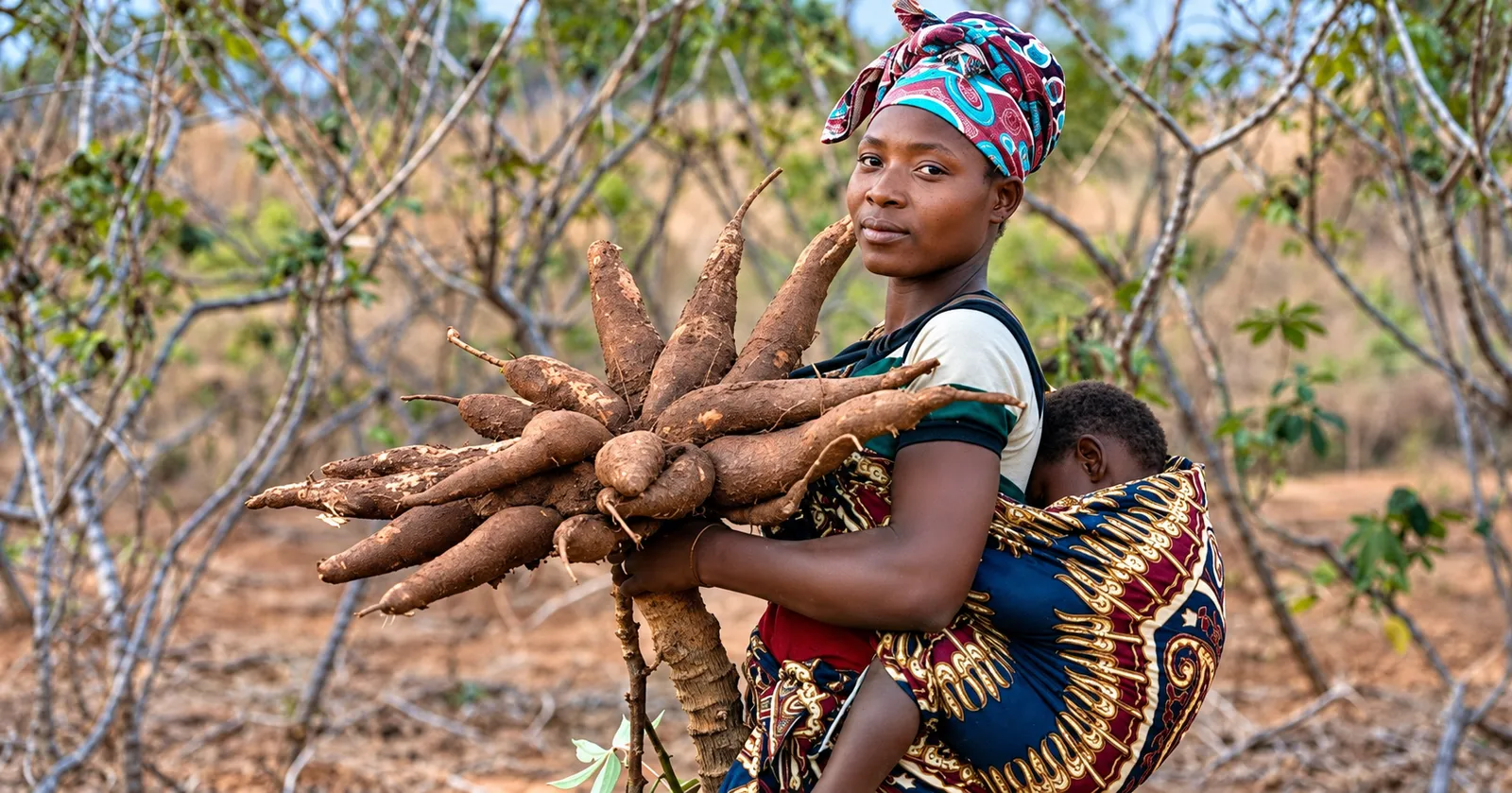
For years, the cassava farmer has largely occupied the bottom rung of Busia's agricultural economy: producing the crop, harvesting it, and selling it, often with limited control over what happens after the produce leaves the farm.
Now, that equation could be changing.
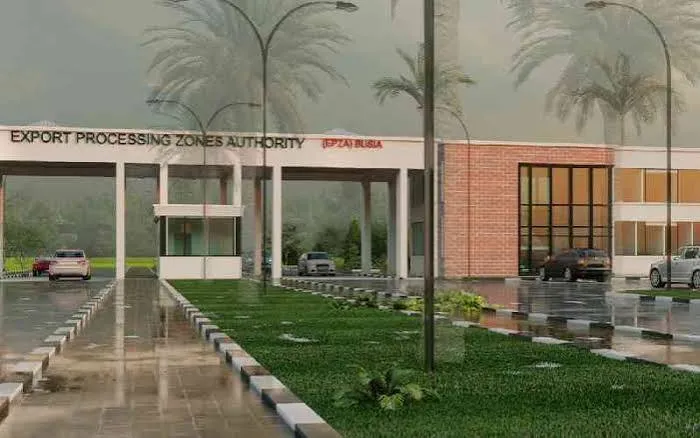
A Sh130 million cassava-processing plant dedicated to starch production is expected in December as Busia County moves to operationalize its County Aggregation and Industrial Park (CAIP) and Export Processing Zone (EPZ) at Nasewa in Matayos Constituency.
But behind the excitement over a new industrial facility lies a much bigger question:
Who will actually gain from the cassava economy?
Will it be the smallholder farmer who grows the cassava?
The cooperative that aggregates it?
The transporter who moves it?
The processor that converts it into starch?
Or the industrial and commercial players who ultimately buy the finished product?
That is where the real Busia story begins.
A factory is coming. What follows?

The announcement was made at the Agricultural Training Centre (ATC) in Busia Town, where more than 100 farmers and agripreneurs from across the county were flagged off to attend the Agriculture and Food Systems Transformation Summit at the Jamhuri Park ASK Showground in Nairobi.
The summit brings together farmers, cooperatives, county governments, private-sector actors, development partners, and other stakeholders to examine Kenya's agricultural transformation and the road ahead.
For Busia, however, the transformation conversation has acquired a distinctly local meaning.
The county is trying to create a chain running from farm to aggregation center, from aggregation to factory, and from factory to market.

Cassava could become one of the commodities through which that ambition is tested.
The proposed starch plant potentially creates an industrial buyer for cassava while providing the raw material for a value-added product.
But factories do not automatically make farmers prosperous.
The economics of the entire chain will determine who captures the value.

Lugaga: Prime the farmer first.
Farmers Party Busia County Chairman Xavier Lugaga has hailed the planned investment, describing it as an opportunity to prime farmers in the county for greater participation in commercial agriculture and value addition.
Lugaga's argument is straightforward: if Busia is going to industrialize agriculture, farmers must not be left behind at the production stage.
They must be prepared to produce commercially, organize themselves, embrace improved farming practices, and position themselves to supply the industries that the county hopes to establish.
The arrival of a starch-processing plant therefore raises the stakes for farmer mobilization.
The question is no longer simply whether Busia can grow cassava.
It is whether Busia's farmers can organize themselves strongly enough to negotiate from a position of strength.
The farmer's dilemma
There is a familiar danger in agricultural value chains.
A farmer can produce the raw material while someone else captures most of the value added after processing.
That is why the success of the Nasewa project cannot be measured simply by the cost of the plant, the machinery installed, or the volume of starch eventually produced.
The more revealing indicators will be found at the farm level.
What price will farmers receive?
Who will aggregate their cassava?
Will farmers have reliable contracts or predictable markets?
Who determines quality standards?
What happens when supply exceeds processing capacity?
Will cooperatives have a meaningful role?
And perhaps most importantly:
How much of every shilling generated by the cassava value chain will ultimately reach the farmer?
These are not questions against the project.
They are the questions that will determine whether the project delivers on its farmer-centered promise.
Nasewa's bigger gamble
The cassava plant is part of a much wider industrial ambition around the CAIP and EPZ in Nasewa.
The vision is to transform Busia from a county that primarily produces agricultural commodities into one that also processes, adds value, and participates in industrial markets.
That could have consequences far beyond cassava.
Processing creates potential demand for transport, packaging, storage, equipment maintenance, logistics, technical services, and other supporting enterprises.
For young people, it could create opportunities around the emerging agricultural-industrial ecosystem.
For farmers, it could provide a new market.
For cooperatives, it could create a stronger commercial role.
For the county, it could expand the local economic base.
But each of those potential benefits depends on how the system is designed and managed.
The danger of producing for a factory that cannot feed itself
There is another uncomfortable question.
Can Busia produce enough cassava to keep the plant operating sustainably?
A processing plant requires a reliable supply of raw material.
That means farmers need access to quality planting materials, extension services, appropriate technology, financing, and predictable markets.
They also need aggregation systems capable of moving cassava from scattered farms to the processing facility efficiently.
If those systems are weak, the plant risks becoming infrastructure waiting for agriculture to catch up.
That is why the December milestone should be viewed not as the conclusion of the project but as the beginning of the harder phase.
The factory must be fed.
And the farmer must be able to make money feeding it.
From food crop to industrial commodity
Cassava has traditionally been an important food crop for many households.
Industrial processing changes the equation.
Once cassava becomes an industrial raw material, production decisions begin to depend increasingly on commercial considerations—volume, quality, consistency, pricing, and market demand.
That transition requires a different kind of farmer.
It requires farmers who are organized, informed, and connected to markets.
This is where cooperatives could become critical.
A fragmented farmer selling individually at the farm gate may have limited bargaining power.
An organized producer group capable of aggregating substantial volumes can potentially negotiate differently with processors and other buyers.
The industrial plant could therefore force a transformation not only in what Busia farmers grow but also in how they organize themselves to sell it.
The Nairobi connection
The decision to send more than 100 Busia farmers and agripreneurs to the Agriculture and Food Systems Transformation Summit is significant against this backdrop.
The delegation is entering a national conversation about how agriculture can move from subsistence and raw production towards commercialization, value addition, innovation, and stronger markets.
For Busia, the lessons from Nairobi will have to come home.
The county's farmers will need to ask what the emerging agricultural transformation means for them—not simply as producers, but as economic participants.
Because the ultimate measure of agricultural transformation is not how impressive the factory looks.
It is what happens to the farmer's income.
The Sh130 million question
The Sh130 million plant will inevitably attract attention because of its scale.
But the more important figure may eventually be found somewhere else—in the farm-gate price paid for cassava.
If the plant creates a dependable market and farmers receive a fair return, the facility could help unlock a new commercial chapter for Busia's cassava economy.
If the value chain is poorly organized, however, the farmer could remain what agriculture has too often made them: the person who carries the production risk while others capture the value.
That is why Busia's cassava story deserves scrutiny from the beginning.
The county is building the infrastructure.
When the first cassava enters the Nasewa factory and emerges as starch, who will be richer—and will the farmer be among them?
That is the question that will determine whether Busia's cassava revolution becomes an industrial success story or simply another chapter in the long struggle to ensure that those who feed the nation also prosper from agriculture.
No comments yet. Be the first to share your thoughts.