


There is a particular kind of silence that descends upon a country when citizens hear that a system they were told would transform their lives is being replaced almost as quickly as they were asked to trust it.
For many Kenyans, the transition from the Social Health Authority's Provider Portal to a new Health Management Information System is therefore more than a technological adjustment.
It is a question of trust.

The Government says the new SHA HMIS is intended to strengthen efficiency, transparency, accountability, patient verification, electronic claims processing and the exchange of health information. The Ministry of Health began consultations on the transition months ago, and thousands of facilities have already migrated.
In principle, there is nothing wrong with improving a system.
Technology evolves. Systems fail. Platforms become obsolete. New architecture can sometimes deliver services more efficiently than the old one.
But the Kenyan taxpayer is entitled to ask a very simple question:

What happens to the billions already spent?
That question becomes even more important when the public hears figures running into tens or hundreds of billions of shillings.
If the often-circulated KSh104 billion figure is being presented as the cost of the SHA system, then Kenyans deserve a clear breakdown: What exactly did the money finance? Software? Infrastructure? Connectivity? Data centres? Consultants? Procurement? Integration? Insurance financing? Claims? Administration? Or several programmes bundled together?
These are not hostile questions.

They are accountability questions.
And there is an important distinction that must not be lost in the public debate: replacing a provider portal does not automatically mean that the entire SHA reform, or KSh104 billion, has been discarded. The Government has described the current exercise as a transition from the SHA Provider Portal to SHA HMIS, not the abolition of SHA itself.
That distinction, however, does not eliminate the need for transparency.
THE ORDINARY KENYAN WANTS VALUE, NOT TECHNOLOGY JARGON
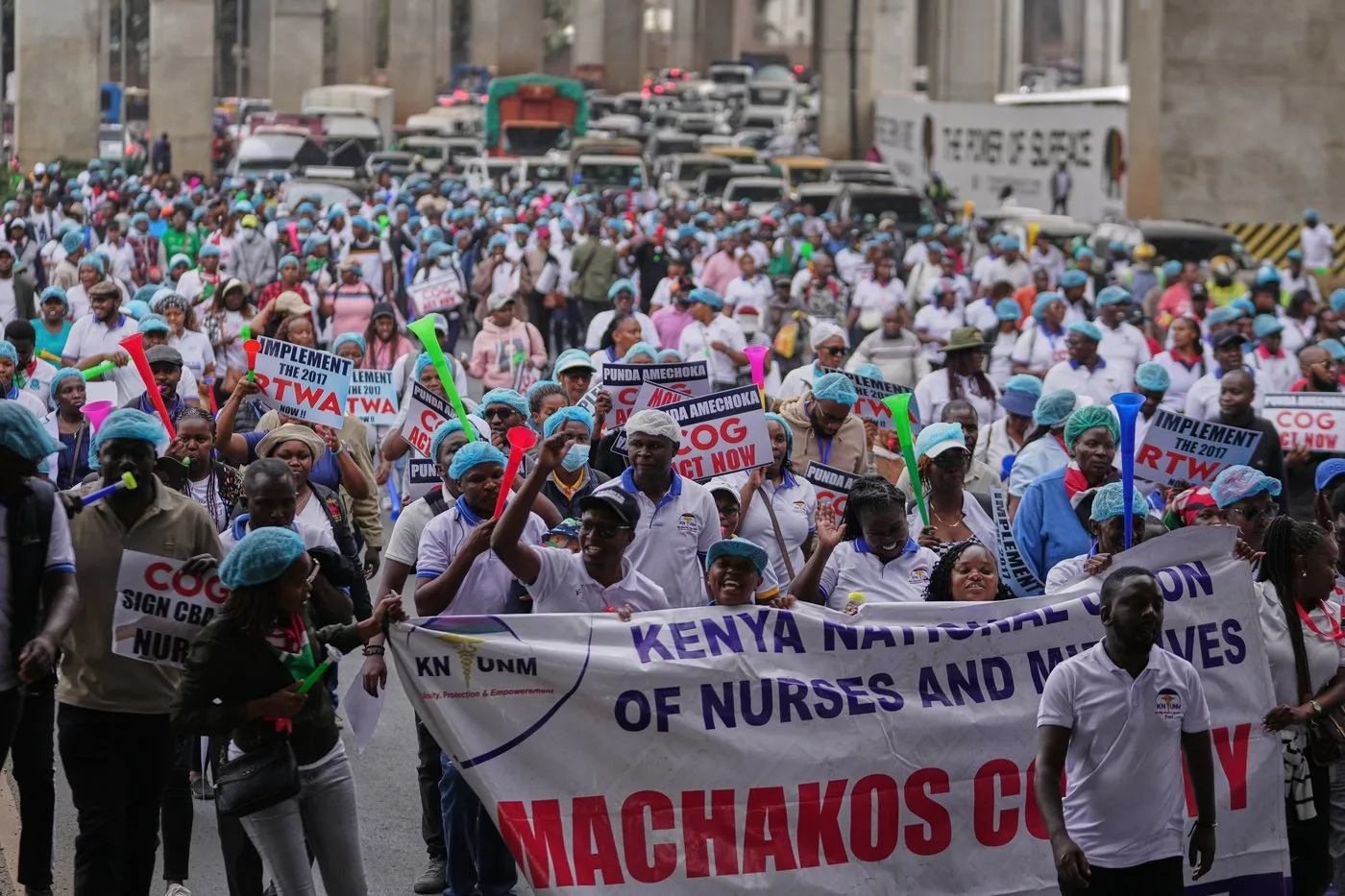
Consider the ordinary Kenyan.
A mother in Busia does not necessarily care whether her hospital uses a Provider Portal, HMIS, an integrated digital platform or another sophisticated technological expression.
She wants to know whether her child will be treated.
A farmer in Bungoma wants to know whether his SHA contribution will translate into healthcare when illness strikes.

A boda boda rider in Nakuru wants to know whether he will be turned away because a computer system is down.
A civil servant wants to know whether deductions from his salary are being used efficiently.
And an elderly Kenyan wants one thing above everything else:
Access to treatment without humiliation.
That is where technology meets human reality.
The Ministry itself has previously warned health facilities not to deny patients treatment because of system downtime.
That warning is significant.
Because when a digital system fails, the consequences are not digital.
A failed computer system can mean a patient missing treatment.
A delayed claim can mean a hospital struggling to pay suppliers.
A rejected electronic claim can mean a facility experiencing financial pressure.
A prolonged transition can create confusion for healthcare workers.
And ultimately, the person carrying the greatest burden may be the patient.
KENYANS ARE TIRED OF STARTING AGAIN
There is also a psychological dimension to this debate.
Kenyans have witnessed repeated changes in public systems.
NHIF gave way to SHA.
Now the SHA Provider Portal is being replaced by another digital arrangement.
Every transition comes with promises of efficiency, transparency and better service.
But ordinary citizens are increasingly asking:
When does reform finally become stability?
There is nothing inherently wrong with changing a system that does not work.
Indeed, refusing to improve a failing system would be irresponsible.
But every replacement creates another question:
Who takes responsibility for what went wrong with the previous arrangement?
If the previous system was defective, who approved it?
Who designed it?
Who procured it?
Who certified it?
Who supervised implementation?
Who was paid?
What did the taxpayer receive for the money spent?
And if some components remain useful, will they be incorporated into the new architecture or simply abandoned?
Those questions should not be treated as political attacks.
They are the basic questions of public financial management.
THE KSH104 BILLION QUESTION
The KSh104 billion figure circulating in public discussion deserves particularly careful scrutiny.
Kenyans should demand documentation rather than social-media arithmetic.
If KSh104 billion was actually spent on a broader health transformation programme rather than one specific portal, the Government should say so clearly.
If the figure includes several contracts, programmes or components, those components should be itemised.
If it does not represent expenditure on the Provider Portal, that should also be stated clearly.
The public deserves the difference between budget allocation, contractual value, actual expenditure and money specifically attributable to the digital platform.
Those four things are not necessarily the same.
This is where Parliament, auditors, procurement officials and oversight institutions have an important role.
The answer should not be political rhetoric.
It should be documentary evidence.
A NEW SYSTEM MUST NOT BECOME A NEW EXPENSE WITHOUT A NEW ACCOUNTABILITY FRAMEWORK
The Government says SHA HMIS is designed to improve real-time patient verification, electronic claims management, digital authentication and health-information exchange. As of June 2026, the Ministry reported that more than 5,000 facilities were already operating on SHA HMIS and nearly 3,000 were submitting claims electronically.
Those are important developments.
But successful digitisation should ultimately be measured by what happens at the hospital gate.
Are patients served faster?
Are fraudulent claims reduced?
Are genuine claims paid promptly?
Can hospitals reconcile their accounts?
Can citizens see and understand their entitlements?
Can the system withstand downtime?
Are patient records protected?
Can an audit trail identify who changed what, when and why?
And perhaps most importantly:
Can every shilling be followed from appropriation to expenditure to measurable public benefit?
That is the real test.
KENYA DOES NOT NEED ANOTHER DIGITAL MIRACLE
We have heard many times that technology will solve corruption, inefficiency and poor service.
Technology can help.
But technology without accountability can simply make an inefficient system more complicated.
A computer does not become transparent merely because it is digital.
A procurement process does not become clean merely because it is electronic.
A claim does not become legitimate merely because it has a reference number.
And public expenditure does not become value for money merely because it has been spent on technology.
Kenya therefore needs something bigger than a new HMIS.
It needs institutional memory.
Before one system is closed and another takes over, citizens should be able to understand what was purchased, what worked, what failed, what remains usable, what has been paid for and who is responsible for the transition.
The country should not repeatedly wake up to announcements that billions were spent yesterday and a new system is necessary today.
THE DEEPEST FEAR IS NOT ABOUT COMPUTERS
The deepest Kenyan apprehension is not that HMIS will replace the SHA portal.
It is the fear that public money can disappear into a system and then the system can disappear without a satisfactory explanation.
That fear must be addressed with facts.
If the Government has spent money properly, let the documents demonstrate it.
If contracts were properly procured, let them be examined.
If the old platform achieved its objectives, let the country know.
If it failed, let Kenyans know why.
If the new HMIS is better, let measurable evidence prove it over time.
And if lessons were learnt, let those lessons be preserved so that Kenya does not pay repeatedly for the same mistakes.
Healthcare is not merely another government computer project.
It is where taxation meets human vulnerability.
It is where a sick child meets a hospital.
It is where an elderly parent meets a doctor.
It is where a poor farmer discovers whether the promises of government are real.
Therefore, as Kenya moves into another phase of digital healthcare, the country should not be afraid of asking uncomfortable questions.
The taxpayer is not an enemy of reform.
The taxpayer is the owner of the money.
And when billions of shillings are involved, asking where the money went is not cynicism.
It is citizenship.Start writing your story…
No comments yet. Be the first to share your thoughts.