
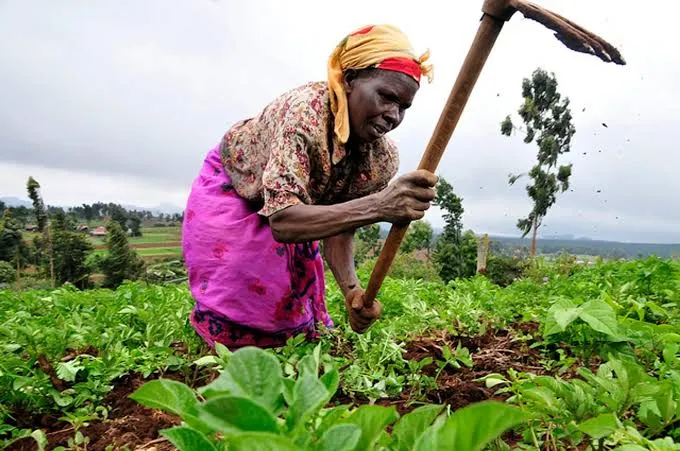
For many Kenyan households, the end of the month is not a financial milestone. It is a moment of reckoning.
School fees have to be paid. Rent is due. Food must be bought. Electricity tokens are running out. A parent may need medical attention. A sibling may call asking for financial assistance. A farmer may need money for fertiliser, seeds or labour before the next planting season.

Sometimes, the entire family income is exhausted before the next salary or harvest arrives. Under such circumstances, talking about wealth creation can sound like a luxury.
But this is precisely where a different financial mindset becomes important: learning to think beyond the current season. A difficult season is real. But it does not necessarily define the entire future.
THE KENYAN HOUSEHOLD: SURVIVING TODAY WHILE PREPARING FOR TOMORROW

Consider a Kenyan household where both parents are working but still struggle to make ends meet.
Their income may be consumed by school fees, food, rent, transport, family obligations and emergencies.
The temptation is to spend every additional shilling as soon as it comes in. But whenever circumstances allow, the family can ask a different question: What can we build today that will reduce our financial pressure tomorrow?
It could be an emergency fund. It could be paying down expensive debt. It could be investing in a small income-generating activity. It could be acquiring a new skill. It could be gradually improving a rural home or farm. It could be saving through a properly managed cooperative or another regulated financial institution.

The amount may initially be small. What matters is developing the habit of converting part of today's income into tomorrow's financial capacity.
THE KENYAN FARMER: FROM PRODUCING TO CREATING WEALTH
The farmer provides perhaps the clearest example of thinking beyond the current season.

A maize farmer may harvest several bags and immediately sell the entire crop because school fees, food and household expenses are pressing. That decision may be necessary.
But the long-term question is: what happens after the sale?
Does the farmer remain trapped in the same cycle next season? Or can part of the income be used to improve production?
Better seeds. Soil management. Irrigation. Farm equipment. Storage. Livestock. Value addition. Diversification.

The objective is not merely to produce another harvest. It is to gradually build a productive agricultural enterprise. A farmer producing maize, for example, may eventually explore milling, animal feeds or other forms of value addition rather than remaining entirely dependent on the price offered for raw grain.
THE COOPERATIVE ADVANTAGE
This is where cooperatives can become an important part of Kenya's economic story. A small-scale farmer acting alone may have limited bargaining power.

Transport costs can be high. Storage can be expensive. Market information may be limited. Financial institutions may have requirements that an individual farmer may struggle to meet.
A well-run cooperative can provide a platform for collective action. Farmers can pool their produce, improve marketing, negotiate collectively and explore opportunities for value addition.
The principle is simple: Many small producers acting together can sometimes achieve what individual producers cannot achieve alone. But cooperative membership should not mean surrendering personal financial responsibility.
Members should demand accountability, proper governance, transparent financial records and responsible management. A cooperative can create sustainable wealth only when the institution itself is responsibly managed.
THE DIFFERENCE BETWEEN SELLING PRODUCE AND BUILDING AN ENTERPRISE
Imagine two farmers producing the same crop.
The first farmer harvests, sells the produce immediately and spends the proceeds.
The second farmer also sells but begins planning for the next stage.
The second farmer may ask: - Can I reduce productionStart writing your story…
No comments yet. Be the first to share your thoughts.