

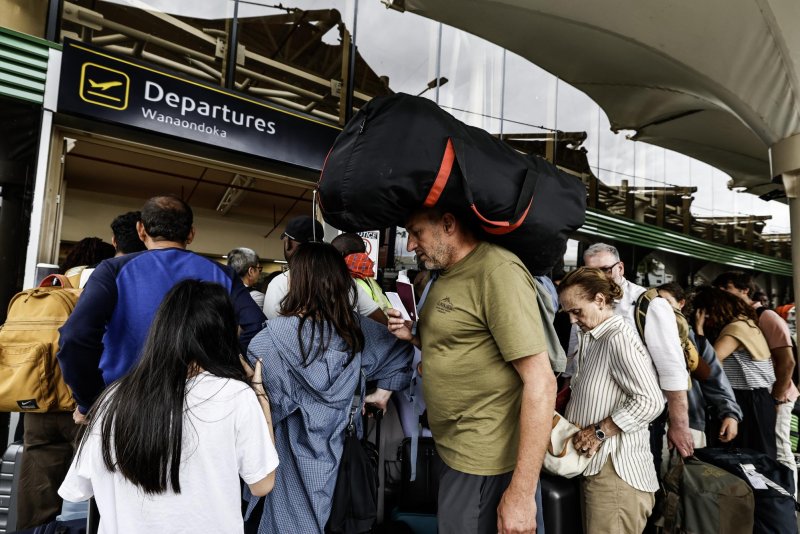
The Kenya Aviation Workers Union called off its strike late Monday following renewed talks with government officials, allowing airlines to begin clearing a backlog of thousands of stranded passengers. But for the travellers who slept on airport floors, the business owners who missed critical meetings, and the families whose long-planned holidays evaporated, the return to normalcy offers little comfort.
Mendel Goldman, a rabbi travelling to a wedding in Florida, spent 12 hours at the airport during the height of the disruption. The earliest flight officials could offer him was the following night, leaving him and his companions with nothing to do but wait. His experience was mirrored across Terminal 1A and 1E, where passengers clutched boarding passes for flights that no longer existed.
The strike began abruptly on Sunday, August 30, catching thousands of travellers off guard. Unlike the February 2026 industrial action which followed a formal seven-day notice this walkout resumed with little public warning after the union accused the government of failing to honour a memorandum of understanding signed after the earlier dispute.
Passengers arriving at JKIA for scheduled departures found themselves trapped in a limbo of contradictory announcements and indefinite delays.
Glen Omindu, who was due to travel to Dubai on a 1 p.m. flight, described the suddenness of the disruption. There had been no advance warning, he said, and all passengers could do was find ways to pass the time and hope for the best.
Faith Mbugua, who arrived three hours early for her 1 p.m. flight, described a breakdown in communication that left travellers fending for themselves. Nobody wanted to take responsibility, she explained, and officials kept insisting the problem was not theirs to solve. Her flight was pushed to 8:50 p.m. with no guarantee it would actually depart.
The disruption was not confined to Nairobi. At Moi International Airport in Mombasa, more than 500 passengers were stranded in the lounge as flight schedules collapsed. Some arriving from international connections reported delays exceeding five hours, turning what should have been seamless transits into ordeals of uncertainty.
For Kenya's corporate travellers, the strike delivered a blunt economic blow. Stephen Maguro, heading to a conference in Rwanda, watched his 1 p.m. departure evaporate into an open-ended delay. He and his colleagues could only hope the situation would be resolved quickly, but hope is a poor substitute for a confirmed seat at a regional business summit.
Hellen Moraa, en route to the Netherlands via Dubai, was more direct about the financial consequences. Standing at the airport, she called the situation unfair, acutely aware that the delays could cost her commercially.
The damage extends beyond individual travellers. Kenya Airways and its subsidiary Jambojet reported extended delays throughout the strike period. During the February disruption, Jambojet had cancelled more than 40 flights, affecting over 5,000 passengers. The August stoppage was broader in scope, involving workers

No comments yet. Be the first to share your thoughts.