

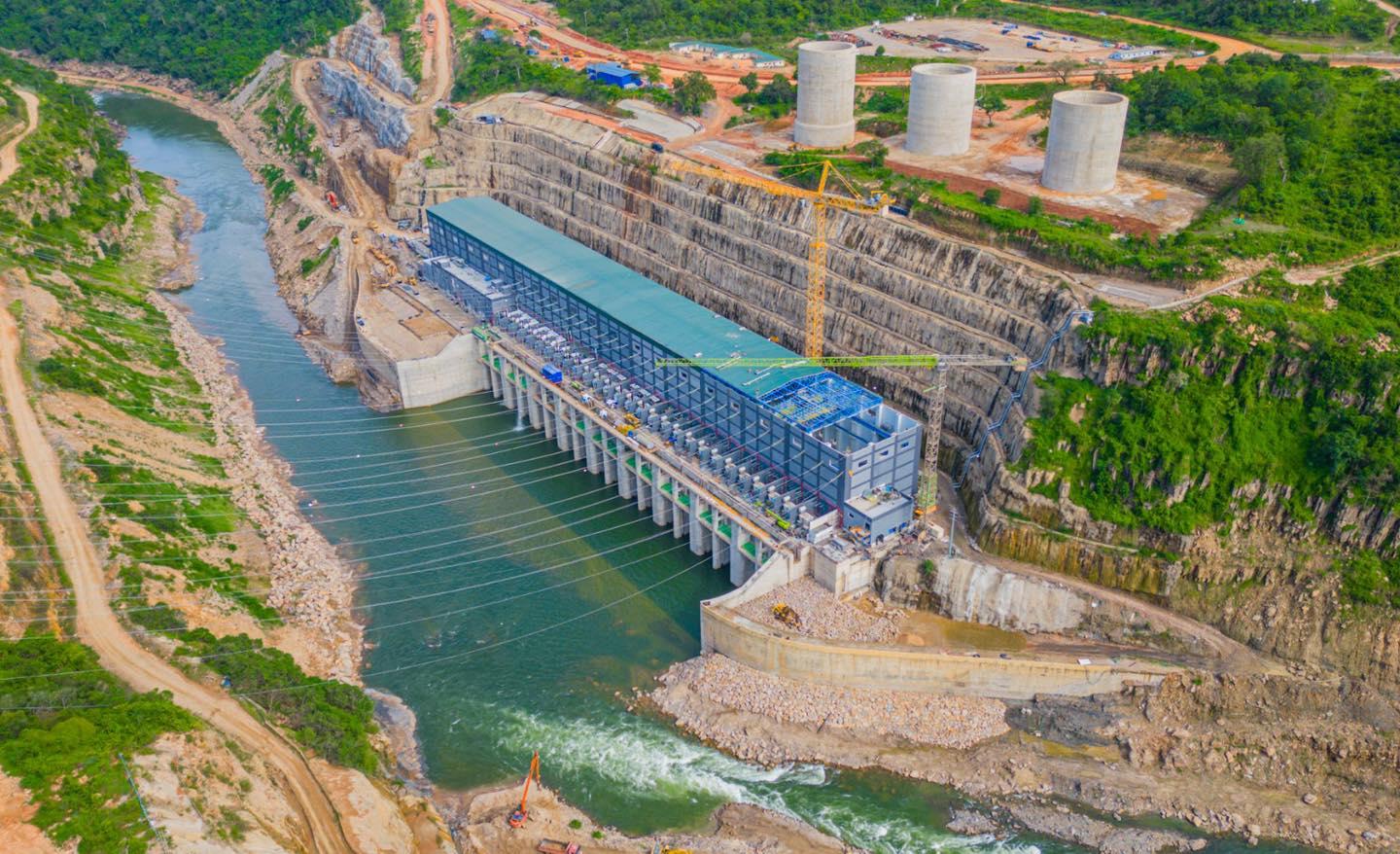
Deep inside Tanzania's Stiegler's Gorge, where the Rufiji River has carved its path through ancient rock for millennia, a transformation is now complete that will redraw the energy map of East Africa. The Julius Nyerere Hydropower Project rises from this wild terrain as the largest power station the region has ever seen, a 2,115-megawatt giant capable of more than doubling Tanzania's electricity generation and sending ripples of change across borders that have long struggled to keep the lights on.
The numbers alone demand attention. Nine massive Francis turbines, each generating 235 megawatts, sit beneath a 134-metre concrete roller-compacted dam that holds back a reservoir stretching nearly one hundred kilometres and containing roughly 34 billion cubic metres of water. At full operation, the station will produce between 5,900 and 6,000 gigawatt-hours of electricity every year, enough to power industries, railways, mining operations and new manufacturing parks that Tanzania has dreamed of for decades. The price tag stands at 2.9 billion dollars, funded by the Tanzanian government itself, a statement of sovereign ambition in an era when African mega-projects often carry foreign flags in their financing.
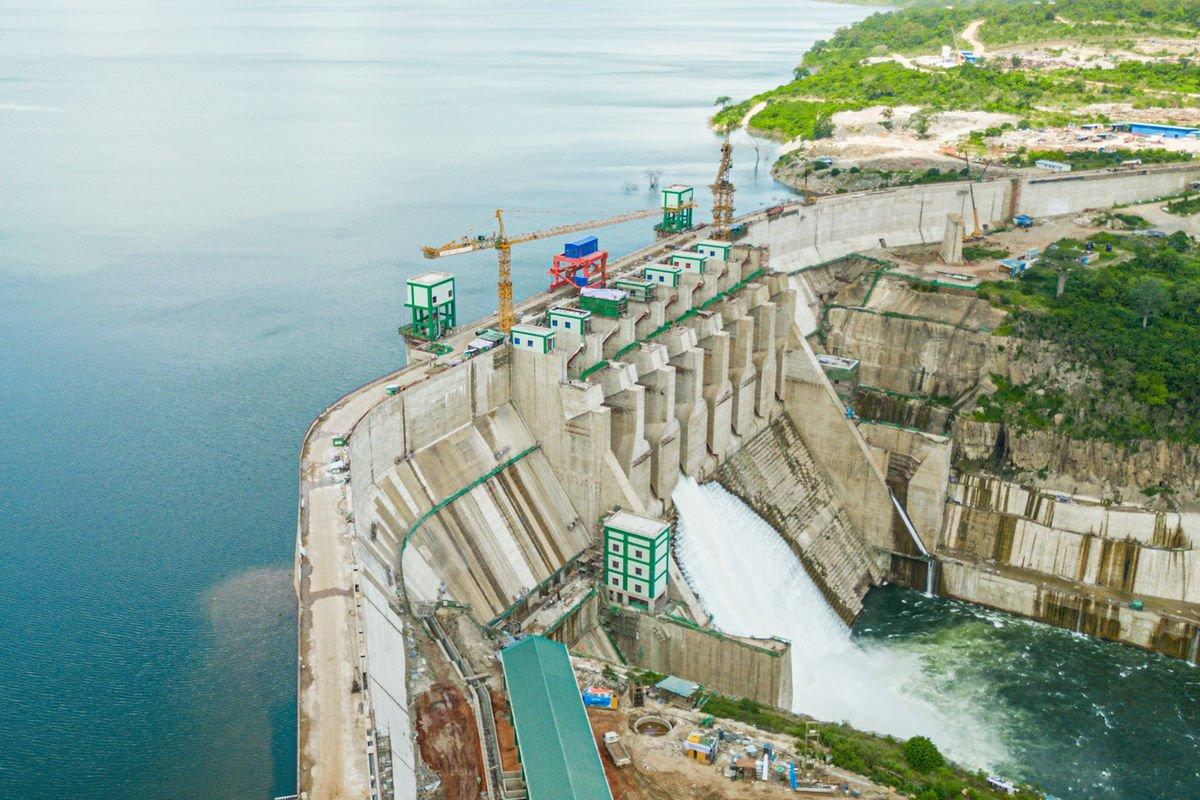
This is not a new dream. Feasibility studies for harnessing the Rufiji's power date back to the 1970s, when Tanzania's founding president Julius Kambarage Nyerere first imagined a nation fuelled by its own rivers rather than dependent on outside hands. Known across Africa as Mwalimu, the Teacher, Nyerere built his legacy on self-reliance, rural development and the conviction that African nations must control their own economic destinies. Half a century later, the dam that now carries his name represents the fulfillment of that vision, even if the world around it has changed beyond recognition.
For decades, Tanzania has limped through recurring power shortages, its economy held back by aging hydropower stations and an over-reliance on natural gas generation that left factories dark and investors hesitant. The Julius Nyerere project was designed to solve this paralysis in one sweeping stroke, creating not merely enough electricity for domestic consumption but a genuine surplus that could flow into regional markets through the Eastern Africa Power Pool. Kenya, Uganda, Rwanda, Burundi and Zambia all stand to benefit from a stronger, interconnected grid that could finally reduce the region's dependence on expensive diesel-powered emergency generation when droughts or breakdowns strike.
The mechanics are elegantly simple. Water stored behind the towering dam rushes through massive intake tunnels, spinning the nine turbines with enough force to generate electricity for transmission across the country through high-voltage lines. When all nine turbines run together, the station reaches its full capacity, a volume of power that could alter the industrial trajectory of an entire nation.
Yet grandeur on this scale rarely arrives without conflict. The dam sits within the Selous ecosystem, a landscape once protected as a UNESCO World Heritage Site and renowned for its elephants, black rhinos, cheetahs and vast wetlands that sustain both wildlife and human communities downstream. Conservationists have warned that altering the Rufiji River's natural flow could destroy fisheries, disrupt seasonal flooding patterns that nourish downstream agriculture, and fragment wildlife habitats that took millennia to form. The reservoir itself floods an area of extraordinary biodiversity, and critics argue that no amount of engineering can fully compensate for the ecological transformation of a river basin that supports life far beyond the turbine halls. Tanzanian authorities insist that environmental safeguards have been woven into the project's design, and they argue that the long-term economic benefits, industrial jobs and energy security outweigh the ecological risks. It is a debate as old as development itself, the tension between progress and preservation played out on a landscape of extraordinary beauty.
For Kenya, the project's success carries strategic weight that transcends diplomacy. A stronger regional electricity market could eventually allow Nairobi and Dar es Salaam to exchange larger volumes of power depending on seasonal rainfall, generation capacity and demand curves. This would complement the cross-border transmission infrastructure already under construction across East Africa, creating a power network more resilient than any single nation could build alone. For households and businesses, the promise is indirect but real: a more stable regional grid means fewer blackouts, lower manufacturing costs, and a competitive environment where electricity is no longer the bottleneck that kills investment.
The Julius Nyerere Hydropower Project is, ultimately, a monument to patience and national will. It took fifty years from conception to completion, surviving political transitions, funding debates, environmental lawsuits and the sheer technical complexity of building one of Africa's largest renewable energy facilities in a remote gorge. Whether it becomes the backbone of East African industrialisation that its architects envision, or a cautionary tale about the costs of mega-development, will unfold over the decades to come. What is certain now is that the Rufiji River has been forever changed, and the energy future of a region flows through nine turbines spinning deep in the Tanzanian bush, carrying the name of a man who believed that Africa could power itself.
No comments yet. Be the first to share your thoughts.