

Some years ago, I posed a difficult question to a senior police officer: Where does aggressive policing end and police over-zealousness begin?
It was not an academic question. Having worked as a police officer myself, I understood the pressures confronting officers on the streets. A police officer is expected to confront criminals, protect life and property, respond quickly to emergencies, and make difficult decisions, sometimes within seconds.
But the story of former police officer Titus Ngamau Musila, alias Katitu, demonstrates why that question remains important.

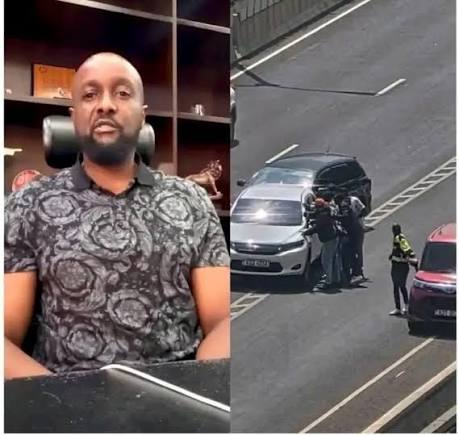
Katitu served in the police service for about 16 years and became widely known in Githurai and surrounding areas as an aggressive crime fighter. Many residents regarded him as a hero because they associated his presence with efforts to reduce crime.
Yet his career also became a powerful illustration of the dangers that can arise when determination to fight crime crosses the boundaries of lawful policing.
In 2014, his arrest triggered demonstrations and confrontations between residents and law enforcement officers, with some locals demanding his release. His popularity demonstrated the complicated relationship between communities and police officers who are perceived as tough on crime.
But public admiration cannot replace the law.

In February 2018, the High Court convicted Katitu over the April 2013 killing of Kenneth Kimani Mwangi at the Githurai 45 bus stage. He was sentenced to 15 years' imprisonment, with the sentence taking into account time already spent in custody. His appeal was subsequently dismissed by the Court of Appeal.
His case raises an uncomfortable but necessary question for every police service:
Can an officer become too zealous in the pursuit of criminals?
The answer matters because policing requires courage, but courage without restraint can become dangerous.
The advantage of a determined police officer
A police officer cannot be timid when confronting violent criminals.
Criminals may be armed. They may have hostages. They may attack police officers or members of the public. A hesitant response can sometimes cost lives.
An energetic and courageous officer can therefore make an enormous contribution to public safety.

Such an officer may respond rapidly to distress calls, pursue suspects, gather intelligence, disrupt criminal networks, and reassure frightened communities.
That is why some communities celebrate officers who appear fearless.
But there is a crucial distinction between being aggressive against crime and being aggressive against people suspected of committing crime.
The first can be an important policing quality.
The second can become a serious professional and legal problem when it involves unnecessary or unlawful force.
The danger of believing that results justify methods
This is where my question to the senior police officer becomes particularly relevant.
If an officer reduces crime but violates the law while doing so, should the reduction in crime be considered sufficient justification?

That question has no simple answer because police work involves difficult operational circumstances. However, the rule of law requires police powers to be exercised within constitutional and legal limits.
A suspect is still a suspect until a court determines otherwise.
The police investigate.
The prosecution presents the case.
The courts determine guilt.
When an officer begins to regard a suspect as already guilty and treats that person accordingly, the distinction between policing and punishment begins to disappear.
That is one of the greatest dangers of over-zealous policing.
The 'hero cop' dilemma
There is also a danger when communities begin to create a mythology around particularly aggressive officers.
A police officer may become known as the man criminals fear or the crime buster who does not play by the rules.
Initially, such descriptions may reflect public appreciation.
But they can eventually create pressure on the officer to maintain that reputation.
The officer may feel compelled to demonstrate toughness even when restraint would be more appropriate.
This can create a dangerous cycle:
crime increases → the public demands tougher policing → officers become more aggressive → questionable methods are tolerated → accountability weakens.
Eventually, the same community that celebrated an officer may find itself demanding answers over an incident involving excessive or unlawful force.
Professionalism is not weakness.
One of the most dangerous misconceptions in policing is that restraint means weakness.
It does not.
A highly trained officer should be capable of controlling a difficult situation without unnecessarily escalating it.
Professional policing requires judgement.
An officer must constantly assess the threat, the available alternatives, the level of force required, and the potential consequences of each decision.
The objective should be to neutralize a threat lawfully, not to punish a suspect.
My question to the senior officer
When I asked that senior police officer about over-zealousness, I was essentially asking about the balance between two legitimate objectives:
How can police officers remain sufficiently aggressive to defeat criminals while remaining sufficiently disciplined to protect the rights of the people they serve?
That is a question Kenya's security institutions must continue discussing.
It is particularly important for young officers who join the service with genuine enthusiasm to protect society.
They should be encouraged to be courageous.
They should be encouraged to pursue criminals.
They should be encouraged to protect vulnerable people.
But they should also be taught that the Constitution is not an obstacle to policing—it is the framework within which legitimate policing operates.
The ultimate lesson from Katitu
Katitu's story should therefore not be reduced to a simple narrative of either heroism or wrongdoing.
It provides a more complicated lesson.
An officer can become popular because citizens believe he is making their neighborhood safer. At the same time, an officer can face serious legal consequences if his actions cross the boundaries established by law.
That tension is at the heart of modern policing.
The greatest police officer is not necessarily the one who creates the greatest fear among criminals.
The measure of professional policing is whether an officer can confront crime firmly, courageously, and effectively while remaining accountable to the law.
As a former police officer, journalist, and court reporter, I have learned that evidence, procedure, and accountability matter long after the excitement surrounding an incident has disappeared.
A police officer's reputation may be built over many years.
But one unlawful decision can change the course of an entire career.
Be fearless in confronting crime—but never become so zealous that the fight against crime causes you to abandon the very law you swore to protect. Start writing your story…
No comments yet. Be the first to share your thoughts.